


Published On 7/3/2026
|
Last update: 21:15 (Mecca time)
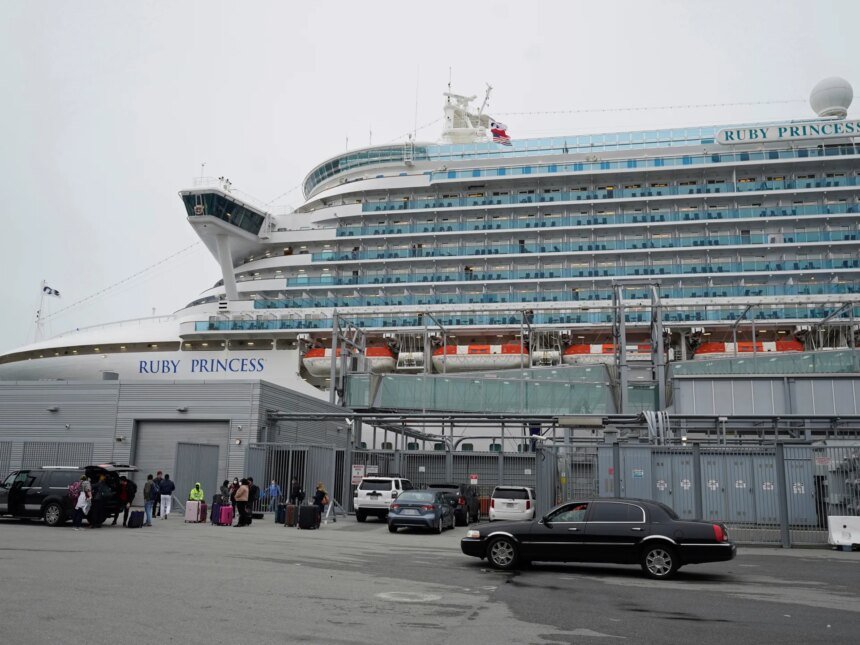
The US Centers for Disease Control and Prevention (CDC) announced that an outbreak of the norovirus had been recorded on board the Ruby Princess cruise ship affiliated with Princess Cruises, during a voyage that departed from San Francisco towards Canada and Alaska, before returning to its American port in early July.
According to data from the US Centers for Ship Sterilization Program, 102 passengers out of 3,032 reported that they had symptoms of illness during the voyage, or 3.4% of the passengers, in addition to 23 crew members out of 1,144, or 2%. The reported symptoms were diarrhea and vomiting, while health authorities identified the causative agent of the outbreak as norovirus.
Flight from San Francisco to Alaska
The ship’s voyage began from June 12 to July 2, and the US ship sterilization program was notified of the outbreak on June 28, days before the ship returned to San Francisco.
CDC data indicates that the announced numbers represent the total cases recorded throughout the trip, and do not mean that all those infected were sick at the same moment upon arrival or departure.
The American authorities deal with outbreaks of gastrointestinal diseases on board ships according to a specific monitoring mechanism. The CDC releases outbreak data when a ship is within the scope of the ship sterilization program, that is, on voyages including US and foreign ports, and when the number of passengers or crew members reporting gastrointestinal symptoms is 3% or more.

Intensive isolation and cleaning procedures
According to the US Centers, Princess Cruises and the ship’s crew reported taking several measures to limit the spread of infection, which included increasing cleaning and disinfection operations in accordance with the outbreak response plan, collecting stool samples from infected cases for testing, isolating sick passengers and crew members, and consulting with the ship’s sterilization program regarding hygiene procedures and reporting cases. The CDC also confirmed that it is monitoring the situation remotely, including reviewing the ship’s response and sterilization procedures.
According to the Associated Press, the total number of infected people reached 125 people Of the passengers and crew, noting that the outbreak did not occur at once among all the cases, but rather was reported to the health authorities before the ship arrived in San Francisco. The agency quoted the company as saying that the crew implemented enhanced cleaning procedures, and that the ship would undergo comprehensive cleaning before its next voyage.
Symptoms and methods of prevention
Norovirus is usually transmitted through contaminated food or water, or through touching contaminated surfaces and then touching the mouth, or through close contact with an infected person. Its epidemiological danger lies in its rapid spread and ease of transmission, even when symptoms are relatively short in most infected people.
The virus causes acute gastroenteritis, and its symptoms often appear in the form of vomiting, diarrhea, and abdominal cramps, and may be accompanied by nausea, headache, muscle pain, or mild fever. Usually, many infected people recover within days, but the risk increases for the elderly, young children, and those with chronic diseases or weak immunity, especially if vomiting and diarrhea lead to dehydration.
The CDC defines a case of acute gastroenteritis based on the presence of… 3 or more loose stools in 24 hoursOr vomiting accompanied by symptoms such as diarrhea, muscle pain, headache, abdominal cramps, or fever. She stresses the importance of informing the medical center on board of the ship of symptoms early, because this helps in quickly detecting the outbreak and taking measures to limit its spread.
In the face of norovirus, hand sanitizers alone are not enough. American guidelines confirm that washing hands well with soap and water is the most important measure, and that hand sanitizer alone does not work well against norovirus. The CDC also recommends not preparing food or providing care to others while sick, and carefully cleaning and disinfecting contaminated surfaces.
Health authorities recommend that passengers on cruise ships wash hands before eating and after using the bathroom, avoid sharing food or personal items with infected people, report any intestinal symptoms to the medical center on board the ship, and adhere to temporary isolation if symptoms appear.
Greater sensitivity to vessel infection
This outbreak coincided with increased global interest in ship-related health events, following a previous outbreak of Hantavirus Andes virus Associated with a cruise ship M/V Hondius. The World Health Organization announced on May 28, 2026 that this outbreak had resulted, as of May 27, in 13 cases Between them 3 deathswith hundreds of contacts traced across dozens of countries, but it estimated the risk at the global level as low.
However, a distinction should be made between the two cases. Hantavirus associated with Andes virus is a different disease in terms of transmission mechanism and clinical severity, and may be associated with severe respiratory complications, while norovirus often causes acute and rapidly spreading intestinal disease, but is usually less fatal in healthy people if dehydration is treated early and isolation and hygiene measures are applied.
Cruise ships are a suitable environment for the spread of gastrointestinal viruses, not because they are necessarily the source of infection, but because they gather thousands of people in closed or semi-closed spaces, where passengers frequently interact with each other, and share restaurants, corridors, elevators, and public facilities.
The CDC explains that norovirus often appears in environments where people live or congregate in close quarters, such as cruise ships, camps, university housing, nursing homes, and hotels, and that it is a common cause of acute diarrhea among travelers in places with limited space.