



Published On 7/6/2026
|
Last update: 7/7/2026 07:23 (Mecca time)
Oman – Jordanian Prime Minister Jaafar Hassan directed the preparation of a new draft system to control ministerial work, in a step that specialists believe represents a shift from moral obligation to legal obligation in regulating the behavior of ministers and strengthening the system of integrity and transparency in public administration.
This directive comes days after Hassan’s resignation request was addressed to Labor Minister Khaled Al-Bakkar on the grounds of a suspected conflict of interest.
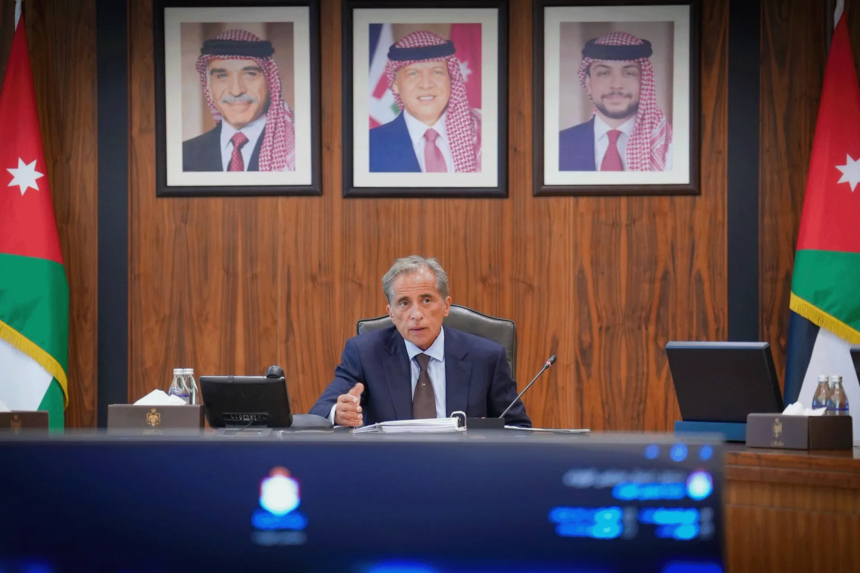
During his presidency of the Council of Ministers session, Hassan directed the issuance of a draft system to control ministerial work and give it the status of urgency, with the aim of preventing conflicts of interest or achieving any personal gains for ministers or direct or indirect benefits for their relatives, and to establish the principle of functional neutrality in government work.
Binding rules
According to government directives, the anticipated system will provide a legal basis for tender departments and supervisory authorities to prevent conflicts of interest. It will also establish binding rules that regulate the relationship of ministers with various agencies and institutions related to the government, whether in projects, bids or tenders, to ensure the prevention of any conflict of interest.
It will also include controls that prevent the exploitation of information that ministers know by virtue of their positions to achieve personal gains or interests for themselves or their relatives, in addition to legal rules based on the Jordanian Constitution, which prohibits a minister, while holding office, from purchasing or leasing state property, from membership in the boards of directors of companies, from practicing any commercial or financial activity, or from receiving a salary from any company.
In the same context, the Prime Minister asked the Minister of Justice, in his capacity as Chairman of the Ministerial Legal Committee, to review all legislation and regulations related to job neutrality for public sector employees, in a way that enhances the system of integrity, justice, and transparency, and establishes the best governance practices in public administration.

Oversight tools
Professor of Constitutional Law, Dr. Laith Nasraween, in his interview with Al Jazeera Net, believes that the government’s approach to preparing a special system to control ministerial work constitutes a qualitative shift in regulating the performance of ministers, because it transforms the rules of conduct from their moral and ethical framework into a binding legal system, which includes supervisory tools and sanctions that ensure compliance with them.
He explained that the ministerial code of conduct currently in effect is based on a code of honor that defines general principles, but it lacks legal binding and implementation mechanisms, which makes the prospective system a necessary step to fill this deficiency and enhance accountability.
Nasraween pointed out that the system will be based on an article in the Jordanian Constitution, but it should go beyond the current constitutional texts, so that it is not limited to regulating the behavior of the minister alone, but rather extends to include cases of conflict of interest that may arise through his relatives, family members, or people associated with him within clear legal limits.
Definition of the concept of conflict of interest
The professor of constitutional law stressed that the success of the system is linked to establishing an accurate and comprehensive definition of the concept of conflict of interest, identifying cases in which conflict occurs or is likely to occur, and linking it to the legislation in force, most notably the financial disclosure and illicit gain law.
He added that it is necessary for the system to include a legal obligation to disclose any potential conflict of interest, while obligating the minister not to participate in any government discussion or decision that could bring him or his relatives a direct or indirect benefit.

He also stressed the importance of establishing controls that regulate ministers’ acceptance of gifts, hospitality, and social participation, in addition to regulating the participation of ministers and their relatives in government tenders, in order to block any suspicion of exploiting public office.
Nasraween pointed out that integrity requirements should not end with the end of the minister’s term, calling for imposing legal restrictions on holders of ministerial positions after they leave their positions, preventing them from exploiting the information they learned while assuming responsibility for private gains or working for parties that might benefit from that information.
Strengthening citizen confidence in the state
He considered that granting the draft system urgent status reflects a direct government response to the state of controversy raised by the recent conflict of interest issue, and expresses a desire to enhance citizens’ confidence in state institutions through clear legislative treatment.
He pointed out that the approval of the system will not be the end of the reform, but rather the beginning of a broader review of the legislative system related to integrity, which includes the graft law, the penal code, the human resources management system in the public sector, and perhaps the government procurement system, in a way that enhances the protection of public money and consolidates the principles of transparency and governance.

Good use of power
Nasraween concluded by stressing that these controls do not detract from the minister’s powers or independence in managing his ministry, but rather provide a legal framework that guarantees the proper use of power, stressing that their success also remains dependent on the minister’s personal conviction of the importance of preserving public office and consolidating the values of integrity.
The government approach came after developments related to the Minister of Labor, Khaled Al-Bakkar, against the backdrop of a conflict of interest related to government bids submitted by his son, as the government explained that one of those bids was referred, while the rest of the bids were suspended in accordance with the legal frameworks and the ministerial code of conduct.
The Minister of Health, Ibrahim Al-Badour, also decided to terminate the contract of a cleaning services company belonging to the minister’s son and his partners with the Ministry of Health, while the Minister of Transport, Nidal Al-Qatamin, was assigned to manage the Ministry of Labor by proxy, in a case that brought the issue of conflict of interest back to the forefront of public debate, and prompted the government to move towards approving a more stringent legal framework to control ministerial work.