


Published On 5/7/2026
The Washington Post reviewed scientific predictions published in 1976 about the world of 2026, by comparing what science editor Thomas O’Toole said at the time with what has actually been achieved today in various fields.
The original report, titled “Inventing the Future,” focused on visions of the future of energy, communications, medicine, space, and genetic modification, in the context of the United States’ bicentennial celebrations.
Read also
list of 2 itemsend of list
Energy
O’Toole said in 1976 that solar power and nuclear fusion were still decades away, and that nuclear power was the most realistic option for the near future.
Today: Solar energy has become one of the most prominent growing sources of electricity in the United States, while nuclear fusion is still in the development stage despite huge investments.

Mining and resources
O’Toole predicted the possibility of extracting minerals from the seabed.
Today: Deep-sea mining is technically possible, but faces widespread environmental objections.

Communications
O’Toole spoke of a future based on fiber optics and the transmission of calls via light instead of traditional cables, while warning of scientific acceleration that may cause dangers.
Today: A bigger leap has been achieved than expected, as mobile phones have completely changed daily life, leading to a global expansion of communication and the emergence of an “attention economy” based on competition for users’ attention.
Biotechnology (genetic modification)
O’Toole anticipated widespread debate about “human improvement” through genetic engineering, even altering physical and mental abilities.
Today: Part of this has been achieved through embryo screening techniques and advances in gene editing, although ethical and scientific restrictions remain on its widespread application.

Medicine
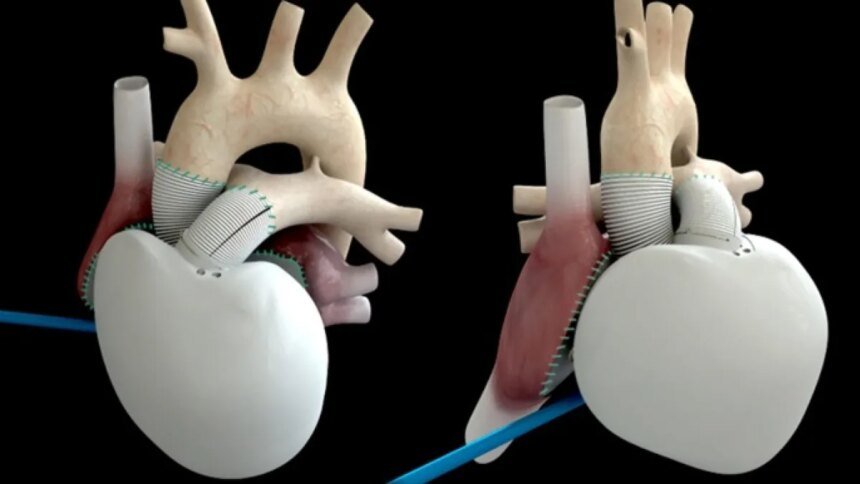
The report proposed the idea of “nuclear artificial hearts” to replace patients’ hearts, with future promises of extending lifespan.
Today: The idea of artificial hearts is still far from being implemented, despite the great progress in organ transplantation and treatment of heart diseases with pharmaceutical and biological techniques, while the average life expectancy has increased significantly in recent decades.

outer space
O’Toole predicted the possibility of extraterrestrial life and human settlements on the Moon and Mars within the coming centuries.
Today: These projects are still within the framework of research ambition, despite the progress of companies such as “SpaceX” in developing plans for future landing and settlement.
In conclusion, this comparison shows that scientific forecasting sometimes succeeds in capturing major trends, but fails to capture speed and timing, with some being achieved early and others being delayed for decades.