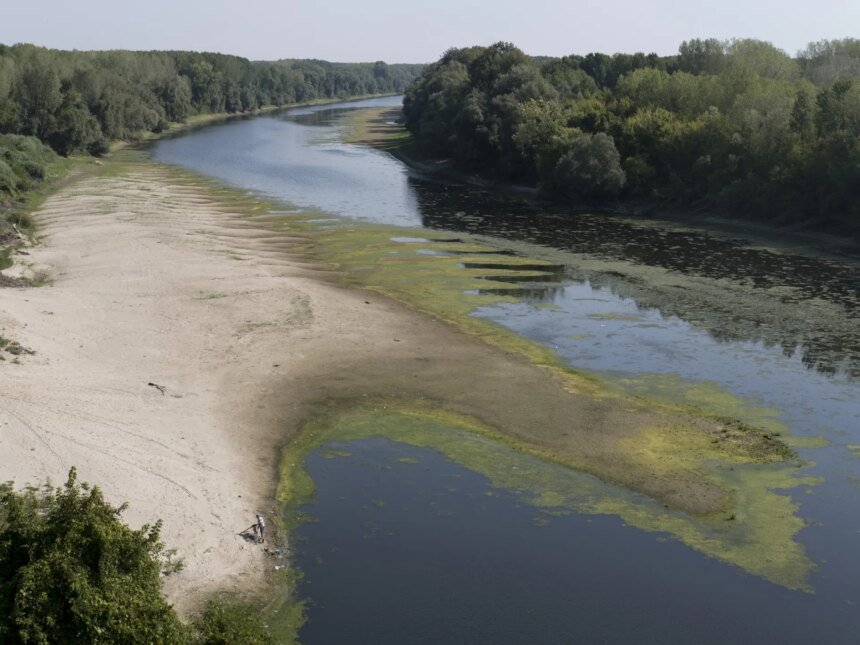
A few miles below a lava field in western Iceland, the Milsa River recently regained its natural flow for the first time in decades, after the removal of an old, abandoned dam that had been built to supply electricity to a farm but continued to impede fish migration even after it had been out of service for years.
This was the first dam to be officially removed from the Icelandic rivers, but this European country was not alone, as other countries on the continent are witnessing similar transformations, and are dismantling old and unnecessary dams and water barriers, which have lost their economic value, but still affect ecosystems and cut off the natural interconnectedness of the rivers.
The latest data shows that Europe recorded a new record during the year 2025 by removing 603 river obstacles, including dams, barriers, weirs, ferries, and gates regulating the flow of water, in a step that contributed to reconnecting thousands of kilometers of waterways, and helping waterways, wildlife, and neighboring communities to recover.
The movement to remove dams has grown in Europe in recent years, partly driven by the “Nature Restoration Law,” which entered into force in 2024, becoming the first binding European legislation that places the restoration of free-flowing rivers and the removal of barriers within a binding legal framework, with the aim of addressing the environmental disturbances that dams may cause, and managing rivers in a more sustainable manner in light of climate change, while providing energy when needed and in the appropriate places.

The environmental cost of dams
It is estimated that Europe has more than a million dams and dykes spread across millions of miles of European rivers, interrupting their continuity, and built over hundreds of years.
Chris Baker, director of Wetlands International Europe, which is concerned with protecting and restoring wetlands, says, “Large numbers of these barriers have reached the end of their operational life,” adding in his speech to Al Jazeera Net that “there are at least 150,000 barriers in Europe that are classified as obsolete and unnecessary, meaning that they no longer achieve tangible economic benefits, but they still cause harm to rivers, and many of them require continuous maintenance and monitoring, while some of them have become increasing risks related to public safety with Deterioration of its structural structure.
Most European dams were built during the Industrial Revolution in the nineteenth century, followed by a widespread wave of dam building and river diversion in the mid-twentieth century with the aim of supporting economic development, facilitating navigation, agriculture, and generating hydroelectric power.
Despite the great benefits that these facilities have provided to communities, Baker believes that their effects are wide-ranging, as they can cause multiple environmental problems, including the fragmentation of river ecosystems and the severing of the natural connection between rivers and their floodplains, noting that they have “contributed to a sharp decline in freshwater biodiversity, including a decline in the number of migratory fish in freshwater by 75% since 1970.”
The effects of dams extend further, as they lead to the fragmentation of ecosystems and weaken their ability to cope with floods, drought, and extreme climate phenomena, according to the European Environment Agency, which explained that 90% of the natural disasters that Europe witnessed during the past decade were related to water, at a time when the continent lost about 80% of its wetlands during the past millennium as a result of drying, urban expansion, and environmental degradation.
Barriers also impede the movement of natural sediments. According to Baker, “Healthy rivers transport gravel, sand and other sediments downstream, which helps create and maintain ecological habitats, such as floodplains, estuaries, and deltas, but dams trap these materials, depriving downstream ecosystems of them, and in some cases contributing to coastal erosion and loss of wetlands.”
He explains, “The effect of dams on fish migration is one of the most obvious effects. Many species need to move freely along rivers to complete their life cycles. Salmon, sturgeon, eels, and many other species may travel hundreds or even thousands of kilometers between feeding, breeding, and growth areas. Even relatively small barriers may prevent these migrations, leading to the isolation of fish populations and contributing to a sharp decline in their numbers or their local disappearance in some cases.”
Dam Removal Europe – an alliance of a number of environmental groups seeking to restore the natural connectivity of rivers across the continent – confirms that river fragmentation is one of the main causes of the decline of biodiversity in European freshwater. The organization relied on a recent European Commission assessment that showed that more than 42% of freshwater fish species on the continent are threatened, while about two-thirds of these species are considered at risk or close to reaching that stage.
“The effects are not limited to specific types of organisms,” Baker points out. “Barriers also change flow patterns, water temperatures, and environmental conditions within the river, often transforming dynamic river systems into disconnected, semi-stagnant parts. Over time, this reduces the diversity of natural habitats, declines biodiversity, and weakens the ability of entire river systems to withstand and recover.”

The rise of the dam removal movement
Opposition to dams began to grow in Europe since the 1980s, influenced by the rise of the environmental movement in the United States, and the continent witnessed the first major dam removals in the late 1990s when France demolished three large hydroelectric dams.
Although the momentum later slowed due to costs and local objections, the dam removal movement continued to grow gradually, with more than 9,000 dams and dams removed from European rivers, more than 6,700 of which were after 2009. While Europe removed 100 dams within one year in the first official census conducted in 2020.
According to the latest report issued by Dam Removal Europe, the number of dams and barriers removed in 2025 increased by 11%, compared to 2024, which witnessed the removal of more than 500 barriers from rivers across the continent.
The organization’s analysis showed that more than three-quarters of the barriers removed in 2025 were less than two meters high. These structures, many of which have lost their original function, are often low cost and relatively easy to remove.
This growing trend appears to extend beyond Europe. In the United States, where more than 550,000 dams and 300,000 barriers obstruct river flow, 100 dams were removed last year, while China has seen hundreds of dams removed on the Yangtze River in recent years as part of efforts to restore river ecosystems.

Benefits not without challenges
“Removing obsolete dams and barriers is increasingly becoming one of the most effective measures to restore rivers to their natural state, because they restore natural connectivity and ecological processes at the level of the entire river system,” says Baker.
He adds, “When the barrier is removed, fish can once again reach the breeding areas, sediments resume their natural journey downstream, the connection between rivers and their floodplains is restored, natural habitats begin to recover automatically, and the ability of ecosystems to cope with future pressures increases.”
However, some warn that this process may also entail some new risks. A study published last year found that artificial barriers may slow the spread of invasive species, creating what researchers describe as an “ecological connectivity dilemma,” where removing barriers may allow new threats to move from one part of the river to another.
As in the United States, dam removal projects in Europe can be controversial, with the policy raising fears of flooding and other concerns among some farmers and policymakers who fear its potential impact on land use and rural livelihoods.
Baker explains, “One of the most common concerns is the loss of cultural heritage. Many dams and barriers have become part of the local landscape and community identity over successive generations, and some of them are linked in the minds of residents to the history of the region, to old mills, or to the traditional landscape to which they are accustomed.”
He points out that “the real concerns relate to the aging of Europe’s water infrastructure. Many old dams and barriers were designed according to hydrological conditions different from current conditions, and may become more vulnerable to failure during extreme weather events, especially with the increase in the frequency and severity of floods as a result of climate change.”
Dam Removal Europe estimates that, during the year 2025, barrier removal operations contributed to reconnecting 3,740 kilometers of rivers across the continent, which brings the European Union closer to its binding goals – according to the Nature Restoration Act – to restore at least 20% of the European Union’s lands and marine areas by 2030, including returning 25,000 kilometers of free-flowing rivers across the continent to their natural state.
However, there is still a long way to go. Modern dam removal projects are not a simple process limited to demolishing concrete, but rather require years of detailed environmental and engineering studies that include environmental benefits, engineering risks, heritage values, economic costs, and the interests of local communities.
In light of limited resources, achieving this goal will require coordination among dozens of countries to identify dams whose removal will open the longest possible river sections, while avoiding sacrificing a large amount of hydroelectric power production, which still constitutes an important part of the renewable energy system in Europe, especially when existing dams are capable of providing large amounts of electricity or storage services and flexibility for electrical networks.
Baker argues that “restoring rivers and maintaining energy security are not mutually exclusive goals,” and believes that “many of the dams and water facilities proposed for removal do not play any role in energy production at all. Many of them were built for other purposes, such as navigation, agriculture, and industry. Therefore, their removal does not weaken energy security, but rather helps restore rivers and at the same time get rid of the burden of aging infrastructure.”
He concludes by saying, “The European experience shows the importance of adopting a strategic, evidence-based approach rather than ideological approaches. The question should not be: Should all dams be kept or all dams removed? Rather, it should be: Which facilities still provide important benefits? Which can be modernized? And which have become obsolete and no longer useful?”