

Published On 5/7/2026
|
Last update: 20:18 (Mecca time)
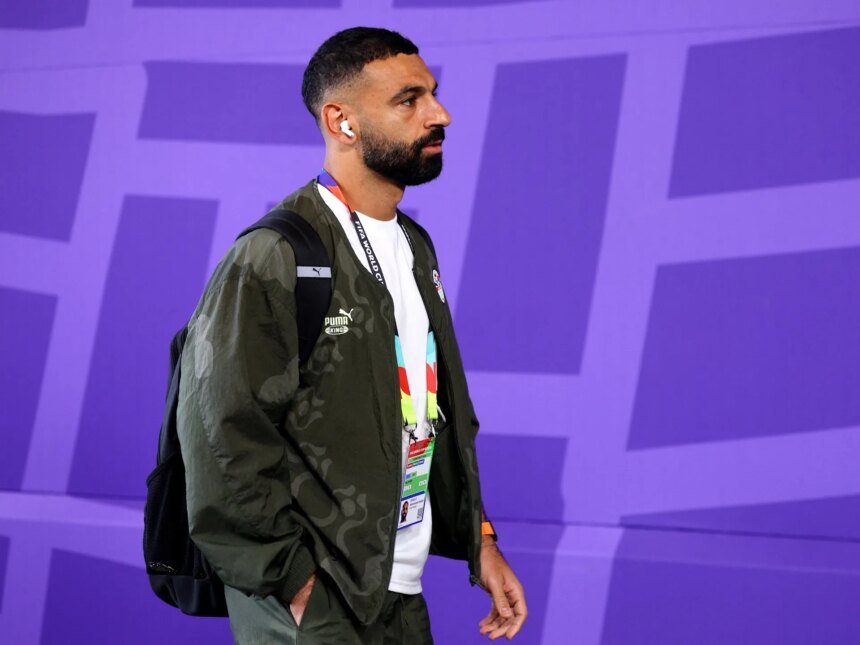
A quick interview conducted by Egyptian star Mohamed Salah with an Israeli journalist sparked controversy on social media, both in the Arab world and Israel.
In the midst of celebrations for the Pharaohs’ historic victory over Australia in the round of 32 in the 2026 World Cup, a reporter took advantage of the crowded atmosphere in the mixed area to ask Salah (34 years old) a question in Arabic: The journalist mentioned his name abstractly without revealing his media identity, which made Salah deal with the situation like any passing and spontaneous sports dialogue without realizing the political dimensions surrounding the channel’s identity.
Read also
list of 2 itemsend of list
A loaded question
It later became clear that the questioner was Uri Levy, a correspondent for the Israeli Kan 11 channel, who asked his question about the best in the history of Egyptian football, citing several names, most notably Mohamed Aboutrika. The former Liverpool star’s response was brief and intelligent: “I don’t know. This is a question I will leave to the people to answer.”
He added, “I will not talk about the best player in Egypt’s history, but what we did in the World Cup will not be forgotten by anyone, and on a personal level it means a lot to me.”
Salah continued: “This generation was not lucky to win the African Cup of Nations. We lost the final twice. We were not lucky, but God compensated us by reaching this stage and with a great performance that made us the talk of the people.”
Salah concluded: “We feel proud. Perhaps this achievement is the biggest in the history of this generation. I hope we can offer more in the future.”
Feedback
Although Salah’s statements were purely sporting and very ordinary with a journalist who deliberately concealed the identity of his organization and did not disclose his employer, taking advantage of his Arabic language, the interview ignited social media platforms, causing a sharp division in opinions between one faction that defended Salah and considered him the victim of a full-fledged media trap, and another faction that criticized the scene based on the popular and principled sensitivity towards such meetings.
Egyptian journalist Ahmed Atta commented on the interview, “Those who committed genocide feel ashamed of their belonging to a satanic state to the point that they do not mention the name of the Israeli media they work with. Stay away from the World Cup, you do not belong to what brings people closer together. You are only good at killing children.”
A tweeter defended Salah by saying, “The journalist did not announce his identity or his channel, and this indicates that he knows for sure that if Salah had known, he would not have responded to him.”
At the same time, the aforementioned correspondent was subjected to violent criticism in Israel, because he interviewed a player known for his “unsupportive of Israel” positions, as the Israeli newspaper “Ma’ariv” put it.
Israeli anger also stems from the fact that the reporter did not identify the entity he worked for, which prompted him to justify his position.
“I didn’t think it would make so much noise,” Levy said. “It was completely spontaneous. I arrived at the mixed zone late and had only 3 minutes remaining. I passed some journalists, snatched the microphone and asked him.”
Levy added, explaining: “It was clear to me that revealing my Israeli identity would have put Salah in extreme embarrassment while he was at the peak of his football career, and would have exaggerated the size of the event to turn into a much larger crisis.”
One of the Israeli observers commented on what journalist Levy did: “Shame and disgrace. Israeli television is hiding to interview an ardent supporter of terrorism, as it claims.”
He added: “Salah proudly mentions Muhammad Abu Trika. This is simply unbelievable. Go to Google to see who Muhammad Abu Trika is. Why did you send them at our expense?”
The Egyptian national team set a match in the eighth final with Argentina, the defending champion, which with great difficulty escaped the trap of Cape Verde, the surprise of the tournament, after a 3-2 overtime.