Published On 5/7/2026
|
Last update: 22:11 (Mecca time)
The agreement to end the war on the Gaza Strip entered a complicated path, amid an Israeli field escalation, represented by the expansion of bombing operations in Beit Lahia, Rafah, and Khan Yunis, and a political escalation led by Israeli Prime Minister Benjamin Netanyahu, with his explicit link between reconstruction and the disarmament of the Hamas movement, which put the entire agreement in vain.
This pivotal shift raises crucial questions about Netanyahu’s ability to freeze reconstruction permanently, the nature of the resistance’s approach to confronting the disarmament condition and the dilemma of international financing, as well as the effectiveness of the mediators and the peace council in curbing Israeli aggression and binding it to the terms of the agreement.
Mtanes Shehadeh, an expert on Israeli affairs, believes that Netanyahu’s position is not new, but rather an extension of an established policy of disrupting the terms of the agreement, turning the war into other tools to maintain the siege, and preventing the entry of the National Committee for the Administration of Gaza.
Shehadeh explains – during his talk on the “Beyond the News” program – that the timing of reigniting the front is linked to Netanyahu’s political and electoral predicament after the decline of the intensity of the northern front with Lebanon and Iran.

Washington’s approach and the resistance
For his part, researcher in strategic studies and international security, Kenneth Katzman, points out that Netanyahu’s condition does not necessarily violate US President Donald Trump’s peace plan, which links long-term reconstruction to the disarmament of Hamas and the formation of a new government in the Strip.
According to Katzman, the main dilemma lies in financing, as no Gulf, Arab or European country will accept the payment of reconstruction funds as long as the Hamas movement maintains its weapons and influence for fear of renewed conflict and the destruction of what has been built.
On the other hand, writer and political analyst Ahmed Al-Tanani confirms that the resistance fully adhered to the terms of the first phase of the agreement without recording a single violation, while Israel shied away from its obligations and expanded its control over about 70% of the Gaza Strip to perpetuate the reality of no administration.
Al-Tanani explains that the resistance showed great flexibility by accepting that security weapons be subject to Palestinian law and the inventory and storage of heavy weapons.

Future scenarios
Based on the direct theses presented by analysts, the paths of the upcoming scene are summarized in the following points:
- Scenario of Hamas’ dramatic move: Al-Tanani expects that the Hamas movement will move in the coming days to officially and clearly announce that it does not cling to ruling the Gaza Strip and will not remain in its administration, in order to remove the pretexts and force the mediators and the Peace Council to push the technocratic committee to assume its duties.
- Scenario of taking away “American legitimacy” for escalation: Shehadeh expects that Netanyahu will take advantage of his upcoming meeting with President Trump to convince him that Hamas has not adhered to the agreement, in order to obtain American legitimacy that will give him the green light to resume the war or expand military tools in the Strip.
- Permanent reconstruction freeze scenario: Katzman expects the reconstruction file to be completely paralyzed due to the absence of international funding that is conditional on America’s disarmament or the fighters’ exit via safe passage, while Shehadeh and Tanani conclude that Israel will continue its bombing operations to completely prevent reconstruction and achieve the right’s strategic goal, which is to displace the population.
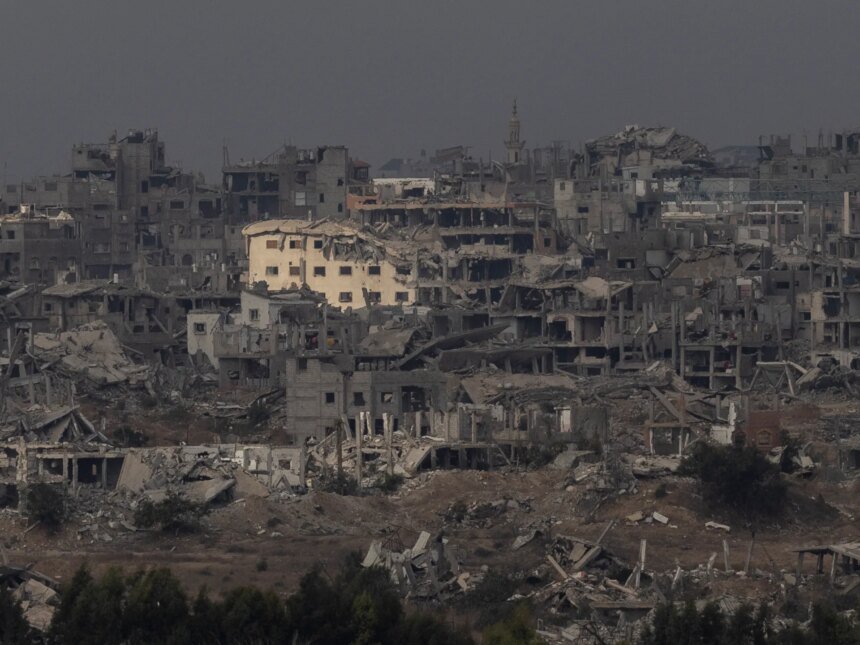
It is noteworthy that the current ceasefire agreement came two years after the genocidal war that began in October 2023, which left widespread destruction affecting 90% of the civilian infrastructure in the Strip, amid international estimates that the cost of reconstruction exceeds 70 billion dollars.