

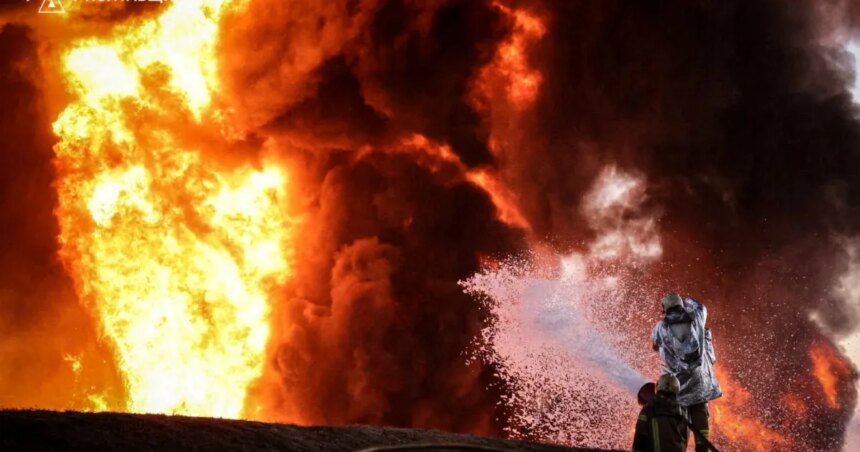
The recent Russian air strike on the Ukrainian capital, Kiev, appears to be one of the most intense and effective attacks since the outbreak of the war, not only with the size of the ammunition used and the wide scope of targeting, but also with the human losses and damage it caused to vital civilian structures.
This attack comes in the context of an accelerating escalation between Moscow and Kiev, where military calculations overlap with political messages, making its repercussions go beyond the immediate field to reshaping existing deterrence equations.
The attack, which the Ukrainian authorities described as “the largest on the capital,” raised questions about the nature of the current escalation and the limits of deterrence between Russia and Ukraine.
In light of a war that has entered its fifth year, there are increasing indications that the conflict is moving into a more complex stage based on mutual attrition and expanding the scope of strikes within the military and civilian depths, which reduces the possibilities of calm.
This report, in a “question and answer” format, monitors the latest field, political and diplomatic developments in the course of the war between Moscow and Kiev, in light of the escalation of mutual strikes and the intensification of international movements aimed at containing the escalation, and the accompanying clear discrepancy in the positions of the parties concerned regarding the chances of calm and the conditions for any possible settlement.
Why was the scale and nature of the latest Russian attack exceptional?
The Russian attack was distinguished first by the unprecedented amount of pyrotechnic means used. According to the Ukrainian Air Force, Russia launched about 496 drones and 74 missiles, including ballistic missiles that are difficult to intercept.
The use of glide bombs and relatively cheap drones allowed Moscow to carry out long-range strikes without exposing its warplanes to direct danger, which doubled the pressure on Ukrainian defenses.
The attack came after Ukrainian strikes that targeted facilities inside Russia, which places it within the context of mutual deterrence and not an isolated operation.
What is the extent of the civilian losses and damage caused by the attack?
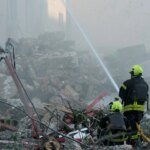
Official data indicate that the death toll in Kiev has risen to 27 people, and 91 others have been injured, with some missing people under the rubble.
Kiev Mayor Vitaly Klycho described the Russian attack as the largest on the capital since the start of the war
The damage was not limited to human lives, but included vital civilian structures. The Red Cross announced the destruction of a warehouse containing 320,000 units of humanitarian aid, in addition to the burning of about 800,000 books in a publishing house that was bombed.
A building containing European Union diplomatic offices was also damaged, although the safety of the crews was confirmed.
These losses reflect the expansion of the scope of targeting to include civilian and logistical infrastructure, and not just military targets.

What is the context of the attack?
The attack came shortly after Ukraine carried out strikes inside Russian territory, targeting an oil refinery and a weapons factory.
According to the Russian “Novorossia” website, the United States was aware of the raid 3 days ago, and warned Kiev in advance, but this information was not officially confirmed by the parties concerned.
How did Russia justify this escalation?
The official Russian position, through Kremlin spokesman Dmitry Peskov, stressed that Moscow will continue to “increase pressure on the Kiev regime” to achieve its military and political goals.
On the other hand, some Russian analyzes, according to the Russian “Novorossia” website, promote the idea that the strike carries a symbolic dimension as much as it is a practical one, aiming to demonstrate Russia’s ability to respond to the Ukrainian targeting of infrastructure within its territory, especially energy facilities.
Some Russian military experts pointed out that the advance warnings that preceded the attack raise questions about the nature of the military decision, and whether it carried political messages rather than being a large-scale destruction operation, especially in light of the continued use of precision weapons in a crowded urban environment.
What was the international position on the attack?
United Nations Secretary-General António Guterres condemned the recent Russian attacks, reiterating the call for a ceasefire.
Meanwhile, his spokesman Stephane Dujarric considered that attacks against civilians and civilian infrastructure – wherever they occur – are a grave violation of international humanitarian law, and should stop immediately.
At the European level, European Union foreign policy chief Kaya Kallas called for imposing additional sanctions on entities supporting the Russian military sector, as part of a policy of escalating economic pressure.
As for the American position, it came through an official who said that President Donald Trump seeks to reach an agreement to end the “senseless killing,” while emphasizing the continuation of diplomatic efforts to find a settlement.
The official told Agence France-Presse that Trump and his team worked hard to end the war between Russia and Ukraine, and he remains optimistic that a peace agreement will eventually be reached.
On the other hand, Ukraine stressed its right to respond, as Ukrainian President Volodymyr Zelensky stressed – during an inspection tour of the affected sites – that targeting civilians aims to break society and weaken the home front, which will never happen, as he put it.
According to observers, the recent Russian strike on Kiev reveals a qualitative shift in the nature of the war, as military considerations intersect with political messages and mutual responses, in light of the increasing reliance on drones, ballistic missiles, and glide bombs.
As the scope of targeting expands to include civilians and infrastructure, the war appears closer to a long pattern of attrition, which places international parties facing increasing challenges to contain the escalation and prevent it from sliding into broader levels of instability.