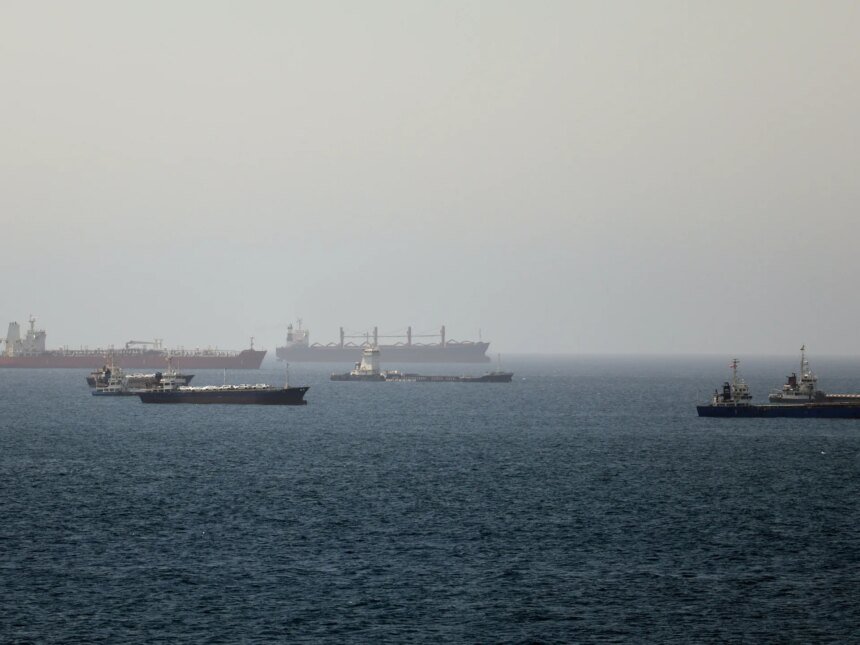
South Korean President Lee Jae-myung announced – in a statement reported by Reuters – that all South Korean ships, except for two, had left the Strait of Hormuz, after weeks of navigational turmoil that followed the outbreak of the US-Israeli war on Iran.
An analysis conducted by the open source unit in the Al Jazeera Navigation Data Network showed that 28 ships operated by South Korean companies left the Strait of Hormuz during the period from May 20 to June 29.
Read also
list of 4 itemsend of list
The data reveal that the exit movement did not occur all at once, but rather came gradually in successive waves, after a period in which ships were stuck inside the Gulf waters, or their exit was delayed due to the closure of the strait and disruption of transit rules.

Hard exit
The unit analyzed the routes of ships operated by South Korean-based companies, which began to leave the Gulf waters more than 100 days after the outbreak of the US-Israeli war on Iran on February 28.
According to data from the Marine Traffic platform, the departing ships included 18 oil tankers, two liquefied gas tankers, 7 cargo ships, and a passenger ship.
The data shows a remarkable density of departures during limited days. Between June 23 and 25 alone, 17 ships left the Strait of Hormuz, an indication of the acceleration of transit traffic after weeks of disruption and uncertainty.
During this June, 26 Korean ships crossed the strait. Ships operated by SINOKOR MARITIME CO LTD and HMM CO LTD, registered in South Korea, recorded the largest percentage of transiting vessels, with 9 ships for the two companies.
Two ships inside
The data shows the continued presence of the two oil tankers, “Rotterdam Energy” and “Belgium B,” in the waters of the Gulf until now, as their navigation data indicate that they are positioned at points far from the exit area from the Strait of Hormuz.

The tanker “Belgium B” crossed the Strait of Hormuz on June 28, coming from the Indian port of Vadinar, while the tanker “Rotterdam Energy” crossed the Strait on June 28, coming from the same port.
No Korean ship crossed the strait today, according to the unit’s daily monitoring of transit movement, as 14 ships crossed the strait, including 4 that took the Omani route.
On the 13th day of the signing of the memorandum of understanding between Washington and Tehran, and 123 days after the outbreak of the war, the Iranian Deputy Foreign Minister stated that they had informed the Sultanate of Oman of the necessity of changing routes in the Strait of Hormuz, stressing that the situation there would not return to what it was before the war.
Korean energy crisis
The movement of Korean ships out of Hormuz is of particular importance due to South Korea’s heavy dependence on energy supplies coming through the strait.
South Korea depends on a large percentage of its oil imports that pass through the Strait of Hormuz, which has made the closure of the Strait or disruption of transit through it a direct economic crisis for the Korean government and companies, and prompted Seoul to take exceptional measures to support energy supplies and curb the rise in oil prices, including measures to reduce the impact of fuel price fluctuations.
Hormuz after the memorandum of understanding
The exit movement of Korean ships comes at a time when the future of navigation in the Strait of Hormuz is still a subject of negotiation and debate.
On the 13th day of the signing of the memorandum of understanding between Washington and Tehran, and 123 days after the outbreak of the war, the Iranian Deputy Foreign Minister stated that his country informed the Sultanate of Oman of the necessity of changing routes in the Strait of Hormuz, stressing that the situation in the Strait will not return to what it was before the war.
This coincided with Iranian warnings to commercial ships against using routes not approved by Tehran, and with Iranian-Omani talks regarding the management of the strait, in light of the continuing dispute over safe passages and Oman’s role in organizing transit.