


In 2024, a comprehensive systematic study published by Gastroenterology Research collected data from more than 188,000 participants from different regions around the world, concluding that IBS affects between 10 and 15% of the Earth’s population.
In Arab countries, the prevalence varies widely between studies. A systematic review in 2024 that included 52 studies from seven Arab countries recorded rates ranging between 7.6% and more than 27%, with an average approaching a quarter in some regions, which makes it one of the most common digestive disorders in the world, and one of the most costly to the health system, as visitors to digestive system clinics constitute between 20% and 50% of the total number of visitors.
However, what makes this disorder striking is not its prevalence alone, but rather the complex nature of its causes and mechanisms. Not long ago, irritable bowel syndrome was classified as a type of functional gastrointestinal disorder, that is, one for which no clear organic causes were identified.
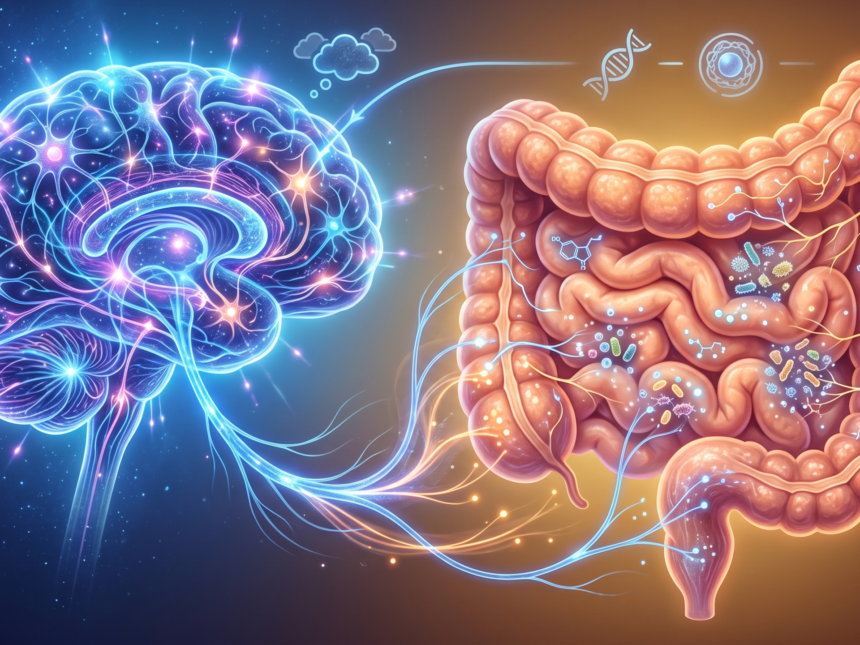
Today, the scientific vision has become broader and deeper. Irritable bowel syndrome is a complex condition in which nerves, immunity, the microbiome, and the psychological state are intertwined in one integrated system that researchers call the gut-brain axis.
Cellular structure: When small is great
To understand what happens in irritable bowel syndrome, we must pause at the basic architectural unit in the intestine, which is the intestinal cell. The size of this cell does not exceed a few tens of micrometres, meaning that it lies completely outside the limits of ocular vision, yet it involves extremely precise geometry.
At its heart lies the nucleus, carrying the genetic code (DNA) that regulates the production of proteins and enzymes necessary to perform its main task, which is to absorb nutrients and transport them to the body.
These cells combine with millions of others to form a thin lining that covers a huge internal area, characterized by tiny protrusions known as microvilli and fimbriae, which work to multiply the absorption and exchange surface in an amazing way. When the function of this lining is disturbed, not in terms of structure but in terms of nervous organization, irritable bowel syndrome begins to appear.

Brain-gut axis: the second brain
The human digestive system has more than 500 million neurons that form an independent network known as the enteric nervous system, which has led neuroscientists to call the intestine the “second brain.” This network does not wait for the brain’s commands to operate, but rather communicates with it in a continuous dialogue that goes in both directions via the vagus nerve, hormones, and neurotransmitters.
At the center of this conversation stands serotonin, the neurotransmitter commonly associated with mood and happiness. But the most amazing scientific fact is that about 90 to 95% of all serotonin in the body is not produced in the brain, but in specialized cells called chromaffin cells in the intestinal wall.
This serotonin is the main regulator of bowel movement and internal sensation, and it is the bridge that transforms feelings and psychological stress into tangible digestive symptoms.
When cortisol rises in response to stress, the balance of serotonin in the intestines changes, so intestinal motility speeds up or slows down, and internal pain sensitivity increases. This mechanism explains why many people notice that their symptoms worsen during times of acute psychological stress, such as work schedules, exams, or emotional crises.

Causes: A combination of factors, not a single cause
The most common mistake in understanding irritable bowel syndrome is looking for a single cause that explains it. While scientific reality proves that the disease is caused by a combination of multiple factors, the weight of each of them may vary from one patient to another.
- Psychological stress and emotional state
A study published in Scientific Reports in 2022 revealed that serotonin levels in the blood are closely related to psychological distress in patients with irritable bowel syndrome, and that disruption in the microbiome contributes to changing levels of this neurotransmitter.
This is not a coincidence, but rather a direct manifestation of the brain-gut axis in its work. Chronic stress reprograms the gut response, making it more sensitive and more volatile.

- Microbiome disruption
The human intestine contains more than a trillion microorganisms that make up what is known as the gut microbiome, a delicate ecosystem that contributes to digestion, immune regulation, and the production of a number of neurotransmitters, including serotonin itself.
When this balance is disturbed by unbalanced nutrition, excessive use of antibiotics, or chronic stress, the way the intestine responds to normal stimuli changes and symptoms become more severe.
Therefore, maintaining a healthy microbiome does not require magic recipes, but rather sustainable habits, represented by diversifying the diet with vegetables, legumes, and whole grains, adequate sleep, regular physical activity, and avoiding antibiotics when they are not a real medical necessity.
- Visceral hypersensitivity
Some patients with irritable bowel syndrome suffer from what doctors call “visceral hypersensitivity,” a condition that makes the intestinal nerves more responsive to normal stimuli such as gas and normal bowel movement, translating into severe pain or discomfort that is disproportionate to the magnitude of the stimulus.
Genetics, psychological stress, and the composition of the microbiome interact in this phenomenon, which explains the great variation in the severity of symptoms between one patient and another.
- Low-grade inflammation
Although irritable bowel syndrome is not classified as an inflammatory disease like Crohn’s disease or ulcerative colitis, a number of studies have revealed the presence of mild, invisible inflammation in some patients, manifested by a slight increase in some inflammatory indicators.
This inflammation likely follows a previous intestinal infection or results from an imbalance in the microbiome, which keeps the immune system in a constant, mild state of activation that compounds gut sensitivity.
- Unbalanced nutrition
Nutrition plays a dual role: on the one hand, it directly triggers symptoms, and on the other hand, it shapes the environment of the microbiome in the long term. A group of short-chain, rapidly fermentable carbohydrates known as FODMAPs, such as lactose, fructose, and fructans, are slowly absorbed in the small intestine in some people and ferment in the colon, causing gas, bloating, and painful cramps.
Added to it are heavy fats and caffeine, which directly stimulate bowel movements.
Symptoms: not only intestinal
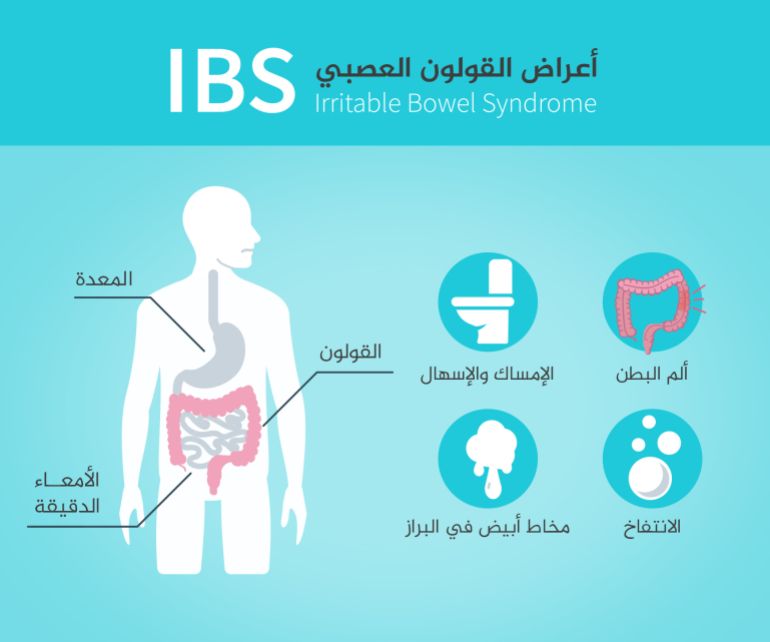
The clinical picture of irritable bowel syndrome usually begins with three central symptoms:
- Recurring abdominal pain that comes in the form of cramps, cramps, or a feeling of pressure, and usually improves after defecation.
- Disorder in the bowel habit, ranging from chronic constipation to recurrent diarrhea or alternating between them.
- Bloating accompanied by gases caused by food fermentation, slow intestinal motility, and nerve sensitivity.
But what really distinguishes irritable bowel syndrome is its extension beyond the intestinal walls. Many patients suffer from general fatigue, chronic headaches, sleep disturbances, anxiety, and psychological tension. This is not a coincidence, but a direct reflection of a disruption of the brain-gut axis in both directions.
Studies indicate that patients with irritable bowel syndrome lose an average of 13.4 days of work or study annually, compared to 4.9 days for people without the condition. A study published in the American Journal of Managed Care indicates that illness is associated with a 21% decrease in productivity at work, which equates to fewer hours than four full workdays per week.
Statistics reveal that the disease affects women at a rate ranging between 1.5 and 3 times more than it affects men, which is partly related to hormonal effects on bowel movement and sensitivity, as in most cases symptoms escalate during the menstrual cycle and decrease after menopause.

Diagnosis: science of criteria, not search for evidence
Many patients remain puzzled when the doctor tells them that their tests are normal and their bowel images are fine, but the pain and symptoms persist. This confusion is understandable, but it stems from a fundamental misunderstanding. Irritable bowel syndrome is not a diagnosis of exclusion, as was previously thought. Rather, it is a disorder with its own independent clinical identity, precisely defined in international standards known as the Rome IV criteria.
These criteria for diagnosing irritable bowel syndrome require the presence of recurrent abdominal pain at least one day per week during the last three months, with at least two of the following conditions being met: association of pain with defecation, a change in the number of times the stool is defecated, or a change in the shape and consistency of the stool.
In addition, it is required that the symptoms began at least six months before the diagnosis was made, and that the treating physician excludes other organic diseases that may explain this clinical picture.
Is irritable bowel syndrome dangerous?
Organically speaking, the answer is no. Irritable bowel syndrome does not turn into cancer, does not cause erosion in the intestines, and does not lead to organ failure of any kind. In this, it is radically different from inflammatory intestinal diseases such as Crohn’s disease and ulcerative colitis.
But this fact does not mean that its influence is limited. On the psychological and functional levels, irritable bowel syndrome constitutes a real and exhausting burden because it is chronic, repetitive, and linked to the psychological state in a spiral that may be difficult to break. The physical symptoms exacerbate anxiety, and anxiety ignites the symptoms again.
Treatment: an integrated system, not a single medication
The complexity of the causes of irritable bowel syndrome is directly reflected in the approach to its treatment; There is no magic pill that will end it, but there is an integrated system that enables the patient to regain control of his life.
- Lifestyle modification
This is the first pillar and has the most long-term impact. Reducing stress, improving sleep quality, and exercising regularly are not entertainment tips, but rather documented therapeutic interventions that directly affect the balance of the brain-gut axis, the composition of the microbiome, and serotonin levels in the digestive system.
- Clinical Nutrition (FODMAP Diet)
The FODMAP diet is one of the most studied dietary interventions in this area. It is based on reducing short-chain carbohydrates that ferment quickly, such as lactose in some dairy products, fructose in fruits and honey, fructans in wheat, onions and garlic, and sugars such as sorbitol and mannitol. The goal of the first stage is to calm the symptoms, and then these foods are gradually reintroduced in a second stage to determine the personal triggers for each patient, because what triggers the symptoms of one person may not affect another.
Medications vary depending on the prevailing type of symptoms: antispasmodics to relieve pain, laxatives in cases of chronic constipation, antidiarrheals when diarrhea is the predominant feature, as well as medications that affect the nervous system in cases of severe allergies. The treating physician remains the first reference in determining the appropriate medication plan for each patient.
- Behavioral psychotherapy
Cognitive-behavioral therapy has proven, in multiple clinical trials, documented effectiveness in alleviating the symptoms of irritable bowel syndrome, both psychologically and directly physiologically. It reduces the body’s stress response, recalibrates pain sensitivity in the central nervous system, and improves the brain’s interaction with signals coming from the intestines.
- Probiotics
The microbiome often does not need the addition of new bacteria as much as it needs a healthy environment that allows naturally occurring beneficial bacteria to grow and thrive, which is achieved through a varied diet and a healthy lifestyle.
As for probiotic supplements (beneficial bacteria), doctors recommend them in certain cases, such as some intestinal disorders or following the use of antibiotics. The benefit varies significantly depending on the type of bacterial strain and the condition of each patient.