Bogotá – He says that the greatest victory for any society is to ensure that its children do not have to live through war. For him, this political idea is inseparable from his personal experience.
He is Jorge Suarez, the son of the former leader of the Revolutionary Armed Forces of Colombia (FARC), Victor Suarez, known by the nickname “Mono Jujuy.” He grew up in Colombia, a country where armed conflict has been part of daily life for decades.
He said in statements to Al Jazeera Net that the threats to his family from right-wing paramilitary groups pushed him, as happened with many Colombian young men, to join the ranks of the armed movement.

Betting on peace
After the signing of the historic peace agreement between the state and the FARC in 2016, Suarez took a different path. He studied social communication, then public administration, before completing a master’s degree in government and public policy. Today, he defines himself as one of the signatories of the agreement who chose to work in the political and civil fields after giving up weapons.
He believes that the peace agreement gave him an opportunity to rebuild his life, but he explains that the most important goal is to ensure that other children and young people do not find themselves faced with the same choices that the conflict imposed on his generation.
From this standpoint, he looks at the “comprehensive peace” policy adopted by outgoing leftist President Gustavo Petro. He points out that the most important thing his government achieved was keeping the peace file and placing the 2016 agreement among the state’s priorities. He adds: “Peace must be viewed as a state policy, not a project linked to a single government.”
But the armed conflict that Colombia knows today is no longer the same one that led to the peace agreement that Jorge Suarez knew.
Complex scene
Javier Flores, Director of the Conflict and Security Program at the Ideas for Peace Foundation (FIP), recalled in a statement to Al Jazeera Net that, over many decades, the conflict was dominated by large rebel groups with clear political goals and relatively hierarchical organizational structures. The agreement with the FARC put an end to the conflict with the largest armed movement in the country and contributed to significantly reducing a number of violence indicators.
But Flores stresses that the agreement was not designed to address all forms of organized violence in Colombia, as many regions continued to suffer from illicit economies, weak state institutions and difficulties in accessing justice, which allowed other organizations to fill the void left by the FARC’s withdrawal.
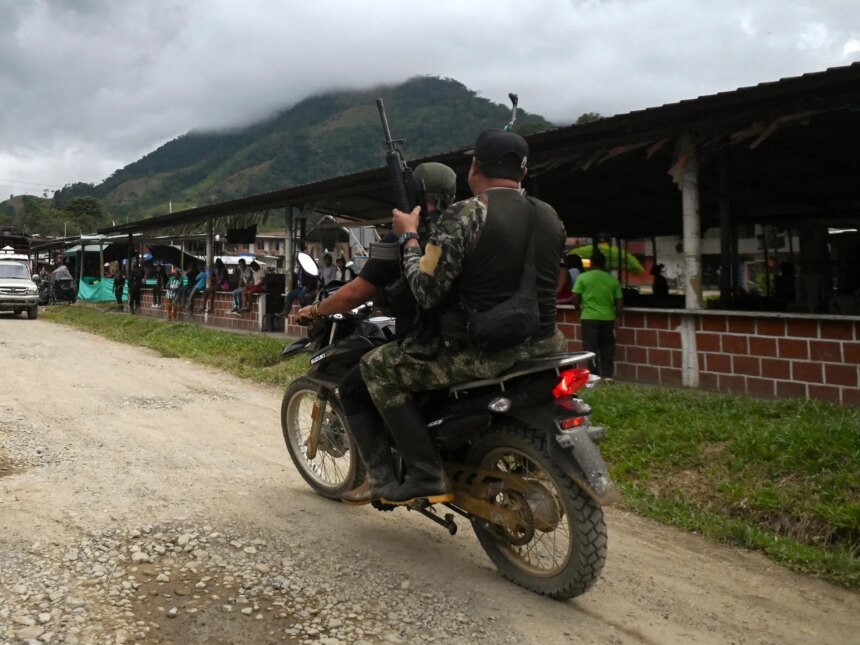
He says the country has moved from a conflict centered around a dominant armed actor to a “more fragmented and complex” scene. In recent years, these transformations have deepened with the emergence of smaller, more flexible and adaptable groups.
These organizations do not rely on drug trafficking alone, but rather – according to him – combine multiple activities that include illegal mining, extortion, smuggling, migrant smuggling, money laundering, and other legal and illegal activities.
Flores believes that the main security challenge in Colombia is no longer limited to the military confrontation with armed groups, but is also represented by the struggle over control of territory and the ability to manage large areas of the country.
In this context, the “comprehensive peace” policy launched by President Petro emerged, with the aim of opening simultaneous negotiation paths with a number of armed groups in an effort to reduce levels of violence and reach negotiated solutions to the conflict. Petro bet that dialogue and negotiation represented the main way out of this situation.

Limited results
However, the results, as Flores confirmed to Al Jazeera Net, were more limited than hoped. According to him, this is due to an attempt to negotiate at the same time with organizations that differ radically in their structure, goals, level of cohesion, and interests.
He says that some groups showed a willingness to explore negotiation opportunities, while others exploited that space to expand their geographical influence, attract new elements, enhance their illicit resources, and consolidate their control over local communities.
With the transfer of power to the right-wing elected president, Abelardo de la Spiria, the security file may witness a major shift. De La Spiria presents a program that he describes as an advanced version of the security policy that was implemented during the rule of former President Alvaro Uribe, and says that it aims to regain control of the territory within 90 days.

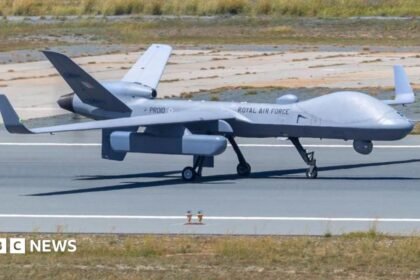
The program includes what he calls the “Colombia Plan 2.0,” relying on drones and artificial intelligence, in addition to the construction of 10 high-security prisons modeled on the model of El Salvador’s President Nayib Bukela.
In the drug file, it calls for the elimination of about 330,000 hectares of coca plantations through aerial spraying, manual removal of crops, and the pursuit of financial networks linked to the drug trade.
He also refuses to negotiate with armed groups, and pledges to end the “comprehensive peace” policy and replace it with direct military operations, in addition to dismantling militias and armed structures parallel to the state and enhancing security cooperation with the United States and Israel.

Logical goals
For his part, Leonardo Gonzalez, Director of the Colombian Institute for Development and Peace Studies (Indipaz), in an interview with Al Jazeera Net, believes that some of these measures are applicable and may achieve important results if implemented effectively.
He pointed out that strengthening criminal investigation capabilities, pursuing sources of funding for illegal organizations, improving coordination between state institutions, providing greater protection for social leaders and threatened communities, in addition to restoring government presence in strategic areas, are all “logical and necessary” goals.
At the same time, he warns against reducing the security issue to a military approach alone. In his estimation, the Colombian experience shows that sustainable security also depends on the state’s ability to establish its legitimacy and actual presence in areas where groups and gangs have found the appropriate conditions to grow and reproduce themselves.
In a statement to Al Jazeera Net, political analyst Jairo Estrada paints a more pessimistic picture. According to his opinion, the president-elect’s policy goes beyond the internal dimension of the conflict and is also linked to broader geopolitical options.
He believes that this trend may be accompanied by greater openness to American and Israeli interests in strategic sectors, such as energy, minerals, and rare resources. He explained that Colombia is viewed in this context as the most prominent strategic ally of the United States in the region, and the only global partner of the North Atlantic Treaty Organization (NATO) in Latin America.
Gloomy prospects
Estrada believes that the prospects for peace in Colombia look “quite bleak.” He considers that the vision adopted by the president-elect intersects, by virtue of his ideological affinity with US President Donald Trump, with the concept of “peace through strength.”
According to him, one should not expect merely security cooperation between Colombia on the one hand and the United States and Israel on the other, but rather “increasing interference, direct and indirect, by the two countries in the country’s internal war.”
He says that Washington and Tel Aviv will become “suppliers of weapons, technology used in war, and intelligence information.” He adds that it is too early to determine all the dimensions of this intervention or its consequences, but he believes that the most likely outcome is “escalation of the armed confrontation.”
Colombia has changed since 2016, but it is not yet free of violence. As the country prepares for a new political phase and a different approach to the security file, Colombians are awaiting whether the new promises will actually be reflected in people’s lives and translated into security and stability on the ground.
As for Jorge Suarez, a signatory of the 2016 peace agreement, the debate about negotiation or military operations is still measured by one question: Will these policies succeed in preventing a new generation from entering the war?