Published on 6/30/2026
|
Last update: 08:01 (Mecca time)
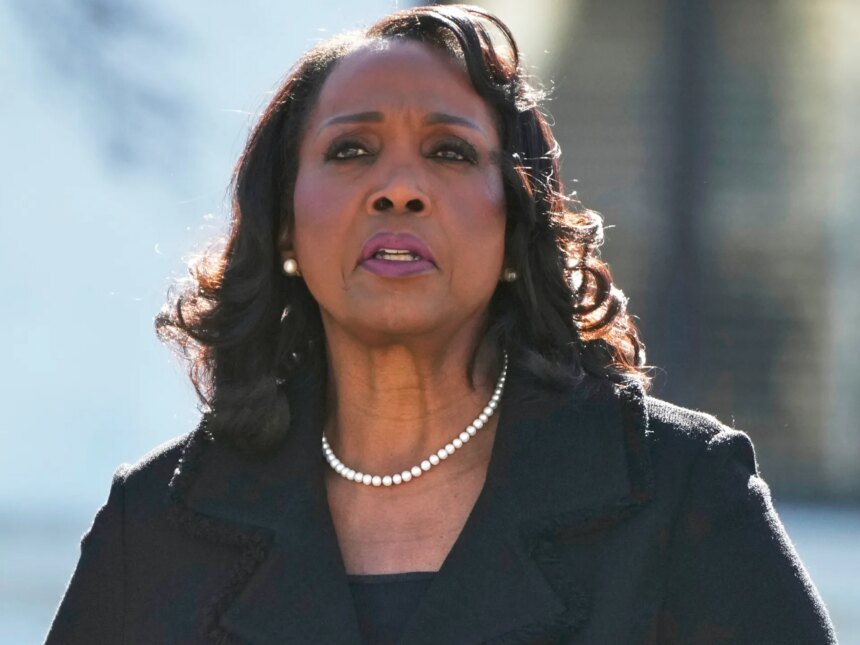
In a ruling considered one of the most important judicial decisions affecting American monetary policy in decades, the United States Supreme Court established the principle of the independence of the Federal Reserve Board from the executive authority, after it rejected US President Donald Trump’s attempt to dismiss Federal Reserve Governor Lisa Cook, stressing that members of the Board cannot be removed without following the stipulated legal procedures.
The Supreme Court voted by a majority of five judges to four to keep Lisa Cook in her position temporarily, rejecting the Trump administration’s request to allow her dismissal while the lawsuit it filed to challenge the decision to dismiss her continues.
Read also
list of 2 itemsend of list
Chief Justice John Roberts, joined by conservative Justice Brett Kavanaugh in addition to the three liberal justices, wrote that the Fed’s design is based on independence from political pressures, stressing that monetary policy “should not be subject to political interference.”
Roberts explained that it was Congress that granted the Federal Reserve governors long terms extending to 14 years, stipulating that they may not be removed except for a “legitimate reason,” which gives the institution a great deal of stability and independence from changing political administrations.
He added that any amendment to this system should come from Congress and not from the executive authority or the courts.
Observers believe that Trump’s success in the case would have set a legal precedent that might open the way for the dismissal of other members of the Board of Governors who do not agree with his views on interest rates, allowing the president to reshape the Council by appointing new members.
Trump had previously threatened to fire former Federal Reserve Chairman Jerome Powell, due to his refusal to respond to his demands to lower interest rates, before he later backed down from those threats.

Temporary decision
Although the ruling was considered a clear victory for the independence of the Federal Reserve, it did not grant members of the Board of Governors absolute immunity from dismissal.
The court explained that it decided the case on a narrow procedural basis, considering that the Trump administration did not give Cook sufficient legal notice or opportunity to defend itself before issuing the impeachment decision.
Therefore, the court kept the door open for the administration to try again in the future if it adheres to the legal procedures and provides reasons that meet the requirements of the law, which means that the dispute may return again to the Supreme Court at a later stage.
Under the decision, Cook will remain in her position while the case is pending before the courts, a process that may extend for months or even years, according to what the Wall Street Journal indicated.
Fraud allegations
The case is due to accusations leveled by the Trump administration against Cook of obtaining favorable real estate financing terms by registering two homes in the states of Michigan and Georgia as her primary residence when applying for a mortgage in 2021, before joining the Federal Reserve Board.
Cook categorically denied these accusations, stressing that they are based on “selected and incomplete excerpts” from the documents, and that no criminal charges have been brought against her so far.
She said after the ruling was issued that the case “was never related to mortgage documents,” but rather was an attempt to exert political pressure because of her refusal to make monetary decisions in response to the wishes of the White House.
The issue comes in the context of ongoing tension between Trump and the Federal Reserve over the direction of interest rates.
Since his return to the White House, Trump has intensified his calls to lower interest rates to support economic activity, while central bank officials have stuck to making their decisions based on economic data and inflation rates.
During the first meeting of the Monetary Policy Committee headed by the new Chairman of the Federal Reserve, Kevin Warsh, the central bank decided to keep interest rates unchanged, despite the continuing political pressures, at a time when the acceleration of inflation raised concerns among some officials about the possible need to tighten monetary policy in the coming months if price pressures continue.
Observers believe that allowing the president to dismiss members of the Board of Governors due to disagreements over monetary policy would have set an unprecedented precedent that could affect the markets’ confidence in the independence of the US Central Bank.

Who is Lisa Cook?
Lisa Cook is one of the most prominent American economists, and has been a member of the Federal Reserve Board of Governors since 2022 after being appointed by former President Joe Biden for a term that extends until 2038. She is the first black woman to join the Board of Governors in the history of the US central bank.
Cook holds a doctorate in economics from the University of California – Berkeley, and worked as a professor of economics at Michigan State University. She also held positions in the US Department of the Treasury, worked as an economic advisor in the Council of Economic Advisers during the administration of former President Barack Obama, and participated in his transition teams for both Obama and Biden.
Her research has focused on the work of central banks, financial crises, innovation, and the impact of inequality, violence, and discrimination on economic growth and productivity, and she has also emerged within the Federal Reserve as one of the voices interested in the ramifications of artificial intelligence on the economy and inflation.
Since joining the Board of Governors, she has been known for her positions in support of the independence of monetary policy, which put her at the heart of the confrontation with the Trump administration regarding interest rate trends and the role of the central bank.
Federal exception
On the same day, the court issued another ruling that gave the US President broader authority to dismiss members of independent regulatory bodies, as it upheld Trump’s decision to dismiss Rebecca Kelly Slaughter, a Democratic member of the Federal Trade Commission.
The decision represents a retreat from a judicial precedent dating back to 1935 that gave Congress the power to protect officials of some independent bodies from presidential dismissal except in specific cases.
But at the same time, the court stressed that the Federal Reserve differs from those institutions because of its direct responsibility for managing monetary policy, which justifies its enjoyment of a higher degree of institutional independence.
Observers believe that the two rulings together redraw the boundaries of executive authority in the United States, as they expand the president’s influence over most regulatory institutions, while keeping the central bank away from direct political interference.
Why does decision matter to markets?
Investors view the independence of central banks as one of the most important pillars of financial market stability, as it helps make monetary policy decisions away from short-term political pressures, especially with regard to interest rates and combating inflation.
Markets were closely monitoring the issue, fearing that granting the president broad authority to dismiss members of the Federal Reserve would lead to increased political interference in the central bank’s decisions, which could raise levels of uncertainty and affect investors’ expectations about inflation and interest rates.
Although the court did not grant absolute immunity to the Federal Reserve governors, it stressed that any attempt to isolate them must be based on clear legal reasons, and must pass through procedures that guarantee the right of defense and judicial review, which is a strong message confirming the continued independence of the most influential monetary institution in the world.