


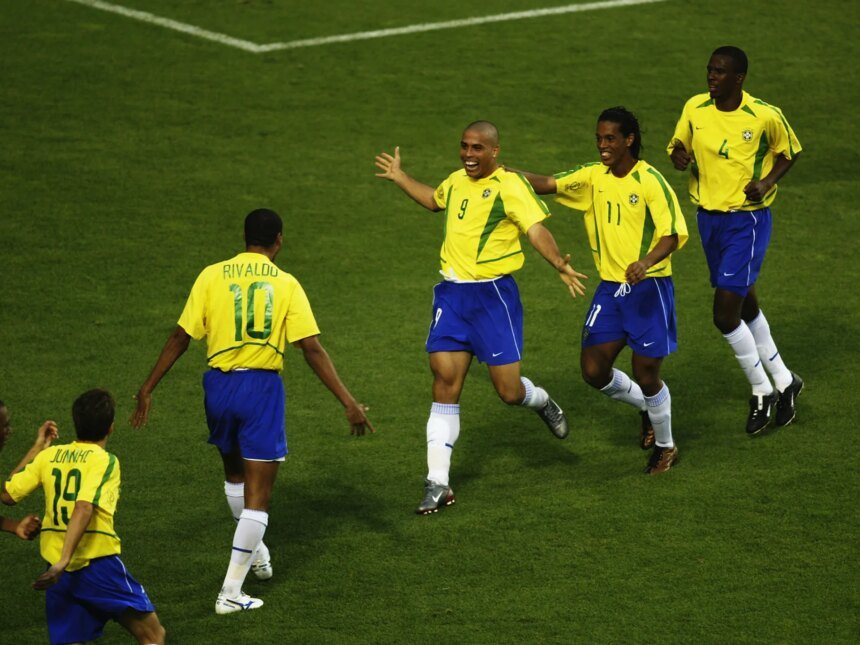
Throughout its long history, the World Cup was not just a coronation tournament, but rather it turned into a stage for the birth of attacking legends that changed the face of football forever. Certain teams remained a milestone in football memory thanks to their extraordinary attacking power. Starting from the “Hungarian surgeons” in the 1950s, through the “Orange Revolution” of the Netherlands in the 1970s, all the way to the Brazilian “samba magicians” in 2002.
Hungary 1954: A golden generation ahead of its time
The Hungarian national team entered the 1954 World Cup in Switzerland as one of the strongest teams in the world, led by the legend Ferenc Puskas and a group of players who presented revolutionary attacking football. The Hungarian national team destroyed its opponents at the beginning of the tournament, scoring 17 goals in only the first two matches, before its total number of goals reached 25 goals in 4 matches.
Read also
list of 2 items
end of list
Despite this offensive dominance, the end was harsh, as the final was lost to West Germany with a score of 3-2 after being ahead 2-0, in one of the most famous finals surprises in history. However, this team remained a symbol of early attacking football.
Brazil 1958: The birth of a legend named Pele
In the 1958 World Cup in Sweden, the world began to recognize a young talent who was only 17 years old: Pele. Despite starting from the bench, he quickly established himself alongside Fava, Garrincha and Didi, creating together one of the most creative attacking lines in the history of the game.
Brazil won its first title after a huge victory in the final over Sweden 5-2, with Pele scoring two goals and announcing the beginning of a legend that will change football forever.
Brazil 1970: football perfection
The Brazilian national team in the 1970 World Cup is considered one of the greatest teams in football history. Led by Pele, Rivelino, Tostao, Gerson and Garrincha, the team played a magical attacking ball that combined skill, speed and harmony.
This generation presented a legendary performance that culminated in a huge victory in the final over Italy 4-1, in a match that embodied the pinnacle of offensive creativity in world football.
advertisement
Netherlands 1974: The Total Football Revolution
The Netherlands national team, led by Johan Cruyff, presented a tactical revolution that changed the concepts of football. Total football depended on all players moving in all directions, with everyone attacking and everyone defending.
The Dutch reached the final after strong performances, but lost to West Germany 2-1, despite taking an early lead. However, their artistic influence outweighed the result, and they became a symbol of modern football.
Brazil 2002: The return of the phenomenon Ronaldo
In the 2002 World Cup in Korea and Japan, Ronaldo returned to the top after a long struggle with injuries, leading Brazil, along with Rivaldo and Ronaldinho, to the fifth title. Ronaldo scored 8 goals, including a brace in the final against Germany, to lead the Samba team to a new title and reaffirm the offensive strength of the Brazilian school.