Published on 6/30/2026
Europe is heading toward an unprecedented strategic transformation, driven by declining confidence in the United States and the escalation of the Russian threat, on a path that observers believe may end decades of security dependence on Washington and establish a more independent European system in defense and foreign policy.
An analysis published by Foreign Affairs magazine believes that the return of US President Donald Trump to the White House in 2025 marked a turning point in transatlantic relations, as Europe was subjected to “insulting, belittling, and marginalization,” and became “Trump’s favorite target.” But the magazine confirms that Washington made a mistake in estimating the extent of the transformations taking place within the continent.
The magazine says that the Europeans realized for the first time in decades that their model based on “wealth without military power, influence without sacrifices, and protection without obligations” was no longer sustainable, which prompted them to formulate a new grand strategy based on taking responsibility for their security themselves.
Foreign Affairs is based on opinion polls showing that 77% of Europeans consider the Russian war on Ukraine a direct threat to the survival of Europe, while only 11% no longer view Washington as a reliable ally, a significant decline compared to previous years. The majority of Europeans also believe that Washington may not defend them if they are attacked.

Principled realism
The magazine indicates that this shift has been reflected in public opinion, as a majority in several European countries supports increasing defense spending, while 47% of citizens support the issuance of joint European debt to finance defense projects, an idea that was until recently considered politically non-negotiable. Calls are also increasing to reduce dependence on American weapons and purchase European military equipment.
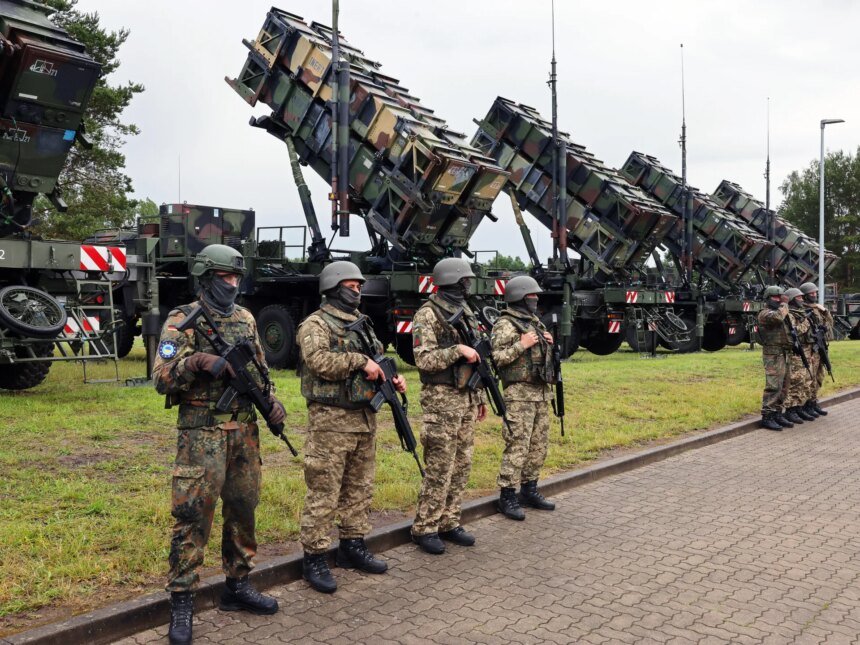
Foreign Affairs explains that Germany is leading the European rearmament process, after it represents about a quarter of the European Union’s defense spending, with expectations that its military budget will rise to about $172 billion by 2029. At the same time, Berlin is expanding its capabilities in the defense industries, especially in the field of drones, in cooperation with major European companies.
The shift is not limited to military spending, but extends to restoring compulsory military service or expanding voluntary conscription in a number of countries, including Germany, Sweden, Croatia, and the Baltic states, in response to growing fears of Russia.
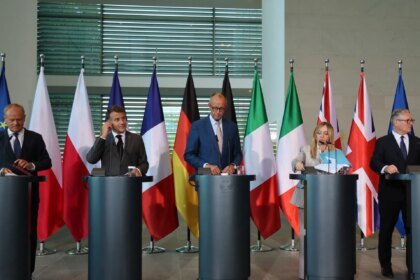
The magazine believes that the war in Ukraine prompted Europe to abandon its old conviction that trade and economic integration were sufficient to guarantee peace, to replace it with a vision based on what German Chancellor Friedrich Merz calls “principled realism,” which stems from the fact that the international system has become governed by the logic of force more than rules and laws.
The European Union may not be able to adopt a unified strategy due to internal differences, but this will not prevent the emergence of new defense blocs, such as the British-led Joint Intervention Force and French initiatives to strengthen the European nuclear deterrent.
A pragmatic partnership
In this context, Foreign Affairs expects that relations with the United States will continue, but in a different form, as “emotional friendship will turn into a pragmatic partnership,” as Europe seeks to build its independent defense capabilities inside and outside the North Atlantic Treaty Organization (NATO).
The magazine points out that the European Union may not be able to adopt a unified strategy due to internal disputes and the rise of parties skeptical of the European project, but this will not prevent the emergence of new European defense blocs, such as the Joint Intervention Force led by Britain, and French initiatives to strengthen the European nuclear deterrent.
Foreign Affairs concludes that waiting for Trump’s term to end is no longer a realistic option for the Europeans, because the war in Ukraine may shape the new balance of power before that, and any future American administration will give increased priority to confronting China in the Indo-Pacific region.
Therefore, the magazine believes that Europe has become convinced that it must have “its own answer” to security challenges, and that the era of complete dependence on the American umbrella is coming to an end, even if NATO remains in place in a different form.