Published on 6/29/2026
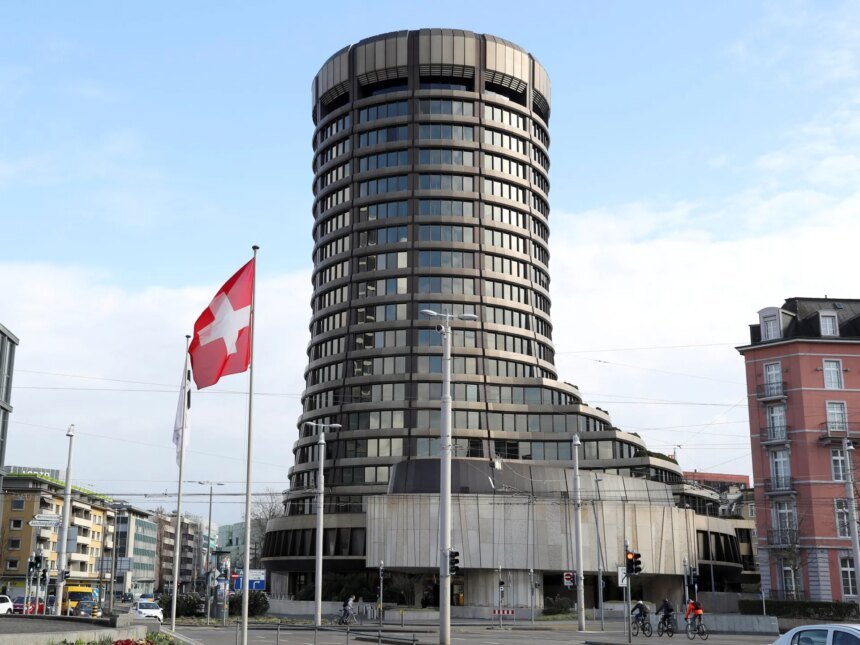
The Bank for International Settlements has warned that the global economy faces a phase of increasing risks arising from high levels of public debt, financial fragility, and continuing inflationary pressures, coupled with uncertainty associated with the investment boom in artificial intelligence.
The bank called – In his annual economic report issued yesterday, Sunday – Governments and central banks must adopt disciplined fiscal and monetary policies to maintain stability.
Read also
list of 4 itemsend of list
He explained that the global economy still shows relative strength, but this performance hides a complex set of weaknesses, including tense financial conditions, continuing supply shocks, and the possibility of inflation returning to high levels in a more sustainable manner.
“Policy measures must support each other to avoid fluctuations in the global economy,” said BIS Director General Pablo Hernandez de Cos. “Ultimately, success depends on sound financial and monetary foundations.”
Inflationary pressures and artificial intelligence
The report highlighted 4 main pressure points, most notably the return of inflationary pressures, warning that supply chain disruptions may lead to the consolidation of inflation expectations among households and companies, making it difficult for central banks to contain prices.
“The readiness to act if central banks notice stabilization in inflation expectations is the basic message we want to convey,” De Cos told reporters.
He added that the recent ceasefire between the United States and Iran, and the reopening of the Strait of Hormuz, represents “good news” because it spared the markets more extreme scenarios, but he indicated that the oil market may need time before it returns to its normal conditions.
Although the wave of investment in artificial intelligence has boosted confidence in the global economy, driven by expectations of rising productivity, the Bank for International Settlements has warned that this boom may carry with it risks similar to previous boom and bust cycles.
The report explained that intense competition and supply chain bottlenecks may push companies to overinvest, and rapid developments raise concerns regarding the labor market and the future of jobs.
The bank indicated that these transformations pose fundamental questions to central banks about how the working mechanisms of the economy will change, but De Cos considered that it is currently “unwise” to determine how monetary policies should respond to these developments.

High debt and financial fragility
The report found that rising asset valuations and the increasing reliance of financing artificial intelligence investments on debt and complex financing structures have contributed to increasing the fragility of financial markets, especially bond markets.
He also warned that public debt reaching record levels, along with the growing role of hedge funds with high leverage in sovereign debt markets, created what he described as “a new relationship between sovereign stability and financial stability,” which increases the possibility of markets being exposed to severe turmoil.
“This new relationship between financial stability and sovereign stability may mean more frequent and severe declines in the value of sovereign bonds,” said Frank Smits, acting head of the bank’s monetary and economic affairs department, adding that such fluctuations could lead to a rapid tightening of financial conditions.
Rising asset valuations, and the increasing reliance of financing AI investments on debt and complex financing structures, have contributed to increased fragility of financial markets.
For his part, De Cos stressed the need to accelerate the reduction of public debt levels, saying: “The message from the Bank for International Settlements stresses the necessity of accelerating the reduction of debt levels in major economies, because the reality is that debt today is high, and is financed through non-bank financial institutions.”
The Bank for International Settlements concluded its report by calling on policymakers to prioritize price stability, ensure financial sustainability, and strengthen oversight of non-bank financial institutions, as well as proceed with structural reforms that support long-term growth.
“Policymakers must act now,” De Cos said. “Delay will only increase the cost of necessary adjustments.”