In the world of modern football, where matches are managed with digital data, complex tactical analysis and artificial intelligence, many believe that the game has become completely rational. But behind this scientific curtain lies a parallel world governed by “superstition” and controlled by inherited “cultural complexes” and psychological issues.
Some numbers, scenarios, or even shirt colors transform in the minds of some team players from mere passing details into real “curses” capable of paralyzing the giants of the game.
Read also
list of 2 itemsend of list
In this report, we examine the cultural and psychological roots of the most famous historical curses that haunt national teams.
Japan and the Curse of Shi
The Japanese team has a terrifying tactical generation that has proven its high ability to bring down the world’s mightiest teams such as Germany, Spain and Brazil, but the “Samurai” always collides with a strange psychological barrier known as the “curse of the number 4.”
In Japanese culture (and East Asian culture in general), the number 4 is considered an absolute bad omen, and the reason for this is purely linguistic; The number 4 is pronounced “Shi” in Japanese, which is the same as the word “death.” For this reason, hotels and hospitals there avoid naming the fourth floor or room bearing the number 4.
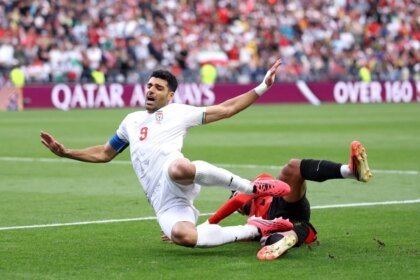
Historically, the Japanese national team has never gone beyond the round of 16 in the history of its participation in the World Cup, which is the round that tactically represents the team’s “fourth match” in the tournament.
In the World Cup in Qatar in 2022, the “Samurai” were on the verge of breaking this curse against Croatia, but the fourth penalty kick, which was missed by Commander Yoshida, brought to mind the concerns of the number “Shi”, so that the fourth match remained a “tactical death” for the ambition of the Japanese.
England and penalty kicks
If there is a team that experiences true terror, classified in sports psychology as “collective trauma,” it is the English team when its matches reach penalty kicks.
This curse began in the 1990 World Cup against Germany, and was repeated in Euro 1996, then in the 1998 World Cup, and Euro 2004, all the way to the Euro 2020 final against Italy.
As a result, the penalty shootout for the English turned into an “inevitable death sentence.”
Sports psychology studies in Britain have proven that when an English player steps up to take a kick, he does not think about the goal, but rather sees in front of him the fierce English newspaper headlines the next day, and pictures of his former teammates whose careers were destroyed because of a missed kick.
This negative psychological charge in turn leads to the phenomenon of “suffocation under pressure”, where the muscles lose their usual elasticity in fractions of a second.
Brazil and the ghost of the “Maracanazo”
Brazil is known worldwide for its charming yellow shirt (seleção), but this color was not the original identity of the five-time world champions.
Until 1950, the Brazilian national team played its matches in white with a blue collar.
In the 1950 World Cup, which was held on their home soil, in front of nearly 200,000 spectators gathered in the Maracana Stadium, Brazil only needed a draw against Uruguay to win the title, but they lost by a score of (2-1) in one of the biggest football disasters in history, which was historically known as the “Maracanazo.”
After the match, the fans and officials deemed the white shirt “cursed” and a bad omen, and it was completely and officially banned.
Subsequently, the newspaper Correio da Manhã launched a national competition to design a new shirt in the colors of the Brazilian flag, which resulted in the current yellow shirt. Although many decades have passed, the Brazilian Federation has tried to revive the white shirt on some short honorary occasions, but the players and fans always feel uncomfortable.
Argentina and the “Image of the Virgin” complex
This knot is one of the most famous official curses recognized by players and the Argentine Football Association, and has haunted them for several decades.
In January 1986, before the World Cup finals in Mexico, coach Carlos Bilardo decided to hold a training camp for the national team in the remote mountain town of Tilcara (which is 2,500 meters above sea level) to accustom the players to playing in the absence of oxygen. There, according to local lore, the players and coach made a promise to the Virgin of Tilcara (a local religious shrine) that they would return to visit her and thank her if they won the World Cup.
Argentina won the 1986 World Cup under Diego Maradona, but the team was caught up in wild celebrations and none of them returned to town to fulfill the promise.
Since then, the curse has struck the team; They lost the 1990 final, and setbacks and dramatic matches continued for nearly 36 years.
In some years, the Argentine Football Association even went so far as to send official delegations and fake cups to the town to “appeal” to the curse, to no avail. This “psychological trauma” was not broken by the masses until Lionel Messi and his companions succeeded in lifting the cup in the Qatar 2022 edition.
Mexico and the “Fifth Match” complex
If Japan suffers from the complex of the fourth match (round of 16), Mexico has a documented historical complex known in Latin journalistic circles as the “Quinto Partido” or the fifth match (quarterfinal) complex.
Mexico succeeded in qualifying for the round of 16 in seven consecutive editions of the World Cup (1994 to 2018), and each time, regardless of the strength of the team or its lead in the score, it emerged from this round in strange and dramatic ways. Whether through penalty kicks, or by conceding deadly goals in the last minutes, or because of controversial refereeing decisions.
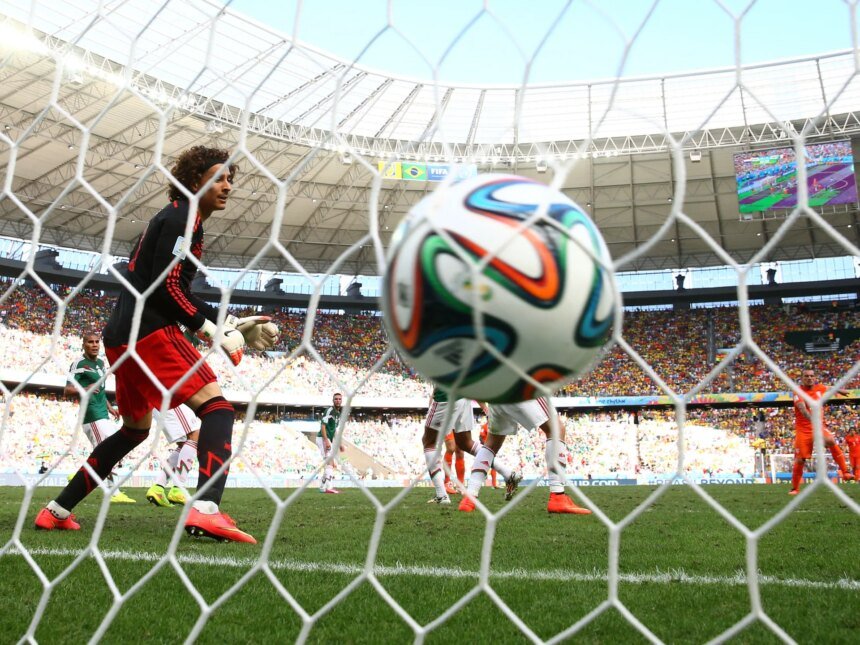
Over time, the “fifth game” turned into a collective psychological obsession; In the 2014 World Cup against the Netherlands, Mexico was leading until the 88th minute, and suddenly the team subconsciously retreated defensively under the weight of the “fear of the usual loss,” and the Netherlands turned the tables in just two minutes.
The matter later turned into an issue of public opinion that prompted successive federations to seek the help of psychological specialists designated solely to untie the “fear of the quarter-finals.”
Colombia and Pele.. “The Curse of Nominations”
In South America, there is a different kind of cultural pessimism associated with the late Brazilian legend Pele, and specifically with his neighbor, the Colombian national team.
In Latin culture, there is a term called “Mufa”, which means the person who brings misfortune with his words or preconceptions, and Pele has historically been famous for his predictions for the World Cup being exactly the opposite.
Before the 1994 World Cup, Colombia had a terrifying golden generation that defeated Argentina 5-0 in the heart of the capital, Buenos Aires. Subsequently, Pele came out and declared publicly: “Colombia is my first candidate to win the World Cup.”
This statement immediately turned into a heavy burden and terrible psychological pressure on the shoulders of the players who entered the tournament terrified by “Pele’s curse of expectation,” and the result was disastrous. Colombia was eliminated in the first round, and the team returned amid a very charged atmosphere that ultimately led to the famous tragedy of the assassination of defender Andres Escobar.
Since then, Latin fans have been begging Pele not to nominate their teams before any major tournament.