Published on 6/29/2026
|
Last update: 13:50 (Mecca time)
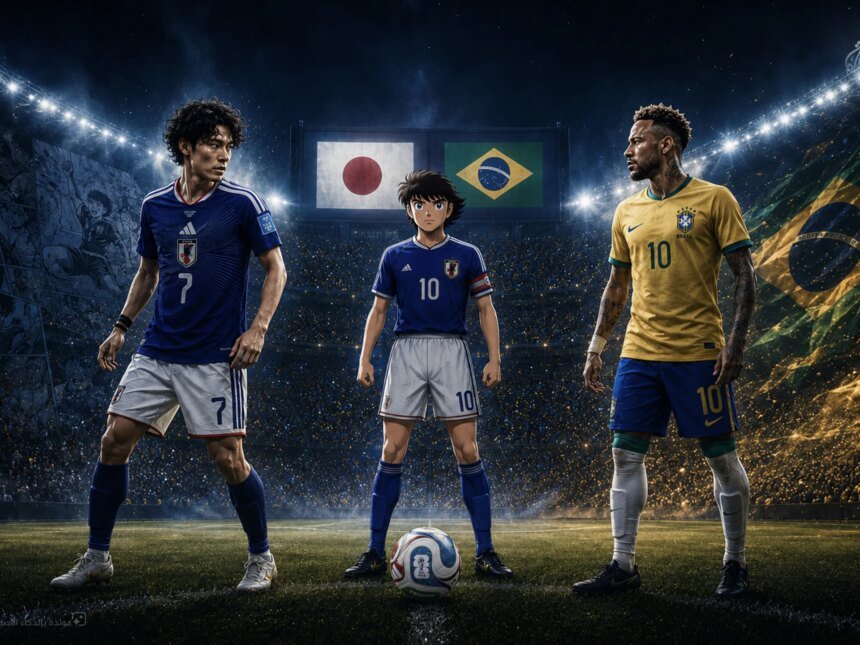
Today, Monday, June 29, 2026, the eyes of football fans will not turn to the Houston Stadium in the American state of Texas to watch just a tactical match in the round of 32 of the 2026 World Cup. Rather, millions will remain behind the screens to watch a “cartoon episode” that came out of memory and turned into a tangible reality.
When the Japanese and Brazilian national teams meet tonight, the confrontation will not only be between the “Blue Samurai” and the “Samba Dancers,” but it will be a living embodiment of a prophecy formulated by the famous Japanese anime “Captain Tsubasa” (known in our Arab conscience as Captain Majid) about 40 years ago.
The story of the missing “final link”.
The origin of this symbolic epic goes back to the eighties of the last century, when Japanese author Yoichi Takahashi wrote with his brush the dream of a Japanese child obsessed with football.
Read also
list of 2 itemsend of list
At the end of this iconic series, Takahashi created a scene that froze in time: the start of a major match between the Japanese national team, led by “Tsubasa/Majid,” and the Brazilian national team. The creative irony is that the series stopped at this particular scene, without the writer revealing the outcome of the meeting.
Today, after four decades, it seems that the geography of the American World Cup has volunteered to write the “continuation of the final episode” that the generation of the eighties and nineties had long awaited.
This emotional, symbolic dimension was not unimaginable on social media platforms, as the accounts were filled with clips and pictures comparing old anime clips with the current preparations for the match. In a striking post that summed up the feelings of an entire generation, one tweeter wrote:
“More than four decades ago, Captain Majid gave the children of Japan a dream that the world thought was impossible… that a day would come when they would stand against Brazil, not with admiration or awe, but with confidence and belief that victory was possible. The children grew up, and Japanese football grew with them. Today the dream stands at the gates of reality. Japan x Brazil… Will reality write the end that the anime began?”
Many believe that this match revived a childhood dream, as what was presented as a motive for entertainment turned out to be a strategic plan to build a football identity and ambition for an entire country.
Also on social media platforms, the generation of the eighties and nineties recalled childhood memories of the series, and some of them wrote that “the match is not just a football confrontation, but rather a snapshot of a childhood memory that came out of the cartoon screen and onto the ground.” Others considered that the meeting between the two teams was “a revival of a dream they had grown up with,” while they were watching the episodes out of entertainment, while it carried within it a message about a great football ambition for Japan.