


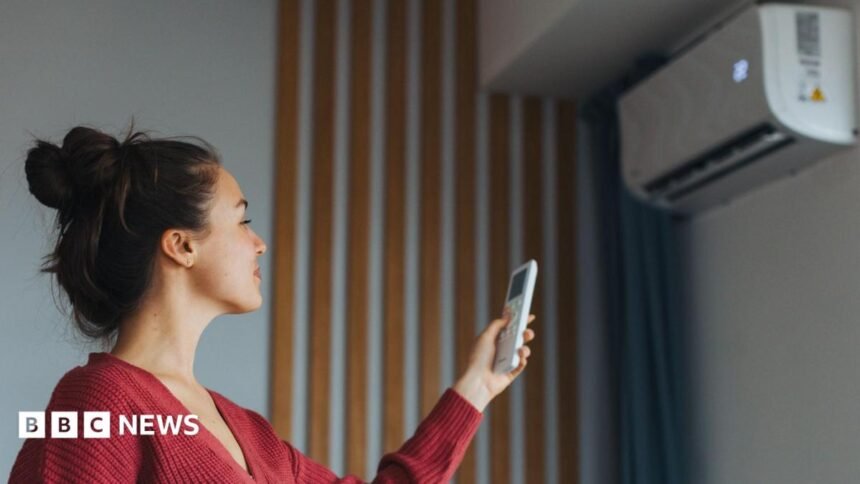

As the UK experiences hotter summers and more regular heatwaves, households have been grappling with how to keep sweltering homes as cool as possible.
Air conditioning has been in hot demand, with retailers seeing their stock fly off the shelves and units online sell out.
The technology already features in many modern cars, hotels and other public places, yet historically homes have been designed to cope with cold weather and keeping heat in them.
Is it time the technology became a feature in most British homes?
Types of air con and how they work
The main function of air conditioning is to cool the temperature inside a building.
There are three main types of air con systems designed for homes:
Portable air conditioners: The clue is in the name. They are portable, standalone units, which can be used to cool individual rooms. They are simply plugged into the nearest socket and work by drawing in warm air, cooling it, and venting heat outside through a window via a pipe or ducting.
Split systems: These involve two units, one inside and one outside, that are fixed to a wall and linked by a pipe. The one outside acts as a condenser, which expels the unwanted heat into the air outside. You can buy one for just one room or you can get multiple indoor units to work with a single outdoor condenser, according to LG, the household appliance and white goods retailer. British Gas says, external such “ductless systems” are one of the most common options for UK homes.
Ducted air con: These systems are designed to serve the entire home, with a central unit pushing cooled air through a network of ducting, with vents in each room. Unlike the other options, this would require invasive renovation work to an existing property.
How much do they cost?
Costs range widely depending on what is wanted and/or required.
Portable units are the cheapest form of air con, ranging from £350 to £650 on average, depending on the brand and performance, according to Checkatrade., external
However, as demand has soared in recent weeks some retailers began selling the cooling machines for £149, as Lidl did in its infamous middle aisles.
Wall mounted or split air con units can cost between £750 and £1,100 each, Checkatrade says – but that is just the unit, and does not include the labour and other installation costs, such as hooking it up to the property’s electricity fuse board. Installation company Heatable suggests, external a full cost is typically £2,000 to £3,500, but can go up to £6,000 if you want to have it in more than one room.
Ducted air con systems cost the most, between £990 and £1,750 without installation costs, according to Checkatrade. Fitting the ducting or remedial work to hide it inside properties means it is likely to be more expensive than any of the other systems given the level of work involved. Heatable estimates it to be between £5,000 and £10,000, depending on the property size, layout and how complex the ductwork needs to be.
The size of both split and ducted units are determined by what is known as the BTU (British Thermal Unit), Checkatrade says, to ensure it will cool the space it’s required to. The larger the BTU number, the bigger the room to cool, and therefore the more expensive the unit.
Following installation, consumer group Which? suggests the running costs “vary wildly” and depend on the type of system.
“A typical portable air conditioner adds roughly 25p to 40p an hour to your electricity bill,” it says.
The pros and cons
Stating the obvious, the main benefit of having air con in a home is that it can keep it cool during times of extreme heat, meaning people can sleep, work and generally live more comfortably.
However, air con units require electricity, the price of which remains much higher now than it was a few years ago, and so you can expect your overall energy bill to increase if you purchase and use one regularly.
Some environmental groups have also raised concerns over the impact of such technology on the environment, including the chemicals used in units to cool air.
Portable air con units are easy to set up, use and move around homes. They are cheaper to buy than the alternatives and do not require professional installation.
But they can be more expensive to run due to not being as energy efficient.
Checkatrade says portable or window units are a good short-term solution and are also ideal for renters or those who live in listed buildings who cannot make major changes to their property.
Split systems are much better at cooling rooms and are also cheaper to run, according to Checkatrade. They are also quieter than portable units, but they do entail larger upfront costs and need to be installed by a professional tradesperson.
Ducting air con is the least noticeable option due to the vents and can cool multiple rooms. But when it comes to retrofitting older homes it can be complex due to having to find space for the equipment, which adds to installation costs.
Do you need planning permission to install air con?
You don’t for portable units.
The government says “in most cases”, planning permission is not required to install air con “for a small home if it would not materially affect the appearance of the building from outside”.
It adds there is no blanket rule and says people should speak to their local authority to check the rules, adding “councils should take a common-sense approach”.
What about heat pumps?
There are some heat pumps that can also work as air conditioning systems, although Which? says this depends on the type and whether the model is reversible.
“Air-to-air heat pumps are specifically designed to provide both heating and cooling by reversing the way they transfer heat – taking heat from outside to warm your home in winter, and removing heat from inside to cool it in summer,” Which? says.
How do I keep cool if I don’t want or can’t afford air con?
Let in cool air and encourage air flow. Open windows on opposite sides of the house to encourage air flow, but only do this when the air temperature outside is cooler than inside, which tends to be overnight or in the early morning.
Keep warmer air out during the day. In the heat of the day it is best to keep your windows shut and blinds or curtains closed.
Use a fan to enhance the breeze. Fans are a relatively cheap and energy-efficient way to keep air moving and can help you stay cool.
Stay hydrated, wear loose-fitting clothes and take tepid showers. Tepid showers can help to cool your body temperature. The NHS recommends six to eight glasses of water a day, but you may need more in the heat.