

Published On 9/7/2026
|
Last update: 02:33 (Mecca time)
The ceasefire agreement between the United States and Iran lasted only a few weeks, before confrontations renewed between the two parties, and US President Donald Trump entered a more complex phase of the conflict, characterized by the absence of easy options and the increasing political, economic, and military costs.
Analyzes published by the New York Times, the Washington Post, and the Economist, along with Axios, agree that the collapse of the truce does not merely represent a diplomatic setback, but rather reveals the fragility of the hastily signed agreement, and opens the door to a war of attrition that could extend for months or years, at a time when the American midterm elections are approaching.
Read also
list of 2 itemsend of list
The New York Times believes that Trump is facing today the results of a quickly drafted agreement to enable him to announce a political achievement, even though he left the fundamental issues unresolved, most notably the future of the Iranian nuclear program, the missile arsenal, Tehran’s regional role, and the security of navigation in the Strait of Hormuz.
Three expensive paths
According to the newspaper, the American President bet that economic interests would push the Iranian leadership to change its behavior, but he clashed with the continued logic of confrontation that has governed the Iranian regime since the Islamic Revolution in 1979.
With the collapse of the ceasefire, Trump finds himself facing three paths, all of which are costly:
- A broad military escalation could drag Washington into a new war that does not enjoy internal support.
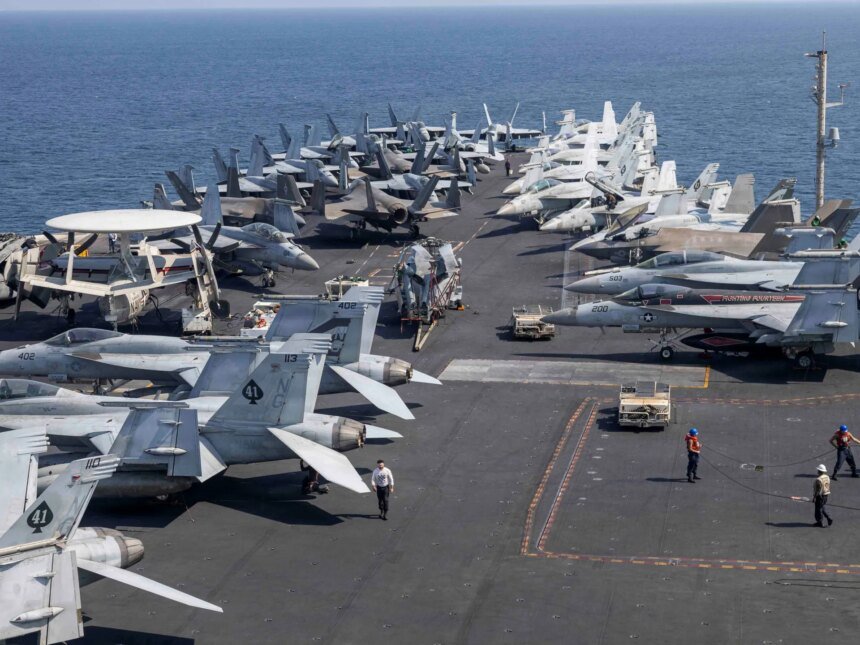
- Reimposing a long-term economic and naval blockade requires an intense US military presence.
- Accepting a state of “no war, no peace” based on intermittent rounds of strikes and negotiations.
The newspaper quoted Richard Fontaine, CEO of the Center for a New American Security, as saying that all options are “unattractive,” expecting the next stage to witness “low-intensity mutual attacks, interspersed with diplomatic mediations and a fragile ceasefire, before returning to a new round of fighting,” which he described as “a long oscillation between a cold war and a limited hot war.”
The New York Times believes that the agreement also gave Iran a wide margin to influence shipping traffic in the Strait of Hormuz, after leaving the issue of passage through the Strait ambiguous, which Tehran exploited to justify targeting oil tankers and commercial ships.
Internal repercussions
As for the Washington Post, it focuses on the repercussions at home in America, considering that the collapse of the truce has returned Trump to “the same predicament”: a war that he cannot end, while most Americans oppose it, and with the midterm elections approaching, for which Republicans fear they will pay the price.
The newspaper notes that the renewed fighting has already led to a rise in oil prices and a decline in financial markets, while the US administration has begun implementing new strikes that it says aim to reduce Iran’s ability to threaten freedom of navigation in the Strait of Hormuz.
The newspaper did not rule out that the rise in fuel and food prices could become an electoral burden on the Republican Party, because voters focus primarily on the costs of living.
The newspaper notes that the majority of members of the Republican Party still support Trump, despite popular opposition to the war, while the Democratic Party took advantage of the collapse of the truce to renew the accusation that the president had entered the country into a “war of choice” that raised energy prices and burdened Americans.
Failed appeasement
The Washington Post editorial goes further, considering that the policy of appeasing Iran has proven to be a failure, and that Tehran has interpreted the easing of pressure and sanctions as a sign of weakness, not a gesture of good faith.
The newspaper believes that the American administration is now required to maintain economic and military pressure, by tightening sanctions and imposing a ban on Iranian oil exports, while implementing limited military operations when necessary, instead of returning to making financial concessions in exchange for unfulfilled Iranian promises.
On the other hand, the Economist report highlights the transformations within Iran itself after the killing of former guide Ali Khamenei, considering that power has gradually moved from the religious institution to the Revolutionary Guard, which has become inclined to use military force as a main means of negotiating with Washington.
The magazine indicates that the new leadership seems more inclined to display force and prolong the confrontation, believing that it can exhaust America politically and economically, while stressing that economic pressures remain the regime’s primary weakness, in light of the expanding poverty, the decline of the middle class, and the destruction of large parts of the industrial structure due to the war.
Remarkable transformation
As for Axios, it monitors the striking shift in Trump’s speech, as he moved, within a few weeks, from praising the new Iranian leadership and describing the agreement as “unconditional surrender,” to declaring that the ceasefire was “over,” and describing the Iranian leaders as “sick” and “violent,” while considering that negotiating with them had become a “waste of time.”
All of these analyzes conclude that the collapse of the ceasefire does not only mean the return of military operations, but also reveals the failure of betting on a temporary agreement that did not address the roots of the crisis.
While Washington seeks to avoid an all-out war, Tehran seems prepared to engage in a long, low-intensity confrontation, which makes the region entering a new phase of instability, in which military calculations intersect with economic pressures and political entitlements on both sides of the conflict.
Source: American press + British press