The Arab Renaissance in the late nineteenth and early twentieth centuries was not just a movement to revive the language or spread heritage, but rather a broad intellectual project that reshaped Arab consciousness in the face of modernity, colonialism, and major social transformations. This project revolved around a basic question: How can the Arab heritage be restored and re-presented with modern scientific tools?
The pioneers of the Renaissance engaged in two parallel paths: collecting, verifying and publishing manuscripts, and openness to modern European approaches, including benefiting from Orientalist efforts in cataloging and studying heritage. This interaction resulted in a new cognitive model that transcended the duality of conflict or dependency.
Contrary to the common perception that reduces the relationship between Orientalism and the Arab world to a framework of hegemony, the historical experience reveals a more complex network of scholarly relations, characterized by dialogue, exchange, and mutual criticism between a number of Renaissance intellectuals and Orientalists, in a context that sought to produce common knowledge about the Arab heritage.
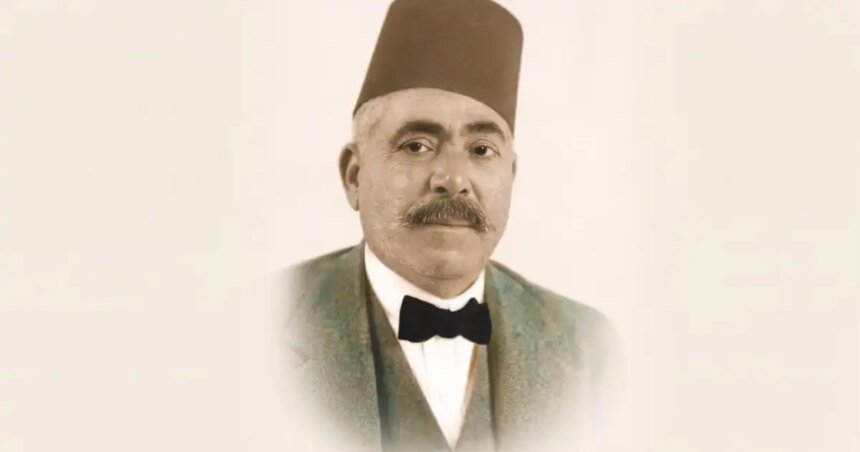
In this context, Ahmed Zaki Pasha (1868-1934), known as the “Sheikh of Arabism,” stands out as one of the most prominent symbols of this renaissance movement that combined authenticity and openness, pride in Arab cultural identity, and active involvement in international knowledge networks.
Zaki Pasha was a high-ranking employee in the Egyptian state, where he held the position of Secretary of the Council of Ministers, in addition to being an encyclopedic intellectual, heritage researcher, and an active participant in international scientific conferences, which gave him a unique position between the official and political circles on the one hand, and European scientific circles on the other hand.
Ahmed Zaki Pasha represents a prominent example of this type of interaction. He participated in a number of Orientalist conferences in Europe, including the London Conference in 1892, and the Geneva, Hamburg, and Athens conferences. He saw these forums as a scientific space for exchanging knowledge between Eastern and Western researchers.
In his interventions, he emphasized that Orientalist studies contributed to correcting many of the stereotypes that were prevalent in Europe about Islam and the Arab world, but at the same time he called for the need for Arab scholars themselves to participate in studying their heritage, instead of leaving this field limited to European researchers.
Based on this perception, Zaki Pasha believed that knowledge is not based on estrangement or isolation, but rather on dialogue and cooperation. Therefore, he called for holding scientific conferences in Arab countries, allowing Eastern researchers to participate directly in producing knowledge about their heritage, stressing that understanding Arabic texts requires precise knowledge of the language and the cultural and civilizational context, which are elements that he believes are available to the Arab researcher in a deeper way in many cases.
Zaki Pasha rejected the link between Islam and theocratic regimes, and considered that the decline of Arab and Islamic societies was not due to religion or heritage in itself, but rather to broader historical and civilizational factors.
This position prompted the contemporary Syrian thinker and historian Muhammad Kurd Ali (1876-1953) to describe him as an “Eastern Orientalist,” a description that reveals the nature of his complex position between the two worlds. He was not an Orientalist in the traditional European sense, but at the same time he adopted modern research tools and participated in international scientific institutions, while fully maintaining his Arab cultural affiliation.
Zaki Pasha’s intellectual project was linked to the idea of cultural Arabism as a broad civilizational framework that goes beyond narrow politics to reviving language, literature, and history. For him, Arabism was not an ideological slogan as much as it was a cognitive project based on restoring heritage as a living element in building the future. From here, he focused on collecting manuscripts, establishing his own library, publishing heritage texts, and working to revive Arabic terminology in the face of modern linguistic challenges.
Zaki Pasha took advantage of his official website and his many trips in Europe to develop his scientific project, as he photographed rare manuscripts in international libraries, and communicated with orientalists and researchers to exchange photographic copies, which made him part of an active international scientific network.
In 1911, after assuming the position of Secretary-General of the Council of Ministers, he launched his most famous project, “Revival of Arabic Literature,” with funding from the Egyptian Ministry of Education, a project that represented the pinnacle of his scientific efforts.
This project was largely inspired by Orientalist approaches to translating and publishing texts, but at the same time it sought to transfer this experience to the Arab context, rather than being content with a subordinate role in discovering heritage.
The project resulted in the publication of major works in Arab heritage, including “Nihayat al-Arb fi Fanun al-Adab” by Shihab al-Din al-Nuwairi, and “The Paths of Vision in the Kingdoms of the Lands” by Ibn Fadl Allah al-Umari.
However, this project was not without controversy, as it faced criticism from some intellectual circles, including the Coptic newspaper Al-Watan, which saw in it a return to the past and backwardness, and a weakening of interest in modern sciences. There was also an intellectual discussion between Zaki Pasha and the Egyptian thinker Salama Musa (1887-1958), about the feasibility of reviving heritage. Musa considered that focusing on the past might lead to stagnation and reactionism, while Zaki Pasha saw that restoring heritage does not mean cloning it, but rather drawing inspiration from its cultural elements to modernize the present.
Within the framework of his linguistic and scientific efforts, Zaki Pasha employed his extensive knowledge in tracing the meanings of Arabic vocabulary whose origins have been obscured or whose meanings have varied over time, or which have become ambiguous in use.
In this context, Zaki Pasha rejected the link between Islam and theocratic regimes, and considered that the decline of Arab and Islamic societies was not due to religion or heritage itself, but rather to broader historical and civilizational factors. He also provided political and material explanations for major events such as the fall of Andalusia and the Ottoman expansion, far from cultural reductionist explanations. However, his position was not an absolute rejection of the West, but rather called for taking advantage of some of its gains, such as women’s rights, separation of religion and state, and technical progress, while emphasizing the specificity of both the East and the West.
Zaki Pasha also paid special attention to developing and modernizing the Arabic language, by Arabizing modern terms and creating Arabic equivalents for them, out of his belief in the language’s ability to absorb the era without losing its identity. He contributed to consolidating the use of words such as “bicycle,” “car,” and “journalist.” He also participated in developing the administrative use of some terms and replacing the Ottoman and French ones with Arabic. He believed that language was not a static entity, but rather a living tool capable of adapting and evolving.
As part of his linguistic and scientific efforts, Zaki Pasha employed his extensive knowledge to trace the meanings of Arabic vocabulary whose origins were obscured or whose meanings varied over time, or which had become ambiguous in use. Whenever it was difficult for him to find an accurate interpretation of one of the words, he would resort to raising the issue for discussion through the press.
Zaki Pasha was more inclined to write in the press than to write books, as he found in the newspaper a more direct and lively space for engaging in intellectual and linguistic discussions with his contemporaries. In his debates with an elite group of Arab intellectuals, he often presented his opinions as the most correct and closest to what is right, compared to the opinions of his opponents, which gave his interventions a sharp dialectical character that contributed to expanding the circle of controversy around his personality and positions, especially after his resignation from his government position in 1921, when his fame increased in the Arab world as an active party in discussions related to issues of literature, history, religion, and language.
He would begin some of his interventions with phrases that had a striking, declarative tone, such as his saying: “On me and me alone, take the truthful news,” an expression that reflects his high confidence in his positions and his belief in the soundness of his conclusions.
He also used to repeat another famous phrase: “And every day I have a position and an article,” in reference to the dynamic nature of his positions and the diversity of his opinions according to the topics and contexts with which he clashes.
His responses in the press to his opponents were characterized by a degree of sarcasm and sharpness, as his style combined acerbic wit and a strict critical tone, sometimes reaching harsh expressions in the face of his intellectual opponents.
The biography of Ahmed Zaki Pasha and the experiences of the pioneers of the Renaissance reveal that the Arab Renaissance project was not merely a restoration of the past, but rather a serious attempt to produce new knowledge about this past using modern tools.
In 1911, Zaki Pasha obtained a permanent official license to allocate an independent section within the Egyptian Book House (Al-Kutbkhana) to preserve his private collection of books and manuscripts, which was later known as the “Pure Treasury.” This treasury contained the proceeds of what he had collected since his years of study in the 1880s, including rare books and manuscripts in the fields of religion, language, literature, geography, and history, to become the first nucleus of his project to document and preserve Arab heritage.
This collection gradually expanded to include thousands of manuscripts, rare books, maps, and periodicals, making it one of the most prominent private collections in modern Egypt. Zaki Pasha was keen to deposit them in Dar al-Kutub as a public institution, aware of the possibility of them being lost or dispersed after his death, or being sold or used for secondary purposes such as packaging materials in the markets, as happened with the libraries of some of his contemporaries.
The treasury was open to researchers and the public from the afternoon until the evening every day, reflecting an early perception of the role of knowledge as public property.
In building his collection, Zaki Pasha relied on multiple means, including traveling abroad equipped with his own camera to photograph Arabic manuscripts in royal, university, and private libraries, in addition to seeking the assistance of a number of European orientalists and photographers to obtain photographic copies of heritage treasures. He also benefited from his network of scientific relations in Europe and Istanbul to facilitate his contacts with libraries and publishing houses, control copying costs, and verify the quality and accuracy of photography.
His efforts were not limited to the direct collection of manuscripts, but rather extended to negotiating with the heirs of a number of intellectual figures to acquire their private libraries, in addition to spending a large portion of his own money on purchasing books and periodicals, to the point that he was once forced to sell a piece of land he owned in Qalyubia Governorate in order to expand his collection.
Ahmed Zaki Pasha appears as a model of the renaissance intellectual who was able to combine authenticity and openness, pride in heritage and engagement with global knowledge, proving that the true renaissance is not based on isolation or dependency, but rather on self-confidence.
In 1921, he was accused of corruption, but he was acquitted after a short period of suspension from work. During that stage, a dispute arose between him and the director of the Dar al-Kutub about moving the library to the upper floor of the building, which Zaki Pasha strongly rejected, stressing his pride in his academic standing and his role in serving the Arabic language and its heritage, and emphasizing that his scientific project was not measured by the administrative position or procedural conditions.
In the same year, he decided to entrust his treasury to the Ministry of Endowments on the condition that it remain under his supervision throughout his life, while reserving its subordination to the Ministry of Education for fear of transferring its management to foreign or non-specialized bodies. He stipulated in his will that it be transferred to Al-Ashraf Qansuh Al-Ghouri School, while ensuring its administrative and scientific independence. However, the treasury was later subjected to noticeable neglect, and the rains in December 1925 almost caused parts of it to be damaged, had it not been for the timely intervention of those in charge of it.
Thus, the “Pure Treasury” crystallized as an integrated project to preserve and reassemble heritage, before it was transformed upon his death in 1934 into a huge fund containing about 18,700 volumes, combining manuscripts, old maps, and Arabic periodicals, in addition to orientalist editions and translations of major classical texts.
Ultimately, it was transferred in December 1935 to the Egyptian House of Books, where it resides in the Corniche building until today, with the special care it requires and restoration befitting its scientific and historical value.
The biography of Ahmed Zaki Pasha and the experiences of the Renaissance pioneers reveal that the Arab Renaissance project was not merely a restoration of the past, but rather a serious attempt to produce new knowledge about this past using modern tools. These pioneers benefited from Orientalist approaches to investigation, textual criticism, and manuscript examination, but they resettled these approaches within an Arab vision of heritage, based on understanding and renewal, not dependency or fascination.
Hence, it can be said that the relationship between the Arab Renaissance and Orientalism was not one of absolute rejection or acceptance, but rather a complex relationship of interaction that produced new forms of knowledge. The pioneers of the Renaissance realized that the scientific method was not monopolized by a particular nation, and that openness to global experiences did not necessarily mean losing cultural identity.
In light of contemporary transformations, especially projects to digitize manuscripts and make them available via digital platforms, Ahmed Zaki Pasha’s experience seems more current than ever before. He believed that knowledge only flourishes through participation and exchange, and that heritage acquires its true meaning only when it turns into a permanent subject of research, review and discussion.
Thus, Ahmed Zaki Pasha appears as a model of the renaissance intellectual who was able to combine authenticity and openness, pride in heritage and engagement with global knowledge, proving that the true renaissance is not based on isolation or dependency, but rather on self-confidence and the ability to dialogue and renewed knowledge production.
The opinions expressed in the article do not necessarily reflect the editorial position of Al Jazeera Network.