


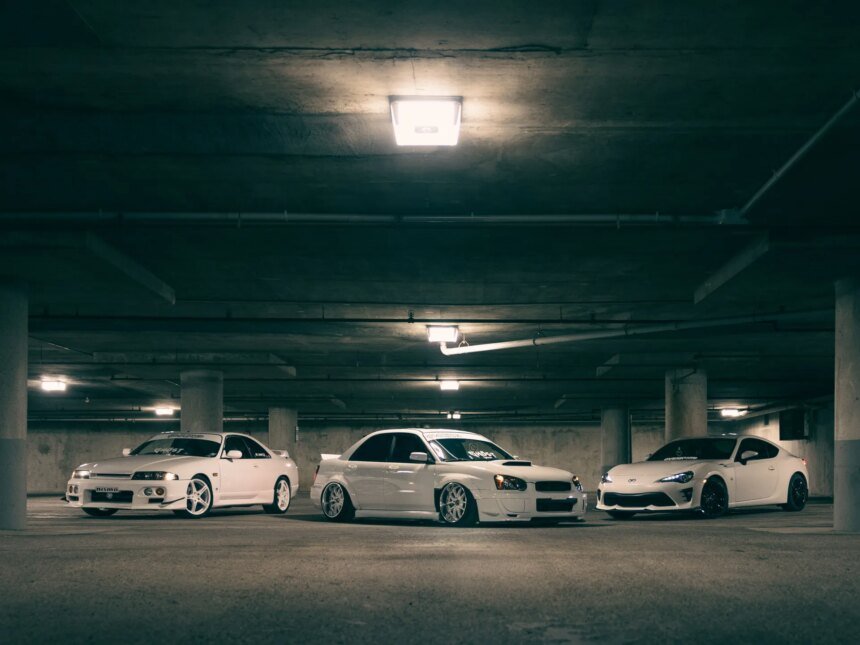
Stand at any busy intersection in any city around the world, and watch the passing cars for just five minutes, and you will notice something remarkable: out of every three cars, you will find at least one white.
It does not matter if it is an economical sedan or a luxury sports car, the white color, which deserves the title of “King of Colors,” imposes its presence in all categories and markets without exception.
According to the latest report issued by the American company Axalta, one of the largest global companies specialized in the automotive paint industry, which issues an annual report monitoring the colors of cars manufactured around the world for decades, white represents approximately 29% of cars around the world, with a clear difference from its closest competitor, black, at 23%.
This superiority of white is no longer linked to coincidence or the absence of alternatives. In the past few years, the automobile industry has witnessed a development that is not limited to exterior design or modern interior systems only, but extends beyond that, as the colors themselves have become a witness to the technology revolution, having transformed from traditional paint to complex engineering techniques that produce a mixture of new shades on an almost daily basis.
However, despite this huge amount of choices available to the consumer today, the preference for white remains constant and does not budge, which reveals that the choice of color has become considered a reflection of how people see themselves through their cars, and not a passing aesthetic decision.

Why is white superior? Where do the rest of the colors stand?
The preferred color map varies by climate and region; White clearly tops the preferences of the Gulf countries and the Middle East region due to its ability to reflect harsh sunlight and reduce heat absorption inside the cabin, while gray tops the European market, and black occupies the lead in the Asian continent. This disparity reflects the connection between the choice of car color and the surrounding environment as much as it is related to personal taste.
The secret of global white supremacy lies in a combination of practicality and symbolism; It is the most capable of reflecting sunlight and withstanding high temperatures, in addition to its elegant appearance that suggests luxury and cleanliness at the same time.
The influence of car color also extends to another very important element, which is road safety. According to recent studies, cars in light colors, such as white, have greater visibility to other drivers, especially at night or during unstable weather conditions, which reduces the possibility of them being involved in accidents.
On the other hand, the vision of dark colors such as black, dark blue, and dark gray is significantly reduced in these circumstances, according to the same studies, which makes color a factor worth thinking about from a safety perspective as well.

Neutral colors
The four neutral colors, white, black, gray and silver, govern more than 80% of the global car market, according to the Axalta report, where black occupies second place with 23%, then gray with about 22%, with silver declining to only 7%, and the rest of the colors such as blue, red, green and yellow share the remaining percentage, which does not exceed 20% of the market.
Neutral colors are sold and resold more easily due to their wide spread, but recent data reveals a striking paradox. Rare colors such as yellow and orange retain their value better when resold, due to their scarcity and high demand from a specific category of buyers, while silver remains the preferred choice among car rental companies and government agencies, as it combines ease of maintenance and preservation of its value over time.
Owning a car in an unusual color has turned from something strange, as it was in the past, to a way to search for uniqueness and distinction amidst this overwhelming presence of neutral colors. Bold and unconventional colors have imposed themselves in recent years as an option that reflects boldness and a desire to deviate from the norm, despite their limited spread.
The scarcity of these colors, despite their attractiveness, is due to their high cost, as they rely on multi-layer paint materials and more advanced techniques, which makes them offered at a higher price than traditional colors. It is also associated with some negatives in addition to its cost, as it requires maintenance and special care, and may take longer to resell compared to the more common neutral colors.
New technologies change market trends
With the development of paint technologies, companies have become able to produce new shades of more diverse colors, with high quality and greater effectiveness in resisting environmental factors and different weather conditions.
Some of them even went beyond the idea of fixed shades to technologies that actually change the color of the car with the push of a button, as BMW did with its “iX3 Flow Edition” experimental car that was unveiled at the Beijing Auto Show in 2026.
It relies on “E Ink Prism” technology, which are tiny pigment particles that move inside microscopic capsules embedded in the hood when an electrical charge is applied, changing its color between black, white, and shades of grey.
This entire development was reflected in consumer behavior as well, as choosing color became an essential part of the purchasing decision, after it was in the past a secondary detail that came after other basic elements.
With the increasing competition in global markets between brands, colors have turned into an effective marketing tool, through which major companies seek to distinguish their models and give them a special and innovative visual identity.
Modern digital technologies also played an important role in this transformation, by enabling customers to choose the colors of their cars even before purchasing, which provided detailing and selection services that were not available before, in a way that reflects the consumer’s taste and ambitions.

Bolder colours
With the amazing technological progress, especially in the world of cars, and the convergence of technologies and specifications between most vehicles, distinction has extended to include visual identity in addition to performance, especially in light of the development of modern paint technologies and their ability to produce unconventional colors that are in line with the development witnessed by the industry.
The tendency of car companies to offer a wide range of bold and unconventional colors reflects their desire to draw attention in a crowded market witnessing fierce competition between international companies, as the new color has become linked to a specific brand, and an effective means to distinguish modern models and enhance their presence with consumers.
Through these bold colors, companies target young people who tend to own cars in different and exotic colors that express their personality and taste, in addition to highlighting the modern and sporty aspect that also attracts this group.
How do consumers choose their car?
Choosing a car is no longer based on performance and price alone. Color has become an essential element that is no less important than the rest of the specifications. The largest percentage of consumers tend to choose practical colors, as they are more widespread and more suitable for daily use, while the color of the car is also linked to the age stage. Young people often prefer bold colors, while older people tend towards calm colors.
Behind this practical decision lies a deeper symbolism, as the car has become a mirror of identity. Its type and color reflect the features of its owner’s personality, taste, and even his social status. Some consumers prefer sports cars with unconventional designs and colors, while others prefer calm colors that reflect luxury and sophistication.
These colors, whether classic or bold, give the first impression of the personality of the car driver, and thus the color becomes a visual message that reveals the identity of its owner even before he drives it on the road.