

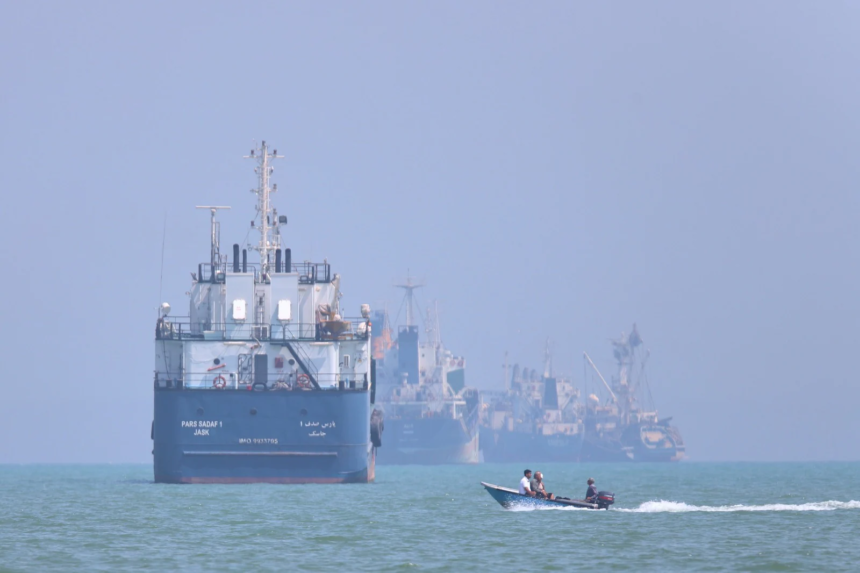
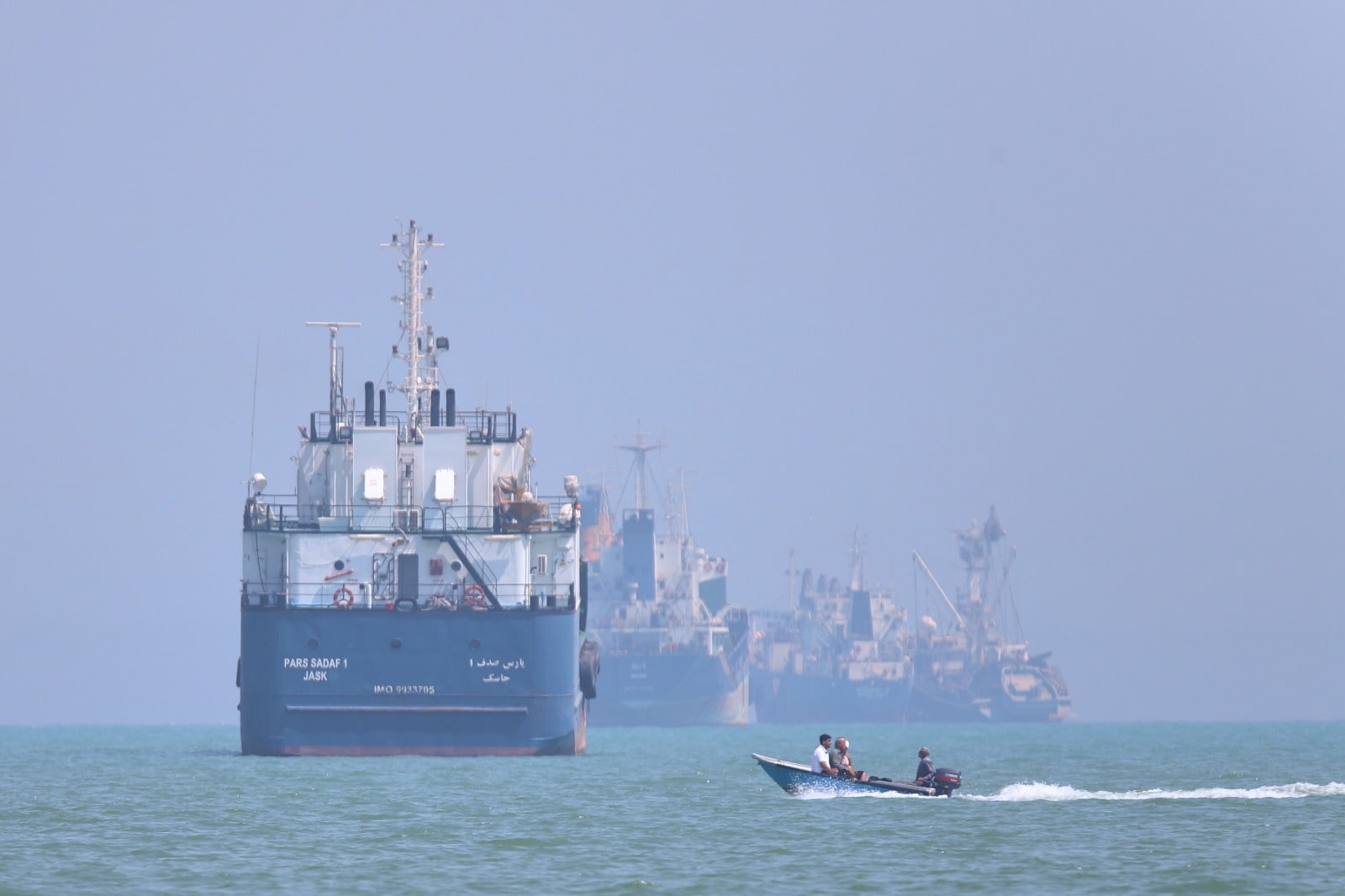
A third tanker was struck by projectiles in the Strait of Hormuz in 24 hours, the UK maritime agency said on Tuesday. The attack comes after two ships were hit earlier while moving through the narrow mouth of the Persian Gulf.
“UKMTO has received a report of a further incident involving a tanker transiting the Strait of Hormuz. The tanker was struck by an unknown Uncrewed Aerial Vehicle (UAV) and has sustained minor structural damage. No casualties or environmental impact reported, and vessel is continuing to its next port of call,” it said in a post on X.
Al-Rekayyat, one of the tankers, caught fire after being attacked earlier while travelling off the coast of Oman to India. The agency said the projectile hit the port side of the vessel as it tried to travel south out of the strait toward the Gulf of Oman.
Majed Al-Ansari, a spokesperson for the Qatari Foreign Ministry, said targeting the Qatari tanker, Al Rekayyat, in the strait was an “unacceptable attack” on international navigation and global energy security. He called it a “serious and explicit violation” of international law.
In a post on X, he said Qatar holds Iran “fully legally responsible” for the attack.
The targeting of the Qatari vessel “Al-Rekayyat” while transiting near the Strait of Hormuz constitutes an unacceptable attack on the security & safety of international maritime navigation, the security of global energy supplies, & a grave & explicit violation of international…
— د. ماجد محمد الأنصاري Dr. Majed Al Ansari (@majedalansari) July 7, 2026
Although the Iranian state television said the liquefied natural gas tanker came under attack after “ignoring repeated warnings”, it did not directly claim the assault.
The second tanker sustained structural damage when it was hit, but no one was injured, the agency said.
The attacks come amid declarations by Iran that only the route it approves through the Strait of Hormuz is safe. Last Thursday, Iran’s joint military command warned that all oil tankers moving through the strait must use its approved routes. It also stated that if the US forces interfered in the Strait of Hormuz, they “will be met with a rapid and decisive reaction”.
Last month, the US and Iran had signed a 14-point ceasefire agreement to end the war, and although the deal has broadly held, with more than 200 ships passing through the Strait of Hormuz in the week to Sunday, the UK maritime agency said that the security threat level remains “substantial”.
The attacks threaten to block the flow of traffic in the strait just as countries hoped to restore normal shipping practices and ease the economic strain of war.
Meanwhile, talks between Iran and the US appeared to be on hold until after the burial of Iran’s Supreme Leader Ayatollah Ali Khamenei, who was killed at the beginning of the war. Mourners at his funeral have called for the death of US President Donald Trump.