

Published On 5/7/2026
|
Last update: 23:24 (Mecca time)
The Russian-Ukrainian war is entering a new phase in which reliance on drones is increasing, amid a mutual escalation of long-range attacks, and accelerating competition to develop this weapon, which has become one of the most important decisive factors in the battles, in parallel with American diplomatic moves to revive the chances of reaching a political settlement.
On the fronts of the Zaporozhye District in southern Ukraine, Ukrainian marching units continue to carry out reconnaissance missions, target monitoring, and precise attacks, at a time when the early morning hours have become the most appropriate for movement after the waves of night attacks by drones have subsided.
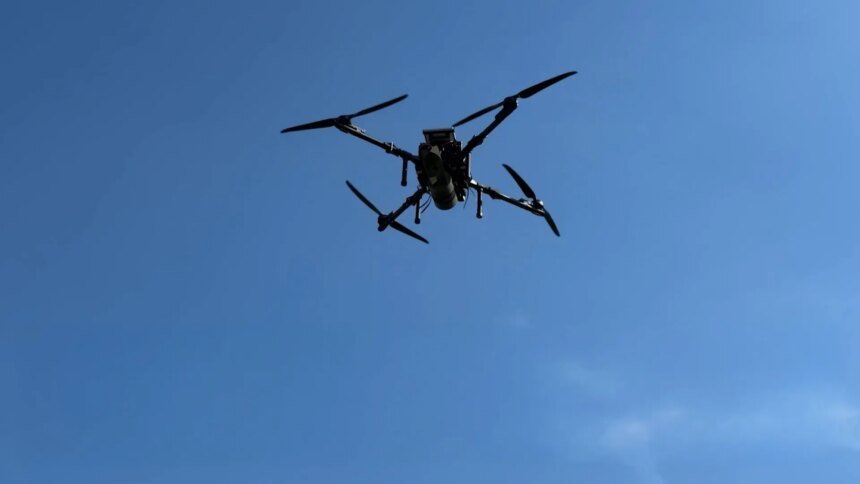
Members of one of the Ukrainian marching units told Al Jazeera’s correspondent from Kharkiv, Omar Al-Hajj, that their forces lost one of the marches after it was shot down while carrying out a mission deep in the areas controlled by Russia, stressing that Russian defenses are now allocating great potential to protect ammunition depots and troop assembly areas from unmanned air attacks.
The unit quickly sent a new march to complete the mission, in a scene that reflects the nature of the current war, which has become increasingly dependent on this weapon, whether in reconnaissance, directing artillery, or carrying out direct strikes.
During the war years, the drone industry in Ukraine expanded significantly, as the number of companies operating in this sector increased to more than 250 companies, working alone or in partnership with allied countries, including the United Kingdom, Canada, Norway, Germany, and Denmark.
The Ukrainian drones vary between FPV suicide planes, which are most commonly used against individuals, vehicles, and nearby fortifications, and reconnaissance drones that provide accurate information to ground forces, in addition to heavy bombers such as the “Perun” and “Vampire” capable of carrying artillery shells and tanks, as well as winged drones with a range of up to about two thousand kilometers, which were used to carry out strikes inside the Russian interior.
Ukrainian soldiers confirm that heavy bombers, led by the “Perun”, are not limited to carrying ammunition, but can transport smaller planes deep into the fronts to carry out complex operations. They are also characterized by high accuracy of hitting, reducing the margin of error to about one meter, which, according to them, makes them more effective than traditional artillery in many tasks.
The Ukrainian military believes that the increased reliance on marches has contributed to reducing human losses and compensating for part of the numerical difference with the Russian forces. However, they acknowledge that the effectiveness of this weapon declines in bad weather conditions, while observers believe that the ongoing development race between the two sides may prolong the war.
American mediation
Politically, Kremlin advisor Yuri Ushakov revealed that US President Donald Trump, during a phone call with Russian President Vladimir Putin, offered to help find a settlement to the war, stressing the continued efforts of US envoys Steve Witkov and Jared Kushner and their readiness to make a new visit to Moscow.
Ushakov described the contact as “practical and constructive,” stressing that Moscow still prefers a political and diplomatic solution that takes into account what he described as Russia’s basic principles, while he accused Ukraine and its European allies of seeking to prolong and escalate the war.
Al Jazeera’s correspondent said that Ukraine has become increasingly dependent on targeting strategic installations inside Russia, especially oil refineries, fuel tanks, and industrial complexes that produce missile components, as a way to compensate for the shortage in equipment and manpower compared to Russia.
He added that Kiev has expanded the scope of its targets to include power plants and infrastructure in the Crimean Peninsula and areas under Russian control in Luhansk and Zaporozhye, in an attempt to disrupt daily life and Russian logistical capabilities, considering that Ukraine is presenting these strikes as a similar response to Russian attacks targeting energy facilities inside Ukrainian territory.
For its part, Moscow acknowledged the impact of the Ukrainian strikes on energy facilities inside Russia, as Al Jazeera’s correspondent in Moscow, Rania Dridi, said that President Vladimir Putin acknowledged that the attacks caused a crisis in fuel supplies and a shortage of gasoline within some Russian regions.
However, the Russian authorities confirm at the same time that these attacks did not affect the conduct of military operations, as Kremlin spokesman Dmitry Peskov said that Ukraine’s intensification of its strikes reflects, from the Russian point of view, its field losses and its retreat along the battle lines.
The Kremlin accused the United States, France, Germany, and the Netherlands of providing intelligence support to Kiev by providing it with satellite coordinates that help it direct strikes inside Russian territory.