After nearly four months of war, does your wallet feel lighter?
Limited time: Save 25% on NBC News subscription
Get exclusive reporting, live Q&As and ad-free reading.

Since the Iran war started, Americans have spent an additional $35 billion on gasoline, according to a Brown University estimate. Increased gas prices have resulted in higher monthly expenses for individuals — anywhere from less than $20 to more than $300 for a driver who fills up twice a month, according to an NBC News analysis of motor club AAA’s average national gas price data.
Just how much has the spike in gas prices bitten into your budget? Use our calculator to estimate your additional expenses at the pump since the start of the war. The calculator updates with the latest data daily.
The cost model used in the calculator uses a sample of the average daily gas price in the United States since the start of the war, simulating how gas prices vary depending on which day you fuel up. The results you get will fall in a range of average costs and change slightly as you use the tool.
Since Feb. 28, when the U.S. and Israel first struck Iran, average gas prices nationally have risen nearly 30%.
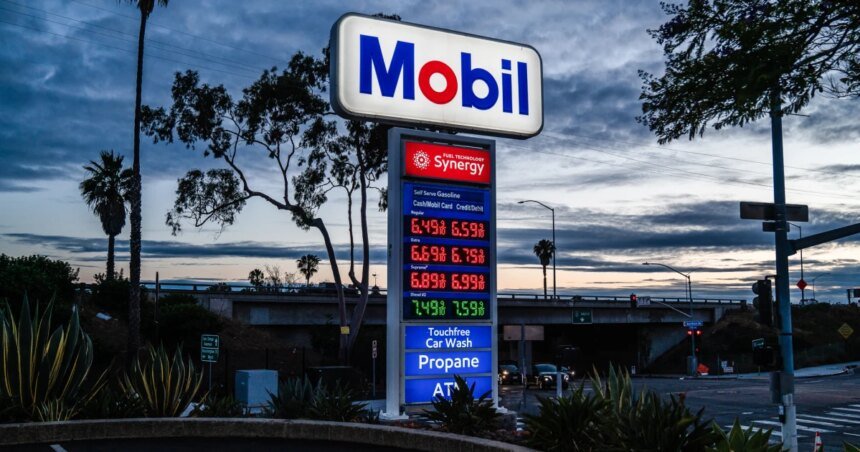
U.S. gas prices in early May were among the most expensive those prices had been in the past decade at an average of $4.63 per gallon, according to data from the U.S. Energy Information Administration. The average gas price last topped $4 in 2022, after Russia invaded Ukraine.
Faced with higher prices, some Americans are driving less, or at least filling up less often. An analysis by the location analytics company Placer.ai found gas station visits across the U.S. were down 5.7% the week of May 18, compared with the corresponding week in May 2025.
Consumers’ spending habits are also changing; April data from the Federal Reserve Bank of New York found consumers expect to spend more on transportation and utilities over the next 12 months and less on vacations, homes and electronics.
At the state level, an NBC News analysis finds Wyoming residents are feeling the greatest strain since the start of the war, with gas prices up more than 40% since February, averaging $3.87 per gallon as of early July.
Montana and Wisconsin, in addition to Wyoming, have experienced the highest rates of change, with prices up at least 40% from four months ago. Indiana’s gas prices have remained the most resilient, up less than 10% — only 27 cents — since February.