


Published On 2/7/2026
|
Last update: 15:16 (Mecca time)
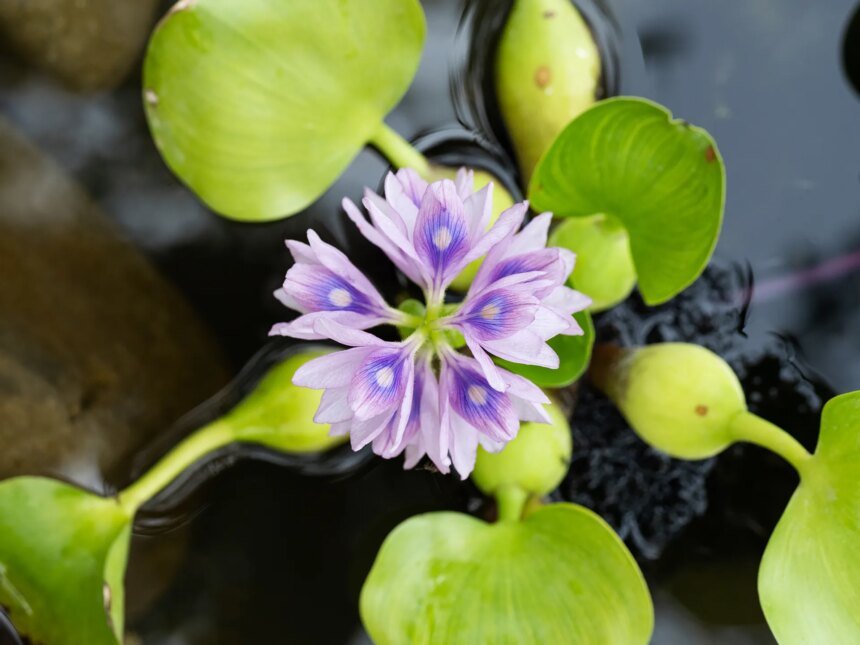
Under a cover of dense greenery and purple flowers that at first glance appears to be a natural painting, there hides an imminent danger that is strangling the rivers of Dhi Qar Governorate in southern Iraq.
The “Flower of the Nile,” or as it is locally called “the green enemy,” has returned to the forefront of the environmental scene in the governorate, transforming riverbeds into stagnant spaces, amid warnings of a disaster threatening fish wealth and pushing the marsh areas toward forced drought.
Accelerating invasion
Since September 2025, the infection spots of the Nile Flower plant have begun to expand in an alarming manner in Dhi Qar Governorate. This aquatic plant, known for its superior ability to reproduce and consume huge amounts of dissolved oxygen, has become a natural dam that impedes the flow of water in the main and subsidiary rivers.
The greatest danger lies in the nature of this plant, which consumes about one liter of water per day for each flower, which represents a real depletion of the already limited water quotas due to the drought crisis hitting the country, according to observers.
Government actions
Official authorities in the governorate confirm that they are waging a “war of attrition” with the plant, trying to confine it to specific areas to prevent it from reaching the Euphrates River, which feeds the marsh areas.
In this context, the Director of Water Resources in Dhi Qar, Engineer Abbas Jassim, said that the “Nile Flower” infections appeared in September 2025, and accordingly, the Directorate of Maintenance of Irrigation and Drainage Projects in Dhi Qar Governorate carried out immediate control work.
He added that they have established water buffers at two main bridges to monitor its spread and deal with it immediately.
The competent authorities are currently removing sediments in the area between the Hadarat and Highway bridges on both banks of the river as part of a campaign led by the directorate. Engineer Jassim said that the plant multiplies strongly in the summer, and its collection at the fences appears dense and annoying, as it impedes the flow and consumes large amounts of water.
The same spokesman considered that their primary goal was to prevent the plant from reaching the marshes, because treatment there would be almost impossible due to the difficulty of heavy machinery reaching deep into wet areas.
Popular concerns
On the other hand, observers and local residents believe that the current efforts, despite their importance, remain “patchwork” in light of the scale of the disaster, considering that the absence of radical solutions will lead to the collapse of the environmental and agricultural system in the governorate.
Ali Al-Hujaimi, an activist and observer of environmental affairs in the governorate, said: “The issue is starting to get out of control in Dhi Qar without radical government solutions,” noting that the government did not provide real solutions in light of the drought that previously struck the agricultural areas and marshes.
The activist added that today the citizen is demanding final solutions. “Every flower that draws a liter of water daily is water suicide in light of the current scarcity.”
Al-Hajaimi warns of the economic and environmental repercussions, saying: “The Nile Flower directly threatens fish and animal wealth, and if the matter is not remedied, the Chibaish marshes are threatened with complete drying as a result of the blockage of water nutrients and the plants’ consumption of water.”
Increasing environmental impacts
The harm of the Nile Flower is not limited to water consumption, but also extends to creating a dead environment under the surface of the water. Its most prominent harmful effects are the following:
– Blocking sunlight: This prevents the growth of aquatic organisms and beneficial natural plants
– Oxygen depletion: causing mass death of fish
– Obstruction to navigation: disruption of the movement of small boats on which the marsh residents depend for their livelihood