

Published On 7/3/2026
|
Last update: 07:39 (Mecca time)
Gaza- By today, Friday, 1,000 days will have passed since the start of the Israeli war of annihilation on the Gaza Strip on October 7, 2023.
Behind this number, the residents of the Gaza Strip experience daily details that are not measured in days as much as they are measured in the number of displacements, the loss of homes, and the absence of loved ones.
On the 1,000th day, more than two million Palestinians face a complex reality characterized by continuing daily killings, the collapse of basic services, and a worsening humanitarian crisis.
Impossible return
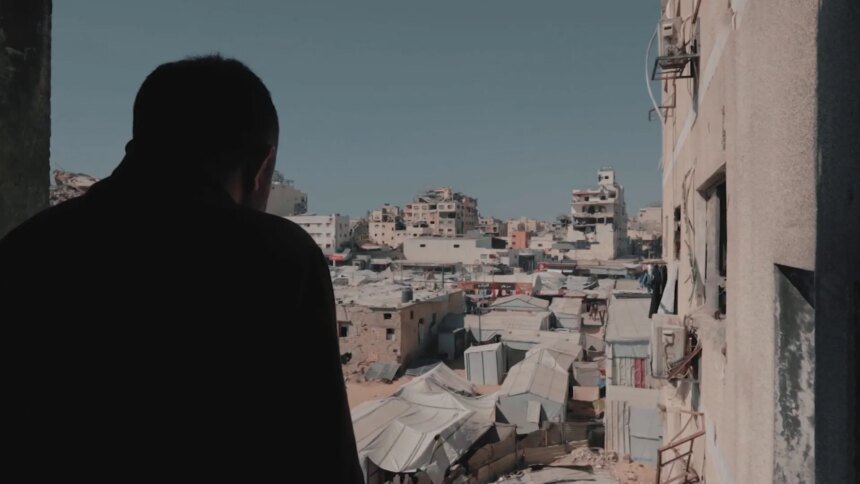
The displaced woman, Raisa Al-Razani, from Jabalia camp, narrates how the war changed the course of her life, explaining that she spent 1,000 days away from her family and neighborhood, after losing her sister and a number of her relatives, and today she lives inside a tent that lacks the most basic necessities of life, while her family members are dispersed in different places of displacement.
She points out that what she wishes most is to return to her room, but today her house is inside a closed military zone along the yellow line, which makes returning to it impossible at the present time.
Displacement and cancer
For his part, Nursing Supervisor Muhammad Al-Kahlot highlights the reality of the medical system 1,000 days after the genocidal war, noting that the health sector faced unprecedented challenges.
Al-Kahlot explains that these challenges were represented by the repeated targeting of medical staff and hospitals, which led to the almost complete collapse of the health system and its inability to provide the minimum level of care for the sick and injured.
Health suffering is more severe in patients with chronic diseases. Almaza Abu Haniyeh, who suffers from cancer, narrates that she received a medical referral for treatment outside the Gaza Strip at the beginning of the war, but the closure of the crossings prevented her from traveling.
She explains that her wait extended for 1,000 days, during which her health condition gradually deteriorated until she lost the ability to walk, while she is still waiting for the crossings to open in the hope of receiving treatment.
A childhood without education
Children were not isolated from this crisis; The child, Muhammad al-Qaddoumi, describes how the war changed the features of his childhood, after he lost a number of his friends, and was deprived of returning to his school, which was destroyed. He also misses his home, his playroom, and the club that he used to go to.
In a related context, Anas Al-Naqla, a displaced person from the Tal Al-Sultan neighborhood in Rafah, talks about the details of daily survival, explaining that he lost his father and his cousins during the war, and that his family’s life has turned into an arduous daily journey between water queues and food groceries, in light of constantly worsening suffering and the absence of any clear indications that its end is near.
As for Munawwar al-Rai, a displaced person from the Juhr al-Dik area, she describes the reality of her family inside a tent that does not protect them from the summer heat, after she saw a picture of her destroyed house on social media platforms, considering that the long years of effort to build the house ended in an instant, and that the dream of stability has become further away than ever before.