
Nine Years of GST: The Goods and Services Tax (GST) turned nine this year. What started as a four-slab tax reform has quietly become one of the most data-rich tax systems in the world. That’s the big takeaway from a new report by Grant Thornton Bharat, titled “GST@9: The rise of GST 2.0.”
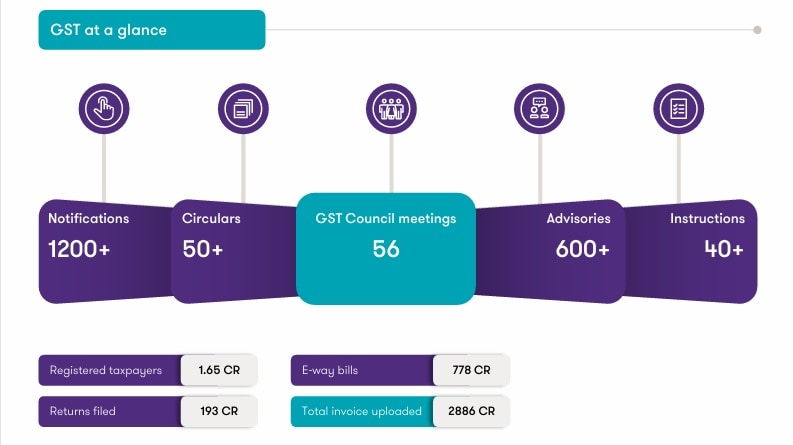
The numbers back it up. Collections hit an all-time high of Rs 23.11 lakh crore in FY 25-26. April 2026 alone brought in a record Rs 2.42 lakh crore. Registered taxpayers have grown from 60 lakh in 2017 to 1.65 crore today. Maharashtra remains the biggest contributor, as always.
But the real story isn’t the money. It’s the shift in how GST works.
From Filing System To Data System
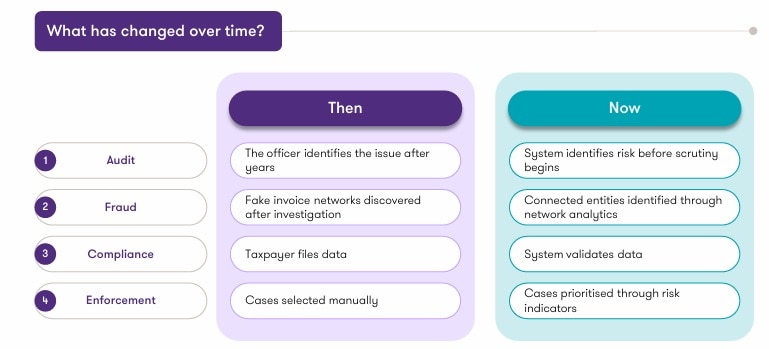
Grant Thornton’s report breaks GST’s journey into three phases. The first three years, 2017 to 2020, were about survival — building a common market, fixing early glitches, getting people to file returns on time. The next phase, 2020 to 2023, was digital: e-invoicing, QRMP, Aadhaar checks. Now, from 2023 to 2026, GST has entered what the report calls “intelligent administration” – AI-led scrutiny, risk-based audits, and the Invoice Management System doing the heavy lifting.
The report puts it simply: GST started as a filing system. Today it’s a data system. Tomorrow, it could become an intelligence system that flags fraud before it happens, not years after.
Then there’s GST 2.0 itself. The 56th GST Council meeting scrapped the old four-slab mess for a cleaner three-rate structure — 5 per cent for essentials, 18 per cent standard, 40 per cent for luxury and sin goods — effective 22 September 2025. Alongside that, the GST Appellate Tribunal finally became operational, clearing a backlog that had piled up for years.
Nine Legal Battles That Shaped The Law
Every big tax regime gets tested in court. GST has had its share of fireworks. Here are the nine rulings Grant Thornton flags as the most consequential of the year.
1. The Gameskraft verdict. The Supreme Court settled India’s biggest GST fight – online gaming. It ruled that once real money is staked, it doesn’t matter if the game is skill or chance. GST applies on the full value of stakes, not just platform fees. The exposure at stake: over Rs 2.5 lakh crore industry-wide.
2. Leasehold rights aren’t taxable. The Supreme Court backed the Bombay High Court’s view that assigning long-term leasehold rights isn’t a “supply” under GST. It’s a transfer of property interest, not a service.
3. Expat salaries get a breather. The Karnataka High Court said GST doesn’t apply to seconded employees’ salaries if the Indian entity genuinely controls and pays them like its own staff. A win for companies with cross-border secondment arrangements.
4. Cross-LoC trade is now taxable. The Jammu & Kashmir High Court ruled that barter trade across the Line of Control counts as an intra-state supply, since Pakistan-occupied Kashmir is legally still part of the old J&K state.
5. Toll roads, taxable construction. The Rajasthan High Court held that building a highway under a toll concession is a taxable service to NHAI. The right to collect toll is treated as payment-in-kind for construction.
6. ITC can’t be denied without a hearing. The Gauhati High Court said a genuine buyer can’t lose input tax credit just because the seller messed up their return. The buyer deserves a chance to prove the transaction was real.
7. Credit can move across states. The Bombay High Court allowed unused input tax credit to transfer from one state’s GST registration to another after a company merger – even though the portal wasn’t built for it.
8. No refund on shutting shop. The Sikkim High Court refused to allow a refund of leftover input tax credit just because a business closed down. Refunds, it said, are for specific cases like exports – not exits.
9. A split verdict on credit timing. Telangana and Madras High Courts disagreed on whether input service distributors must pass on credit in the same month it’s received. Telangana said the old rule went too far; Madras upheld it but added a practical twist – credit only counts once it’s actually usable.
Hits & Misses: Sector By Sector
Grant Thornton’s report also runs the numbers on seven sectors — what GST 2.0 got right, what it missed, and what industry is still asking for.
Automobiles – Cess is gone, folded into a simpler rate. Cars and two-wheelers got cheaper. But nobody’s told dealers what happens to leftover cess credit, and EV charging still has no clear tax treatment.
Real estate – Cement dropped from 28 per cent to 18 per cent. Cheap win for builders. But credit on construction remains murky, and nobody knows how to tax development rights or joint development agreements properly.
Pharma and healthcare – Life-saving drugs and diagnostic kits got exemptions. Good news for patients. Bad news: the inverted duty structure still traps working capital across the value chain, and hospitals barely get any credit at all.
Hospitality – Hotel rooms under Rs 7,500 now cost less to book, GST cut from 12 per cent to 5 per cent. The catch: hotels lose their input credit at that rate, which quietly pushes costs back up.
FMCG – Daily-use products and packaged food got cheaper. But fizzy drinks are still taxed heavily, and nobody’s figured out where energy drinks or “healthy” snacks fit in the rate chart.
Insurance – Life and health policies are now exempt, which sounds great – until you realise exempt means no input credit either. Premiums may not fall as much as expected.
Textiles and footwear – The old inverted duty problem got fixed. But apparel above Rs 2,500 jumps to 18%, creating an awkward price cliff right where the organised sector operates.
Nine Years Of GST: What PwC Thinks
Grant Thornton isn’t the only firm taking stock. Pratik Jain, Partner at Price Waterhouse & Co LLP, offered his own read on where GST stands – and it lines up on the numbers, even if the emphasis is different.
Jain points to registrations jumping 150 per cent since 2017, monthly collections settling near Rs 2 lakh crore, and refund processing up nearly 11 per cent year-on-year. To him, that’s not just healthy revenue — it’s a sign the administration itself has matured.
He also credits the government for working with industry to unlock real fixes: GST 2.0’s rate rationalisation, the Tribunal finally opening its doors, and years of sector-specific clarifications.
But Jain doesn’t think the job is done. He wants a serious rethink of blocked credits, so that businesses can claim input tax credit based on how they actually operate – not a fixed list of exclusions.
His bigger ask is for GSTAT to grow beyond just clearing pending cases. He wants it to start setting precedent – rulings that bring some consistency to how states classify and value goods, instead of every state doing its own thing. And he’d like e-invoicing and returns to talk to each other better, cutting down the endless reconciliation work businesses do today.
His closing line sums up where the debate is headed: the next chapter of GST shouldn’t be judged by how much has changed. It should be judged by how much simpler it has become to just run a business.
Nine Years Of GST: What Businesses Think
With GST entering its second decade, the effort now should be on making the system more efficient and easy to comply with, as per entrepreneurs. “Increasing interoperability of e-invoices, e-way bills and GST return filings can go a long way in making reconciliation easier and improving transparency within the entire supply chain. Working on solving the input tax credit problem and timely refund systems can help improve working capital management for both logistics players and manufacturers,” said Raghunandan Saraf, Founder and CEO, Saraf Furniture.
He added, “The future success of GST needs to be measured not just by revenues but by how well it facilitates movement of goods within the country.”