Published on 6/30/2026
|
Last update: 11:59 (Mecca time)
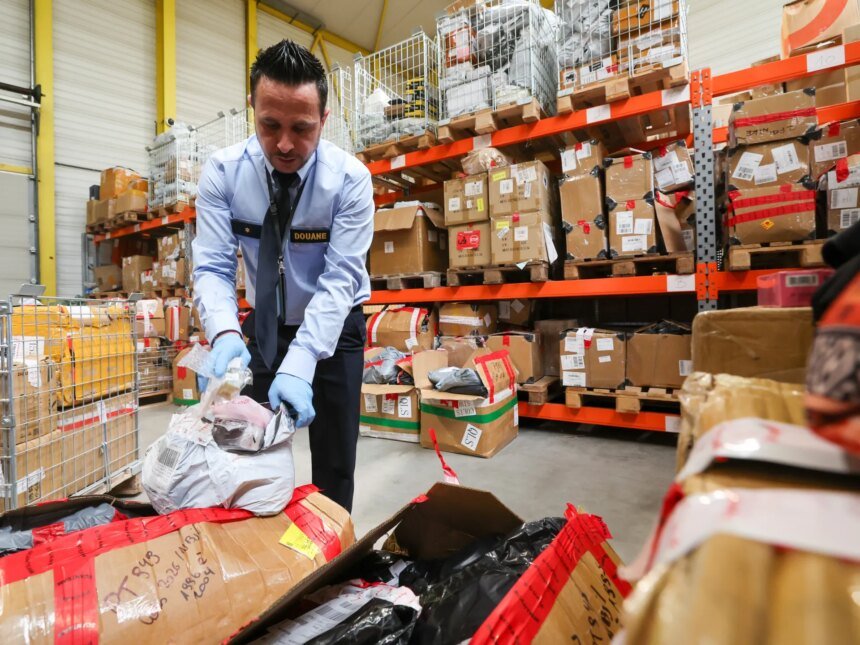
Tomorrow, Wednesday, the European Union will begin applying a new fee of 3 euros (about 3.4 dollars) on low-value imported packages, in a move aimed at regulating e-commerce and reducing the increasing flow of goods coming from abroad, especially from China, while strengthening customs control and achieving fairer competition.
The decision comes after the European Union received about 6 billion small commercial parcels during 2025, most of them from China via e-commerce platforms, such as “Shein” and “Temo,” compared to 4.6 billion parcels in 2024, which increased pressure on European customs authorities.
Read also
list of 4 itemsend of list
How will the tax be applied?
The European Union will abolish the customs exemption granted to parcels worth less than 150 euros (about 170.8 dollars), and replace it with a temporary duty of 3 euros (about 3.4 dollars) on each category of imported goods, and not on each individual item.
For example, the importer will pay 3 euros (about 3.4 dollars) when importing several shirts within the same shipment, while the fees rise to 6 euros (about 6.5 dollars) if the shipment includes a shirt and a watch as two different categories.
These fees will remain in effect until July 1, 2028, before moving to applying traditional customs duties depending on the type of goods.
Why did the European Union take the decision?
The European Commission confirms that the measure does not target China or any specific country, but rather aims to apply uniform rules to products sold within the European market.
“It is about applying the same rules to our companies and to goods entering our territory and sold online,” a senior European official said.

The Commission believes that the current customs exemption has given importers an unfair competitive advantage, at a time when customs departments are facing increasing pressure as a result of the rapid growth of e-commerce.
Inspections conducted during 2025 also showed that more than 60% of imported goods, such as toys, cosmetics and electronics, contained banned ingredients or lacked the required data labels and safety documentation.
“The situation is uncontrollable, and it has become almost impossible to carry out normal inspections,” said Bernd Lange, head of the European Parliament’s Trade Committee.
He added that the number of small parcels received from abroad has increased more than four-fold since 2022, reaching about 5.88 billion parcels in 2025.
Who will bear the cost?
The European Union emphasizes that the importer is legally responsible for paying duties, not the consumer.
The European official said: “Consumers who shop online are not legally responsible for paying customs duties,” but noted that e-commerce platforms may pass this cost on to buyers by raising prices.
He added that the Union authorities will monitor any attempts to circumvent the decision, including redirecting parcels through other countries, while some e-commerce companies are considering establishing warehouses within Europe to facilitate import and distribution operations.
As of November 1, 2026, the European Union will require e-commerce service providers to provide detailed reference data on imported products, and it intends to impose additional processing fees later this year to help customs authorities cover the costs of dealing with the increasing flow of parcels, with the amount of these fees to be determined at a later date.