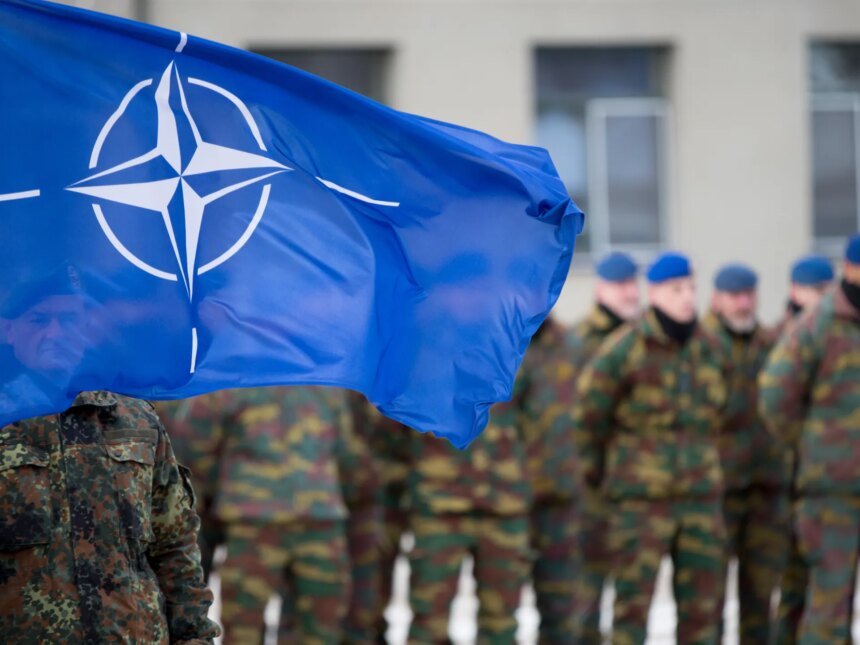
22 years after the 2004 summit in Istanbul, the leaders of the North Atlantic Treaty Organization (NATO) countries are returning to the Anatolian plateau in an anticipated summit hosted by the political capital, Ankara, this time, but with various security and geopolitical concerns and challenges, the most complex of which is the ongoing Russian war in Ukraine since 2021, in addition to the war in the East, the spark of which was sparked by the dual American-Israeli attack on Iran.
While the Istanbul summit more than two decades ago laid the cornerstone for the alliance to deal with the transitional period in Iraq after the fall of Saddam Hussein’s regime and the expansion of the scope of military operations in Afghanistan against Al-Qaeda, in addition to the inclusion of new allies from Eastern Europe into the alliance, the Ankara summit this time is particularly dominated by the issue of increasing military industrialization, raising the military spending budget of member states, and securing the eastern flank of the alliance in light of the worsening Russian threats, with public demands from Türkiye for a greater role in European defense initiatives.
Military spending threshold
Turkey will host 32 NATO leaders, in addition to officials from the Gulf states and the Asia-Pacific region, on July 7-8, amid tension within the alliance over burden-sharing, defense spending, and US complaints about the allies’ lack of participation in reopening the Strait of Hormuz.
Washington has repeatedly called on the allies to increase their military spending to 5% of their gross domestic product by 2035, and to reduce their dependence on Washington to ensure their security, which is what the European alliance countries sought to gradually respond to at the 2025 summit in Brussels.
Turkish Defense Minister Yaşar Guler told Reuters that the summit will focus on the NATO alliance and will evaluate increased allied spending on defense, enhance cooperation in the field of defense industries, and increase support for Ukraine.
The Turkish minister also indicated that the United States does not intend to withdraw from the alliance, but wants European allies and Canada to bear more responsibility for Europe’s security, which he said should include Ankara’s involvement in its defense plans and initiatives.

Data from the Stockholm International Peace Research Institute indicate that the military spending of European NATO member states increased their defense budgets in 2025 by 14% compared to the previous year, which is the largest increase since 1953.
This is due to the acceleration of rearmament programs against the backdrop of geopolitical tensions and the continuation of armed conflicts, and amid growing doubts about the reliability of the United States as a security partner.
On the other hand, this increase reflects the efforts of European countries to fulfill NATO goals. Of the 29 European member states of the alliance, 22 countries are now in compliance with the criterion of allocating 2% of GDP to defense spending.
However, NATO countries face obstacles related to how to advance weapons production more quickly.
Accelerating the pace of military industrialization
The conflicts in Ukraine and the Middle East have exposed the challenges faced by the industrial sector to produce weapons in sufficient quantities and within short periods of time.

On the one hand, the Russian war on Ukraine demonstrated Europe’s limited capabilities in this regard, as it highlighted the lack of basic capabilities and long waiting periods for production. At the same time, the war waged by the United States and Israel on Iran has depleted the American stockpile of weapons, putting intense pressure on companies to rebuild it.
A year after its historic pledge in The Hague to increase its defense spending, NATO countries face another challenge this year during their upcoming summit in Ankara, which requires getting the industrial sector to produce weapons in sufficient quantities.
With money flowing into defense budgets that rose last year by $90 billion in Europe and Canada alone, the alliance is struggling to convert this money into firepower.
NATO Secretary-General Mark Rutte stressed the inherent challenge of converting these funds into combat-ready capabilities, and considered this challenge a common priority.

This issue will be pivotal in Ankara, where NATO leaders are expected to conclude deals worth billions of dollars during a special industrial forum organized in parallel with the summit.
For Europe, the need to intensify efforts in this regard is of fundamental importance at a time when the continent is seeking to reduce its dependence on Washington in light of growing doubts about the extent of Washington’s reliability and warnings that Russia may launch attacks in the coming years.
In this context, European Union Defense Commissioner Andrius Kubilius said: “We have learned how to raise additional funds, but we must learn how to spend them effectively in order to outperform Russia in production, innovation and firepower.”
For his part, Secretary General of the European Defense Industries Association, Camille Gran, said that “many manufacturers are investing in much greater production capabilities,” although there is still much to be done.
Bureaucratic obstacles
To achieve the goals of readiness and superiority over Russia, NATO member states must first overcome the obstacle of bureaucracy and facilitate laws and procedures.
The first reason for this is due to the nature of the defense industry itself, as it is closely linked to the issues of national sovereignty of each country, which makes the defense market dispersed between national rules governing 27 member states of the European Union. This leads to other obstacles, including:
- “Costly fragmentation” hinders the prosperity of medium and small enterprises, which play a pivotal role in innovation.
- Large companies do not find incentives to invest, because they are confident that they will receive priority at the national level.
- Another major problem is related to the lack of flexibility and the difficulty of adapting production chains.
Yves-Marie Guerlain, Vice President of the French Dassault Group for European Affairs, said: “We discussed this together within our association, and we reached a common conclusion that the defense market cannot actually be described as a unified market.”
European Union Defense Commissioner Andrius Kubilius also summarized the situation by commenting that, “Last year, the Russians produced 2,000 ballistic missiles and cruise missiles. We only produce 250 cruise missiles, and we do not produce any ballistic missiles. The Ukrainians started producing them last year, and they will make 700 of them this year, because they make them with a sufficient level of effectiveness.”
In light of this, European companies are moving in increasing numbers to develop partnerships with Ukrainian companies to benefit from their experience, especially in the drone sector.
Securing the eastern flank of the alliance
In addition to the issues of military spending and manufacturing, NATO leaders are expected to discuss the critical importance of securing the alliance’s eastern flank borders as Russian threats worsen, incidents of hybrid warfare increase, breakthroughs via marches in countries such as Poland, Estonia and Romania, and suspicions of the Russian shadow fleet’s involvement in submarine cable sabotage operations in the Baltic Sea – penetrations that are widely viewed by European defense experts as Russian attempts to test the alliance’s capabilities to react.
The German-Dutch Corps now assumes command of the Alliance’s ground forces in Estonia and Latvia, and through its staff, it is establishing a second tactical headquarters for the region.
German Defense Minister Boris Pistorius said while he was in the Estonian city of Tartu this week before the NATO summit in Ankara: “Germany is strengthening its commitment to NATO’s eastern flank, in cooperation with our Dutch friends,” adding that the Corps will focus its leadership mission “entirely on Estonia and Latvia,” in confirmation of European action within NATO.
The headquarters of the Dutch German Legion is located in the city of Münster in the state of North Rhine-Westphalia. According to the data, the Corps will be responsible for organizing military maneuvers, as well as defending the eastern flank of the alliance if any emergency occurs, while NATO headquarters in Poland was undertaking this task until recently.
In theory, the increase in NATO’s military presence close to the Russian borders and areas of influence in Eastern Europe returns the tension between Moscow and the West to square one against the backdrop of the caveats that Russia usually places on the limits of NATO’s progress, which is a very sensitive issue.