Published on 6/29/2026
|
Last update: 16:24 (Mecca time)
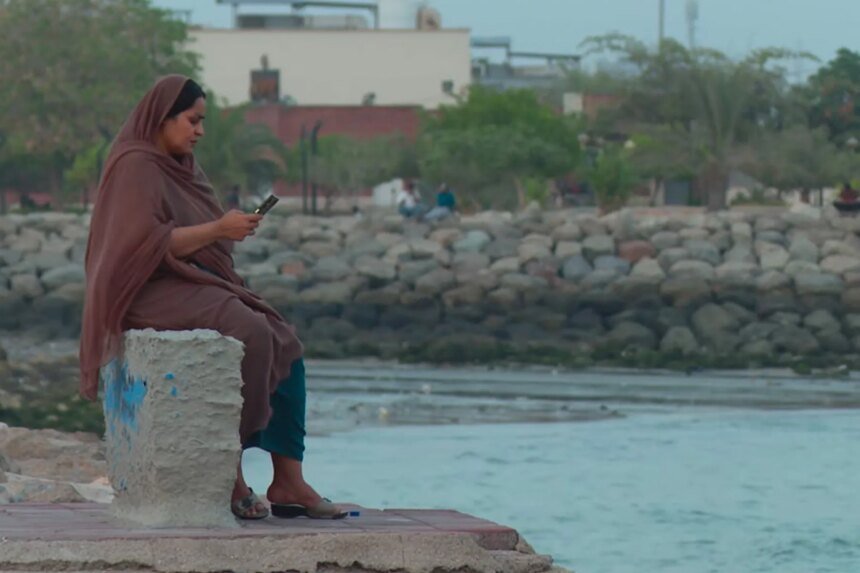
Bandar Abbas- The effects of the war in Bandar Abbas – southern Iran – do not appear in the form of direct destruction in the streets or markets, but rather in declining sales activity, prices rising on a daily basis, and anxiety extending from the sea to small shops.
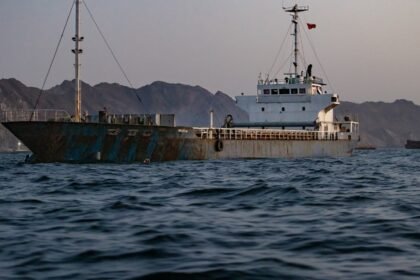
The city gained its importance in the recent war from its location overlooking the Strait of Hormuz, one of the most sensitive sea lanes in the world, where part of people’s lives are linked to the sea, the port, and the movement of trade and energy across the Gulf.
Hence, the military tension turned into a living pressure that includes vendors and customers alike, in a city that finds itself between the weight of geography and the calculations of war on the one hand, and the daily suffering of the market on the other hand.
In the fish market, one of the sellers tells Al Jazeera Net that the war directly affected his source of livelihood, because his work is primarily related to the sea. He added: “Our daily income has become 10 million tomans (the Iranian currency). We sell two fish and the income is 10 million tomans. What I mean is that we are unemployed. We come in the morning with clean clothes, and we leave in the evening with the same cleanliness.”
The man does not see this as just a temporary decline in demand, but rather as a result of fear that has spread to fishermen and customers alike. He explains that the war affected them 100%. “As fishmongers, our work is linked to the sea, and the sailor does not go to the sea now because he is afraid. Many of my friends believe that there is oil (pollution) in the sea or that there is a war, so they did not come to buy. We were greatly damaged.”
Prices in space
In an auto repair shop, the crisis appears from another angle. According to the workshop owner, the war not only hit the labor movement, but also exacerbated the price turmoil. He told Al Jazeera Net: “Before the war, the market was better, but now with the war, the labor market is very bad, and the situation is very bad.”
As for prices, the scene is summed up with one phrase: “Prices in space. Every day is more expensive than the last. You sleep at night and wake up in the morning to find that prices have risen.”
This daily change in prices is not limited to car spare parts or import-related materials, but also includes daily needs. A bread seller says that the living situation has become “very bad,” adding, “The prices of everything have risen. I wanted to buy medicine for my daughter, but I could not.”
She continues: “I hope the war will end and the high prices will end, because rising prices are difficult for us, very difficult.”

Movement without purchasing power
But the market picture is not the same for all sellers. In one of the clothing stores, a seller sees the market as “very bad,” but he does not link this to the war alone. He says while eating breakfast inside his shop: “The market is no longer what it was before, but – praise be to God – we are managing our affairs. In my estimation, it is not much related to the war, as the market is always like this.”
He adds: “All we want is for people to be happy and safe. We have no other hope. When the pockets are full, everyone will be happy.”
In an eyeglasses shop in the center of the city, its owner says that the war is not seen on the streets of Bandar Abbas as it is seen in other areas, but its economic impact is clear. He explained to Al Jazeera Net: “The war is not in the city, so we did not feel it directly. Here we see movement in the market because it is the center of the city, but people’s purchasing power has become weaker.”
He added: “The economic pressures affected people, but we did not see the war with our own eyes.”

Hormuz is at the heart of the debate
While vendors complain about the decline in work and the rise in prices, the importance of Bandar Abbas is due to its geographical location overlooking the Strait of Hormuz, which made the city strongly present in the calculations of the recent war, whether from the angle of navigation and energy security or from the angle of the reflection of tension on local markets.
The Strait of Hormuz is a vital corridor for global energy flows, as large quantities of oil and gas pass through it destined for international markets, which makes any tension around it a stressful factor on the regional and global economy, and not on Iranian coastal cities alone.
Bandar Abbas’s representative in the Iranian parliament, Ahmed Moradi, put this factor at the heart of his reading of the repercussions of the war, considering that Iran has not yet used its full capacity in this strait.
Moradi told Al Jazeera Net that “the issue of the strategic Strait of Hormuz” is one of the most important files related to Bandar Abbas, adding that “at least 20% of the world’s energy passes through the Strait of Hormuz,” in addition to the passage of a large portion of commercial goods and goods through it.
He pointed out that the Strait “was open and there was no problem,” but he linked the discussion about it to what he strongly described as the operations that targeted Iran, saying that “the enemy crossed all red lines,” and that the Iranian street was now demanding – in his words – that the armed forces exercise “greater control over the Strait of Hormuz.”
Moradi added that closing the strait “is up to Iran and can be done easily,” considering that it is “a waterway that is under Iran’s control, and Iran has sufficient supervision over it from all sides.”
The Iranian MP stated that he visited the Strait of Hormuz and a number of islands, including Hormuz, Lark, Hingham, and Qeshm, and said that he saw there “the strength and solidity of the armed forces and their high motivation,” in addition to the presence of the population on the islands alongside the armed forces.
Moradi added that the Strait “will not return to its previous status,” based on what he described as a popular and official position calling for greater oversight over it. But he added that Iran is “one of the people who negotiate,” expressing his expectation that the international community and neighboring countries will keep pace – as he put it – with the developments witnessed in the region.

Market in crisis
On the ground, sellers do not speak in the language of straits and military equations, but in the language of daily income, medicine, food, and customer traffic. For the fish seller, the problem begins with the fishermen’s fear of entering the sea. For the car repairman, the war appears in prices that jump every morning. As for the bread seller, she sees the crisis in her inability to buy medicine for her daughter.
Between an official speech talking about the Strait of Hormuz as a strategic card, and a popular market looking for a customer able to buy, Bandar Abbas appears to be a city suspended between the weight of geography and the pressure of living. The war did not reach every street in its direct military form, nor did it remain far from the details of the daily lives of those who live by the sea, the market, and daily work.