Published on 6/27/2026
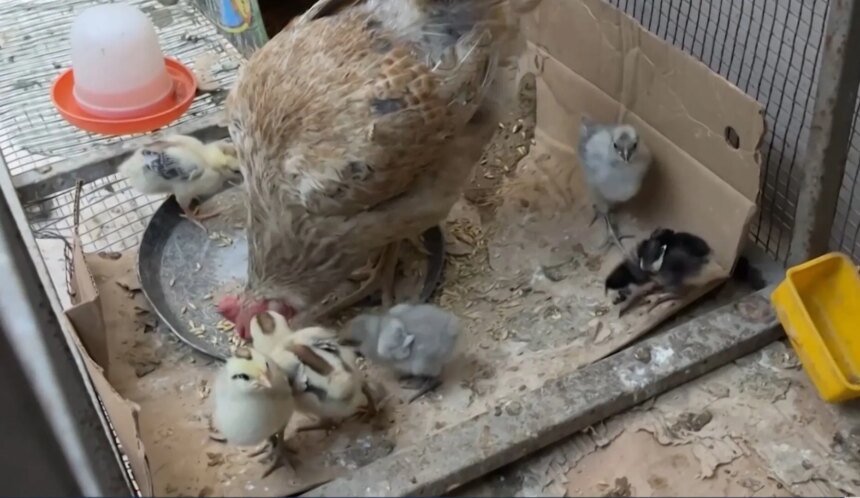
On the roof of his house in Gaza City, Ghassan did not find an ordinary space above the walls of his house, but rather saw it as an opportunity to try to restore something of what the Strip had lost during the war. Between small cages and birds that he was trying to care for, Ghassan started a simple project to raise poultry, in an attempt to adapt to the reality imposed by the war that caused widespread destruction to poultry farms and food sources in Gaza.
Ghassan says that the idea of raising poultry came after birds and poultry disappeared from the markets, at a time when the population lived in harsh food conditions, to the point where some of them were forced to eat animal feed during periods of famine and food shortages.
He adds that re-breeding birds is not just a personal project, but rather an attempt to provide a safe food source in light of a crisis that has affected every detail of daily life, as poultry has become one of the most affected sectors during the war.
According to estimates by the Ministry of Agriculture in Gaza, the poultry sector was subjected to almost complete destruction, as more than 99% of broiler farms were destroyed, in addition to the complete destruction of feed factories, and most egg incubators were out of service, which led to the sector losing its production capacity almost completely.
The Ministry of Agriculture says that this destruction directly affected the food security of the population, after the poultry sector represented one of the most important sources of protein and food in the sector, before it turned into one of the most prominent sectors struggling to survive.
In Gaza markets, live poultry was almost absent, and reliance became mainly on frozen chicken, which raises health concerns among specialists, due to the conditions that accompany its entry and storage in light of the lack of electricity and weak refrigeration capabilities.
Specialists warn that repeated thawing and re-freezing of frozen chicken may lead to the growth of harmful bacteria such as salmonella and campylobacter, which are bacteria that may cause cases of food poisoning and symptoms such as vomiting and diarrhea, which increases the risk of malnutrition, especially in children.
While the poultry crisis continues in Gaza due to the destruction of farms and the prevention of the entry of production requirements, some residents are trying to launch limited individual initiatives to revive this sector again, by raising birds in homes and rooftops, in search of a local food source amid an extremely difficult food reality.
What Ghassan is doing on the roof of his house is only a small attempt, but it reflects the desire of the people of Gaza to rebuild what sectors of life can be saved, and to search for alternatives in the face of food shortages and declining sources of production.