Football matches are not only played on the field, they are also played in front of cameras and microphones, and while the public is busy analyzing plans and formations, some coaches are fighting another, no less important battle, which revolves around controlling the expectations and psychological pressures of players and fans.
During the 2026 World Cup, several different models of this philosophy appeared, showing something in public and hiding something else inside, with the aim of protecting the players and giving them the best possible mental environment to compete.
Read also
list of 2 itemsend of list
Hossam Hassan “The Winner”
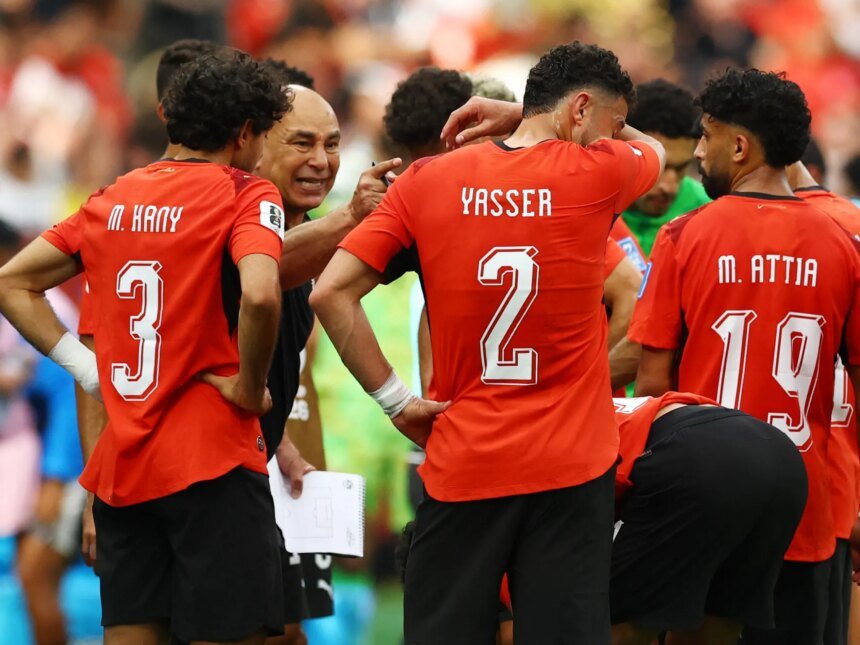
Hossam Hassan has one of the most winning personalities in the history of Egyptian football. He does not enter any competition, no matter how small, without setting victory in his sights, and the 2026 World Cup comes as the crown jewel of what Hossam Hassan went through in his career as a coach.
According to what was revealed by journalist Hani Hathout, Hossam Hassan informed the Egyptian national team players inside the camp that his goal was to reach the semi-finals in the World Cup, while he was speaking in front of the media that the goal was merely to qualify for the second round.

This may seem like a contradiction at first glance, but it is consistent with an old Egyptian school dating back to the era of the late coach Mahmoud El-Gohary. In the 1998 African Cup of Nations, El-Gohary was declaring to the media that the team was aiming to reach thirteenth place in the tournament, while he was assuring his players in closed meetings that the real goal was to win the tournament.
The matter was repeated in a different way in the 2006 African Cup of Nations, when the declared goal – even for the fans – was to reach the semi-finals, while Hassan Shehata was telling the players about winning the title, which was what happened in the end.
This philosophy is an attempt to reduce external pressure. When you announce relatively modest goals, you reduce public and media expectations, while keeping your real ambitions inside the dressing room.
Deschamps never nominates France
Didier Deschamps turned this idea into an integrated philosophy. The French coach rarely enters a press conference and speaks as his team is the first candidate for the tournament, despite having a group of the best players in the world.
On the contrary, he is always keen to praise competitors and emphasize that matches are decided by small details, and that all teams are strong and capable of winning. This appeared in his message that was filmed from the Iraqi team’s camp, in which he affirmed that the Arab team is capable of defeating France. He cited the matches of Bolivia and Spain and how the Lions of Mesopotamia excelled in them despite the technical differences between him and the competitors.
These messages are not only directed to journalists, but also to his players. Deschamps realizes that the most dangerous thing facing a team full of stars is not the opponent on the field, but rather the feeling that victory is inevitable. When Deschamps clashes with journalists in those areas and prevents them from feeling it, he looks to manage the pressure on his players in a balanced manner.
In sports psychology, there is what is called “cognitive load,” which is the amount of mental energy that a person consumes in dealing with external pressures and stimuli, and managing cognitive load is one of the most important things that the person in charge of any sports team should take into account.
Every negative press headline, every television criticism, every provocative question, or even continued exaggeration, adds a new burden on the player, and as these pressures accumulate, the player’s ability to concentrate and make decisions on the field may decline, and here comes the role of Deschamps in the French national team, who comes to the fore to bear the bulk of these pressures on behalf of his players, whom he does not enter into these details.
Even when asked about the brilliance of a particular star, he often credits teamwork, defensive organization or the midfield role, in a constant attempt to shift the spotlight away from individuals and reinforce the idea that success is a collective responsibility.
Pochettino…a different speech inside the room
As for Mauricio Pochettino, he used the same method, but in the opposite direction. While he appears in the media as a calm and organized coach who often uses diplomatic phrases in the US national team camp, the team’s players reveal a completely different discourse inside the locker room.

American player Sebastian Berhalter explained in statements reported by Fox News that the Argentine coach uses very harsh profanity as he repeats to his players the phrase: “We do not become Americans if we accept insults in this cup.” His colleague Timothy Weah also spoke about the “positive aggressiveness and strong personality that the coaching staff instilled within the national team.”
Pochettino intends to inject doses of enthusiasm and confidence into the team, while avoiding turning these messages into media headlines that might double the pressure on his players.
Football is no longer concerned with managing the ninety minutes only, but has also extended to managing emotions, expectations and pressures. Just as teams need a tactical plan on the field, they sometimes need a psychological plan off the field, because major tournaments are not decided by technical abilities alone, but also by the ability to deal with pressure when the lights become at their brightest.