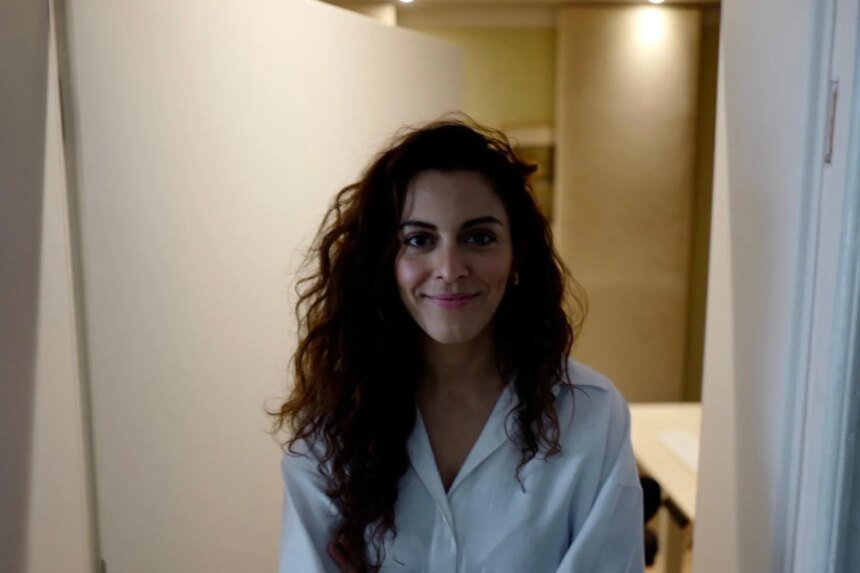
Videos of Egyptian psychotherapist Christina Mikhail have received millions of views on social media platforms. Most of them do not exceed a minute, but they lightheartedly explain the roots of psychological suffering and ways to confront it in a language that is close to the people.
Christina studied psychology in Austria, where she obtained a bachelor’s and master’s degrees, specializing in clinical psychology and neurosciences. She then underwent specialized therapeutic training in Germany over a period of five years, which qualified her to obtain a license to practice the profession there. With daily work, she decided to expand her influence through a meditation initiative directed at Arab immigrants entitled “Meditation in Al-Masry,” in addition to other attempts at “digital psychological assistance,” which she tells Al-Jazeera Net.
Read also
list of 4 itemsend of list
A special kind of suffering
As an Arabic-speaking therapist, her experience mainly works with refugees and Arabs residing in Germany, in addition to her work with German patients. She told Al Jazeera Net: “I worked for two years in an institution in Berlin, and the majority of the cases were related to their experiences of migration, asylum, and the traumas resulting from a complete life change.”
She adds: “Many immigrants suffer from a kind of existential dimension, as the person suddenly finds himself in a new country, with a different language and culture, which affects his sense of psychological stability, identity, and belonging, especially when there are unrealistic expectations of a fast-paced and disciplined pace of life, while they are starting from scratch after prestigious jobs and high professional and social levels in their countries, on top of additional difficulties such as racism or social exclusion in a country that classifies them as refugees.”
Christina points out a humanitarian side that many do not pay attention to: “Many children who arrive without their families remain for long periods of time in a state of waiting and instability, sometimes in homes or centers awaiting reunification that may or may not happen.” That is why she felt the need to offer something different that would ease the burden of the experience on everyone.
“Meditation in Egyptian”… Free meditation from the phone
Through a free channel on YouTube, Al-Masry launched the “Meditation” initiative, after noticing a lack of awareness of some simple things that can make a big difference. She says: “Meditation helps a lot, especially with anxiety and sleep problems that are common among many Arabs and refugees, especially if it is combined with movement and sports. Psychotherapy is not one thing, but rather a set of different tools.”
She explains that she wanted to reach people in the simplest way possible: “Seeking psychological help is a difficult step for many people, so I thought about delivering information without barriers. Everyone has phones in their hands, and instead of asking them to come, it is better to reach them where they are.”
Although she addresses Arabs of multiple nationalities, she chose to speak in Egyptian: “My language is part of my personality, and it was difficult for me to present the content in a language that is not natural to me. I felt that the issue should not be complicated or huge. Meditation is a real opportunity for a person to calm himself down a little and pay attention to what is inside him in the midst of a fast world and continuous responses to everything that happens around us. Meditation slows down the rhythm, and teaches us that not everything needs an immediate response, which helps in building a kind of stability and internal organization.”
Is digital awareness enough to confront psychological pain?
In addition to the meditation initiative, Christina continues to publish psychological awareness clips at a rate of two to three clips per week, each of which takes 3 to 4 hours to prepare. She says: “I love creating content and it does not exhaust me. I believe that not every person who feels stressed or distressed should start psychological treatment immediately. The beginning may be with simple information that helps him understand himself more, and reduces his fear or embarrassment at the idea of treatment.”
However, she stresses that psychological content on platforms such as TikTok and Instagram cannot be a substitute for specialized treatment: “Any short content may not be accurate enough, and may be understood out of context or applied incorrectly. If you notice that you are negatively affected or stressed by these clips, this may be a sign that you need specialized support.”
The young therapist chooses topics that touch on everyday experiences, and avoids content that is presented as absolute truths. Although the interaction with her content in Germany is not great, the Arabic messages she receives give her motivation to continue: “These messages are very important to me, as proof that a simple sentence can make a real difference in a person’s life, and this is my primary goal.”

Psychological peace in exile is not a luxury
Christina never tires of reminding her followers that digital content is no substitute for seeking help. She always repeats her golden advice: “As an immigrant or refugee going through a difficult experience, you must remember that you have great value to add to wherever you go, so that while learning you add without losing your identity.”
She explains that the rosy picture of life in Europe hides stressful details: “The systems are complex, the procedures are numerous and take a long time. These are very stressful issues, especially when a person does not know his rights.”
She adds: “I deal with suffering such as anxiety, trauma, and fear, especially among those coming from wars or violence. I see strong feelings of isolation and loss of social warmth inside semi-isolated buildings or centers, and loneliness and the necessity of constant movement in order to fulfill obligations, which is an extremely difficult matter for someone suffering from depression or psychological pressure.”
Therefore, she believes that part of her work is not limited to psychological support, but also includes clarifying rights: “I am trying to create some kind of link between Arab refugees and the regime in Germany, for greater interaction with German society that benefits everyone.”
Regarding the cost of treatment, Christina points out that a treatment session in Germany ranges between 100 euros (about 108 dollars) and 120 euros (about 130 dollars), but health insurance covers the costs in most cases.
She says: “There are also many psychological support centers in Germany, in almost every region. In Berlin, for example, there are centers that provide psychological assistance for free or at a nominal cost. Depending on the person, his capabilities, and his need, he can find appropriate support. Therefore, it is important for any resident of Germany to have health insurance, even if it puts pressure on the system or leads to waiting lists. Mental health must remain a priority, not a luxury.”