
New Delhi:
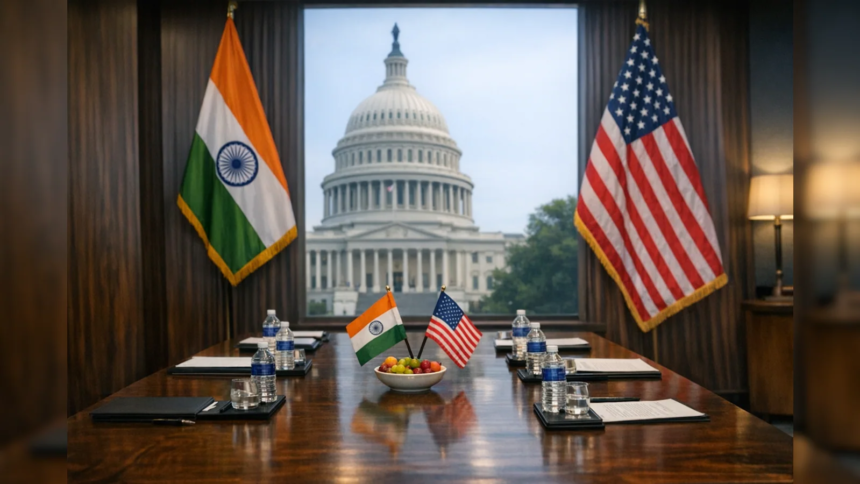
Commerce and Industry Minister Piyush Goyal has indicated that India and the United States are making steady progress towards a bilateral trade agreement after two days of high-level negotiations in New Delhi, even as both sides race against a crucial July deadline.
Speaking after the discussions with a visiting US delegation led by US Trade Representative Jamieson Greer, Goyal described the talks as “constructive” and said negotiations were moving forward in the right direction. While he stopped short of announcing a breakthrough, the minister reiterated that India would only sign a deal that protects national interests and benefits both economies.
His remarks come at a critical stage in the negotiations, with both countries trying to finalise the first tranche of an interim trade agreement before the current negotiation window expires in July. Failure to do so could reopen the possibility of fresh tariff actions and add uncertainty for exporters and investors.
The latest round of talks follows weeks of intense engagement between officials from both sides as New Delhi and Washington attempt to resolve long-pending trade disputes while laying the foundation for a broader free trade framework.
Market Access Remains The Biggest Sticking Point
While Goyal struck an optimistic tone, several difficult issues remain on the table.
The discussions have centred on improving market access, reducing non-tariff barriers, customs procedures, regulatory standards and sector-specific concerns across agriculture, industrial goods and technology.
India is understood to be seeking greater access for its labour-intensive exports, while the United States wants wider access for agricultural products, industrial goods and digital trade. Non-tariff barriers have also emerged as one of the most significant areas under negotiation as businesses increasingly face regulatory hurdles rather than import duties alone.
“Discussions with Washington are now focused on creating a framework that gives India a competitive edge over peers”, Reuters quoted Goyal as saying.”We cannot enter a deal with the US until the framework of having a comparative advantage is finalised,” Goyal said, adding “India and the United States are very close to finalising a trade deal”.
According to media reports, negotiators are attempting to find common ground without compromising domestic regulatory safeguards, making the ongoing talks especially delicate.
India-US Trade Deal: Why Non-Tariff Barriers Matter?
Prabhat Ranjan, Senior Director at Nexdigm, said reducing non-tariff barriers could prove even more significant than lowering tariffs.
“Businesses today are often more affected by compliance complexities, certification requirements, customs procedures and regulatory inconsistencies than tariffs alone,” he said.
According to Ranjan, greater harmonisation of standards and smoother trade facilitation measures can reduce transaction costs, strengthen supply chains and help exporters on both sides access markets more quickly.
He added that companies would closely watch how the final framework balances operational ease with regulatory protections, saying a well-balanced agreement would provide greater certainty to investors and exporters while strengthening the strategic partnership between India and the US.
Ranjan also noted that the July timeline has become increasingly important because any delay could revive the possibility of additional tariff actions, creating uncertainty for bilateral trade. Concluding an interim agreement before then, he said, would help preserve market access and reduce risks for businesses operating in both countries.
US-India FTA: The Bigger Picture
The current negotiations build upon the interim trade understanding reached earlier this year after the US agreed to lower tariffs on several Indian products as part of a broader effort to ease trade tensions.
According to Grant Thornton’s analysis, the arrangement was designed to create space for wider negotiations on digital trade, market access and sector-specific issues while encouraging India to increase imports of American products, particularly in energy, information technology and coal.
The analysis notes that Washington has also outlined ambitious trade expansion goals, while discussions continue on digital trade rules, agricultural access and industrial exports. However, many elements of the framework remain non-binding and will ultimately require further negotiations before becoming permanent.
Grant Thornton also points out that the India-US discussions come soon after India’s trade progress with the European Union, highlighting New Delhi’s broader push to deepen trade ties with major global economies.
US-India FTA: What’s Next?
With the July deadline fast approaching, negotiators now face the difficult task of resolving outstanding differences without diluting either country’s core interests.
Goyal’s comments suggest that both sides remain committed to finding common ground. But whether the current momentum translates into an interim agreement over the coming days will be closely watched by businesses, exporters and investors on both sides of the globe.
Significantly, New Delhi has already made it clear that India is unlikely to rush into a deal unless it delivers long-term strategic and economic gains.