Published on 6/24/2026
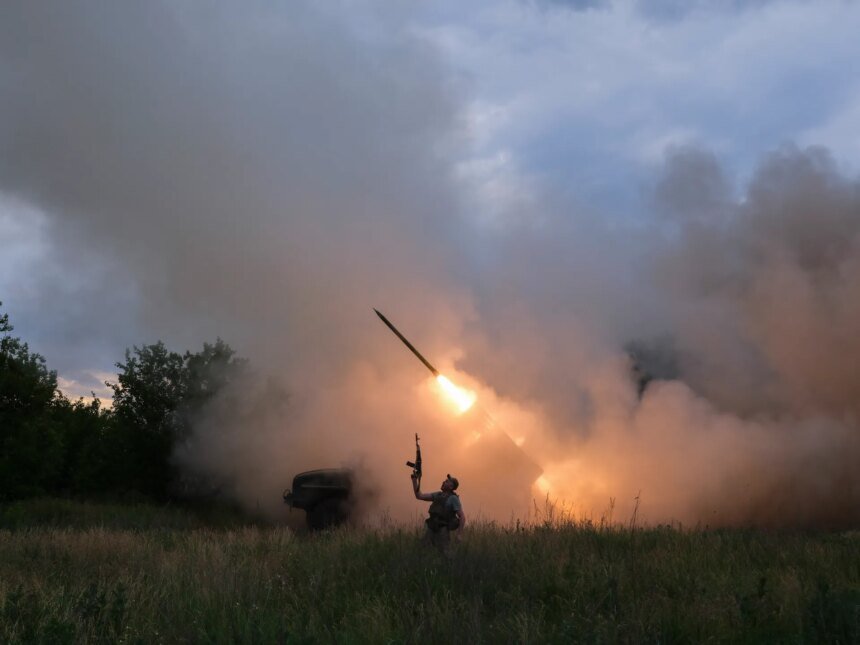
The language of escalation is at the forefront of the political and field scene in the Ukrainian crisis, amid explicit Russian warnings of the expansion of the conflict and its transformation into a direct confrontation with Western countries led by the North Atlantic Treaty Organization (NATO).
These developments coincide with an intense European movement to compensate for the gradual decline in American engagement, which places the European continent before a new strategic reality that redraws the balance of power and the prospects for a peaceful solution.
Drums of great war
Russian President Vladimir Putin believes that Western countries have begun to go beyond the stage of providing support to Kiev and are preparing to fight a real war against Russia, based on the increase in European defense spending.
In this context, Russian political analyst Ronald Begamov confirms that the conflict in its essence is not between Moscow and Kiev, but rather a direct confrontation between Russia, NATO, and Europe as a whole, as a result of the absence of a collective security structure and the continued Western expansion eastward.
Bijamov explains – during his talk to the “Beyond the News” program – that Russian circles are tired of talking about “red lines” that have completely gone out of fashion, so that the option of continuing the war has turned into a unified Russian popular demand to guarantee Ukraine’s neutrality and combat Nazism.

On the ground, Begamov reduces the extent of Ukrainian drones’ penetration of Moscow’s airspace, stressing the efficiency of Russian air defense by 100%.
He also pointed to the progress of the Russian army, which has only 12% left to liberate the entire area of the “Donetsk People’s Republic”, which reflects Moscow’s long-sightedness and ability to withstand a prolonged war of attrition.
Inheriting the military burden
In the face of increasing indications of the United States’ unwillingness to continue bearing the military bill alone and the decline in its priority of the Ukrainian file since the Iran war, European capitals began to inherit this burden out of a desire to avoid a scenario of freezing the conflict.
Hosni Abidi, professor of international relations at the University of Geneva, points out that Putin’s statements came as a reaction to the success of the Europeans at the G7 summit in convincing US President Donald Trump to ratify a clause that would strike the Russian economy and paralyze its war machine.
Obaidi adds that this transformation is accompanied by an increase in the pace of armament, as German Chancellor Friedrich Merz seeks to make his country the largest military power in Europe, while France established the “Coalition of the Willing” to compensate for the absence of a unified collective European position, so that Europe today becomes the largest military, financial and political supporter of Kiev.

For his part, Ulrich Bruckner, professor of political science at Stanford University in Berlin, confirms that the Europeans have already effectively assumed Washington’s responsibilities, relying on technological initiatives that allow Kiev to use drones and analyze battle data to target Russian defense supply chains.
Bruckner believes that the worsening economic situation in Russia towards recession and the decline in oil prices due to sanctions will eventually force Moscow to sit at the negotiating table and bargain on its red lines, stressing that the Europeans are ready to take the lead of these negotiations on behalf of Ukraine.
Since February 24, 2022, Russia has been launching an attack on Ukraine and stipulates in order to end it that its neighbor abandons joining Western military entities, which Kiev considers “interference” in its affairs.