Al Jazeera correspondents
Published on 6/25/2026
|
Last update: 11:33 (Mecca time)
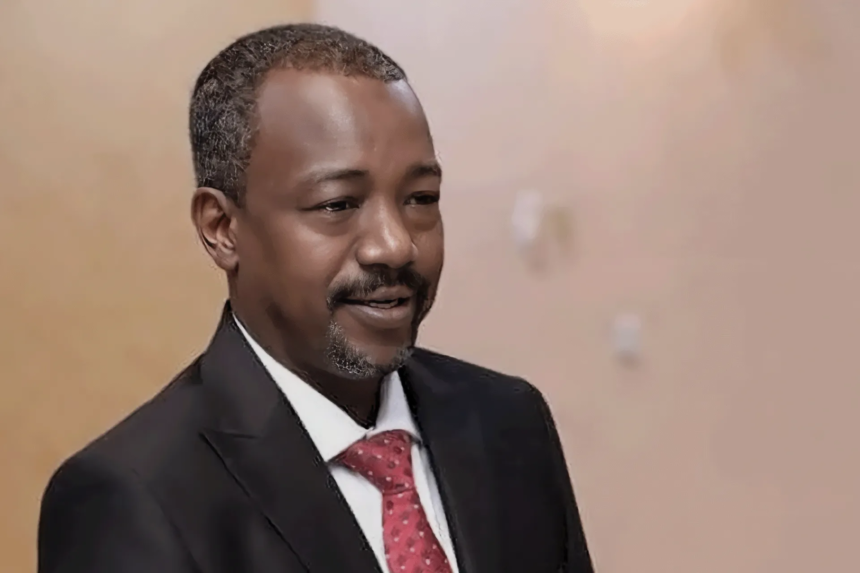
Khartoum- Member of the Transitional Sovereignty Council and head of the Sudan Liberation Forces Movement, Abdullah Yahya, revealed that what the Rapid Support Forces are currently doing in the Darfur region, in imposing a parallel authority in Nyala, is behind it. External dictates.
During an interview with Al Jazeera Net, Yahya, who was appointed a member of the Sovereignty Council in August 2024, confirmed that the Rapid Support Forces will not be able to separate the Darfur region, and that the Libyan model that it is trying to copy is not suitable for application in Sudan.
He believed that going for a military solution was a necessity dictated by the nature of the ongoing war, and that the “Rapid Support Militia” targeted the Sudanese people with massacres and atrocities, making it difficult for people to coexist with it or accept it as an entity in the future.
He called for not to be afraid of armed movements, and said that the country is living in exceptional circumstances in light of an existential war, and after the end of the war, the army must monopolize weapons, and all these movements must be integrated into the military institution, and if that does not happen, then everything is expected.

Below is the text of the dialogue:
-
After more than three years of war, how does the Darfur region currently look, humanitarianly, security-wise, and militarily?
Since the outbreak of the war, the Darfur region has remained outside the influence of the executive and administrative state, and with the fall of El Fasher last year, the region has become a scene of chaos for rebel militias, and a crossing through which weapons and mercenaries enter. People in Darfur have become either displaced, refugees, or detained in the prisons of the Rapid Support Forces, and the citizens there are helpless and live in deprivation under threats and extortion.
-
Do you think that international and regional interventions have contributed to the complexity of the situation in the country, or are the factors of the crisis internal?
Without a doubt, the proliferation of internal crises and the failure to manage them prepared the country for international interventions, which led to the aggravation and complexity of the situation.
-
Don’t you see that the steps imposed by the Rapid Support Forces reflect a trend towards separating the Darfur region, or at least applying the Libyan model?
Rapid Support was never able to run a state. It is enough that it controlled most of Khartoum State, the country’s capital, and some central states, and was unable to form a government. What is currently happening in Nyala is not the product of its ideas, but rather external dictates. Whatever the case may be, the one who lacks something does not give it, and it will not be able to separate Darfur from Sudan, and the Libyan model is not suitable for application in Sudan.
-
After the massacres and violations that occurred since the beginning of the war, can peaceful coexistence and social peace return to the country?
The “Rapid Support Militia” targeted all the Sudanese people with massacres and atrocities, and committed violations wherever it went. Therefore, it may be difficult for people to coexist with it or accept it as an established entity participating in the administration of the state. Therefore, we are committed to dismantling and eliminating it in order to preserve social peace in the country.
-
There are fears that the Darfur movements fighting with the army will quickly turn to new support after gaining financial influence and military support?
Why fear the Darfur movements alone? Look at the map of Sudan. Is there a spot in the country where movements or armed groups have not emerged? Did it participate or not participate in power, whether in the past or in the present? Was it integrated or were its weapons collected?
We are currently living in exceptional circumstances in an existential war for self-defense and honor, but after the end of the war, all weapons must be transferred to the armed forces, by integrating all these armed movements and groups into the military institution, and if that does not happen, then everything is expected.
-
Don’t you think that the multiplicity of armies and militias is one of the biggest risks facing the country, especially since some of them want to turn their fighting alongside the army into political gains?
In my opinion, the multiplicity of armies is a manifestation of the real crisis in the emergence of the Sudanese state, and the failure of successive regimes to find solutions to their crises.
My solution is for the Sudanese to unite behind the goals of formulating a unified state, which includes everyone and leaves no room for narrow biases.
-
Do you think that resolving the war is not easy and costly militarily, economically and humanitarianly, and that it is better to shorten the solution through negotiation?
Military resolution is a necessity dictated by the nature of the ongoing war, which targeted the citizen, his money, his honor, and his entire existence on the ground. Therefore, the state has no choice but to fight.
As for negotiating to stop the war, the state has not stopped doing it. Since the beginning of the war, it has sought negotiations in all platforms and is still seeking to do so, but the question is with whom it negotiated, and who has the ability to restrain the militias and mercenaries. This group is a tool managed by evil countries that do not want stability and progress for Sudan.
-
The government handed over a plan to the United Nations for peace, and the Quartet also put forward proposals to resolve the crisis. Can’t the two plans be harmonized in order to reach a formula that leads to peace and stability in the country?
Every external effort by friends is welcome as long as it seeks the unity and stability of the state and its sovereignty over its land, but in my estimation, true peace and stability in the country is created by the Sudanese with their solidarity and alignment behind their forces and the national state’s agenda.

-
The Chairman of the Sovereignty Council called for a Sudanese dialogue inside the country that includes all political forces. What guarantees can the council provide to make the dialogue successful?
The call for a comprehensive Sudanese-Sudanese dialogue within the country is a thesis that came from the top of the state hierarchy, and therefore providing guarantees for the success of the process is the responsibility of the agencies concerned with that, and the Transitional Sovereignty Council is keen on the success of the dialogue and all necessary arrangements will be made for that.
-
The five-member Sudanese forces conference in Addis Ababa recently witnessed a division in the positions of the forces supporting the army and state institutions. Do you not think that this weakens the national forces inside?
Everyone hopes that the positions of the forces supporting legitimacy and state institutions will be unified under one banner, but in light of the complexities of the scene in the country and the increase in external interference, points of view are numerous and some differences appear, but the important thing is that the difference was in the principle of participation or not, and not on the agenda of supporting and supporting the country’s army. This is a matter of agreement and no disagreement, and this is praiseworthy.