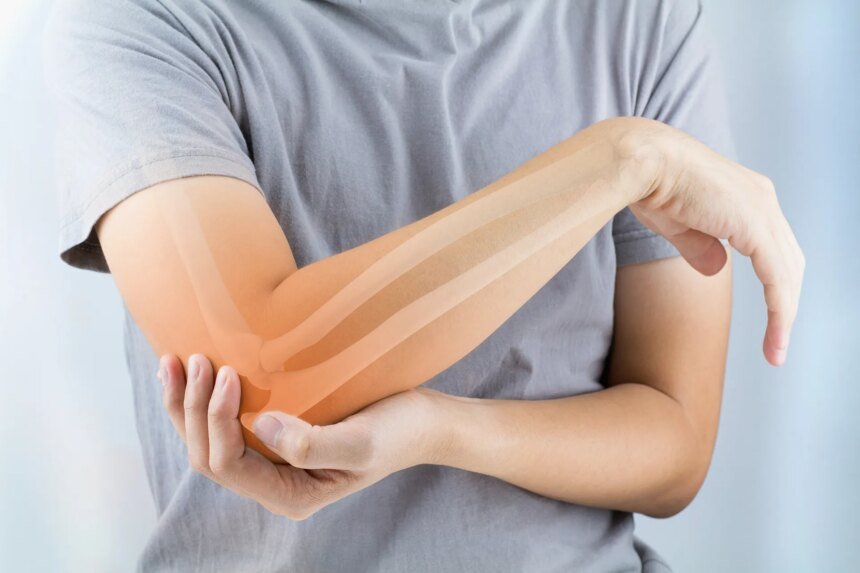
If you asked anyone about bones, they would likely answer you with one word: calcium. This answer, although partly correct, reveals how much we do not know what is going on inside our bodies. Bones are much more complex than we learned. What science has discovered in recent decades changes the way we look at this fabric that we carry throughout our lives.
Bones are a living tissue within which specialized cells work non-stop. They build and destroy, sense and make blood, and respond to every step we take, every meal we eat, and every night we sleep. At the same time, bone diseases are becoming more common, from silent fragility that only appears after a sudden fracture, to joint pain that has begun to plague a wide range of people at an early age.
In this report, we review what science says about bones, their structure, and diseases, and how simple daily choices can make a real difference in their long-term health.

Bone cells
To truly understand what is going on inside the bone, it is necessary to recognize three types of cells, each of which has a role that no other plays:
- Osteoblasts: They are considered skeletal engineers; Specialized cells known as osteoblasts work inside each bone, producing collagen fibers and then depositing calcium and phosphorus with high precision to form strong, consistent bone tissue.
- catabolic cells: On the other hand, there are osteoclasts, which are specialized cells that secrete acids and enzymes that dissolve old or damaged parts of the bone. Old or weak bone tissue needs continuous removal to be replaced by new, stronger and more efficient tissue.
- Guard cells: Which acts as a smart bone memory, and is considered one of the most amazing bone cells. They live in a fine network deep inside the bone, and act as advanced sensors, sensing movement, pressure, and stress, and then sending signals to the rest of the cells to determine when construction or repair should begin.
Bones and joints: an integrated vital system
Behind this solid structure that supports the body and maintains its shape, a precise and restless system operates; A system that goes beyond support and movement to vital tasks that touch the core of life itself, from blood production to maintaining balance and regulating movement.
Inside some bones there is spongy tissue that houses bone marrow, one of the body’s greatest vital factories.
There, stem cells produce millions of red blood cells that transport oxygen, white blood cells that defend immunity, and platelets that are responsible for stopping bleeding. That is, bones not only give us the ability to move, but contribute daily to keeping us alive.
It represents a living reservoir of vital minerals, as it works as a dynamic system that stores essential minerals such as calcium and phosphorus and gradually releases them when needed.
When calcium in the blood decreases, the body does not wait for your next meal, but rather withdraws it directly from the bones to maintain the work of the heart, nerves, and muscles. This constant exchange makes bones an actual partner in the body’s balance, not just a silent repository.
Modern anatomy shows that the human body consists of a delicate and highly complex structure, which includes a large number of large and small joints that connect the bones and give the body its ability to move and balance. These joints are distributed in the limbs, the spine, and multiple areas of the skeleton.
This general perception of the structure of joints and their abundance in the human body reflects remarkable accuracy in describing the physical structure of humans, in a time when there were no tools for detailed anatomy or advanced scientific imaging.
Bone health and aging
This delicate vital system is not immune to deterioration. With age, the balance between construction and destruction becomes disturbed, and bone and joint diseases begin to appear in different forms:
- Osteoporosis: the silent disease
A disease characterized by decreased bone density and deterioration of its microstructure, making it more fragile and susceptible to fractures even after minor injuries. It is often called the “silent disease” because it develops over the years without obvious symptoms, and its first signs may be a fracture of the hip, wrist, or vertebrae, or loss of height and curvature of the back with age.
This condition results from an imbalance between bone building and bone destruction, where bone loss becomes faster than its replacement, due to aging, hormonal changes, lack of some essential nutrients, and lack of physical activity.
It is mainly diagnosed by measuring bone density, while treatment depends on nutrition rich in calcium, protein, and Vitamin D, regular physical activity, avoiding smoking and factors harmful to bones, in addition to prescribed medications when needed to reduce the risk of fractures.
- Osteoarthritis: wear and tear of movement
It occurs when the cartilage that facilitates joint movement wears out, especially in the knees and hips, causing pain, stiffness, and difficulty in movement gradually, especially with excess weight, lack of activity, and muscle weakness.
What is noteworthy is that lifestyle can make a huge difference. Appropriate exercise, strengthening muscles, and losing weight may help maintain movement for many years.
- Neck and back pain: diseases of the modern age
Modern people no longer move as they used to, with long hours in front of the phone and computer, continuous sitting, and lack of physical activity. The result is that the neck and lower back have become one of the areas of the body most exposed to stress and pain.
This accumulated stress may develop into a herniated disc or chronic muscle tension that affects the quality of daily life. The body was not created to remain bent all day.

Can bone health be maintained as we age?
Getting older does not necessarily mean giving in to weak bones and joints. Much of what is considered inevitable can be avoided or delayed with simple daily decisions.
- Bones and movement
There is a common belief among patients that weak bones require reducing movement as much as possible, as if absolute rest is the ideal solution. The doctor may temporarily recommend rest in cases of acute pain or after fractures, but this remains a limited treatment phase that does not mean stopping movement permanently.
Bone is a living tissue, with tiny cells intertwined within it that constantly respond to pressure and movement, and it works as a biological sensor network. When you walk or engage in physical activity, light mechanical signals are generated inside the bone that stimulate the osteoblasts to strengthen its structure and increase its density and durability.
However, in the case of prolonged inactivity, these signals weaken, as building activity gradually declines and bone mass begins to decrease, which increases the bone’s susceptibility to fragility. Every step is a message of building, and every prolonged inactivity is a signal of a decline in internal regeneration.
Muscle strengthening exercises remain one of the most beneficial activities for bones, as they send signals through mechanical tension that stimulate the bone to maintain its density and strength.
Every extra kilogram represents an additional load on the knees, hips, and spine, and over the years, this repetitive pressure turns into an important factor in the appearance of roughness, joint pain, and movement difficulties.
As the patient’s weight decreases, he is surprised to find that the skeleton, which was groaning silently under excessive weight, begins little by little to regain its lightness and function.

During sleep, the body enters a phase of bone repair and building, where the building cells that work to restore the fine structure of the bone become active, while the activity of the catabolic cells decreases to achieve balance.
At the same time, the secretion of growth hormone increases, which is an essential element that helps regenerate bones and strengthen their density.
Bone strength does not depend on calcium alone, as many people believe, but rather requires an integrated nutritional system. Calcium and phosphorus form the mineral structure of the bone, and vitamin D helps absorb calcium and use it efficiently, while protein contributes to building the basic matrix on which minerals are deposited.
Other elements, such as magnesium and vitamin K, also play an important role in maintaining bone quality, and they are elements provided by various foods such as dairy products, fish, legumes, leafy vegetables, and nuts.
- The golden key: Vitamin D
It is the element that allows calcium to be absorbed from the intestines and transported to the bones. Without it, even calcium-rich foods become ineffective. Its sources are sunlight (the main source), fatty fish (salmon, sardines), egg yolks, and fish liver.
Exposure to the sun is the natural source of it, and is done by exposing the skin, such as the face and arms, at moderate times, such as early morning or before sunset, for a period of approximately 10 to 20 minutes, about 3 to 4 times a week, which is often sufficient to support the production of vitamin D, which is necessary for bone health.
This period varies according to skin color and the intensity of solar radiation. Light skin requires a shorter time, while dark skin or winter periods require a longer time to ensure the same benefit.
As for dietary supplements, they should only be used in specific cases, and not randomly, when there is a proven deficiency in blood tests, or lack of exposure to the sun, or in the elderly, pregnant and breastfeeding women, and this is under medical supervision because the excess may cause health problems.
After everything that science has revealed about bones, from their restless cells, to their marrow that makes blood, to their joints that allow every movement in our lives, it seems amazing that maintaining this extremely complex system does not require complex equations.
Bone responds to what you do every day, it strengthens with movement and weakens with inactivity, it builds itself while you sleep, and it depends on what you put on your plate. Between a step you take, a balanced meal you eat, and enough hours of sleep you give your body, you write a part of the future of your bones every day.
Prevention does not begin when pain appears, but rather years before it. The good news is that the body responds at any stage, the important thing is that you start.