Published on 6/24/2026
|
Last update: 20:34 (Mecca time)
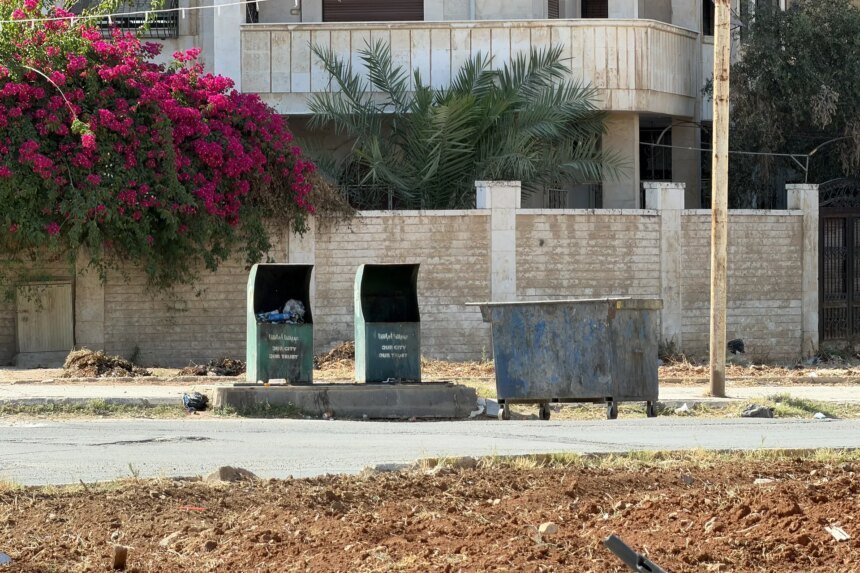
The Environment Directorate in Hama, in cooperation with the Hygiene Directorate, began implementing a home waste sorting experiment in the Karama neighborhood in the city of Hama. The first phase includes a sample of 137 homes (between 600 and 800 people) and lasts for three months with the aim of evaluating them, before expanding the experiment.
Sorting waste from the source
The experiment is based on a simplified mechanism that requires participating families to separate waste within residential apartments and distribute it into two separate bags. Transparent plastic bags are allocated to collect dry and solid materials, while wet materials and waste are isolated in other completely different bags, which contributes directly to reducing the total volume of waste and facilitating its handling.
Regarding the selection of the location, Doha Shaar, head of the Department of Environmental Media and Environmental Awareness, told the correspondent of “Syria Now” that “the neighborhood is one of the distinguished and very cooperative neighborhoods, as the experiment will be implemented for a period of three months and then it will be subject to evaluation.” If the experiment is successful, it will be circulated to all neighborhoods in the city of Hama.
Positive interaction
Those in charge of the project explained that the home screening process represents an applied and stable experience in many countries, but it does not exist or be activated in the local reality, which requires additional effort to educate residents.
Maysar Baroudi, Chairman of the Karama Neighborhood Committee, in his interview with the “Syria Now” correspondent, indicated that the main bet was on the response of the families, praising the noticeable interaction, especially from the female segment of the neighbourhood, explaining: “The interaction and participation was very good from the housewives.”

Challenges to generalizing experience
Despite the optimism surrounding the start of the initiative, the work system faces several logistical and financial difficulties, especially with regard to the lack of equipment and machinery in municipal agencies. Abdel-Ghani Issa, mayor of Al-Karama district, confirmed that the awareness of the people is the main tool for filling this deficiency and circumventing weak capabilities.
At the end of the three-month deadline, the Environment Directorate, in coordination with the neighborhood committee, intends to conduct a comprehensive and expanded evaluation of the results of this experiment, where field obstacles will be monitored and worked to overcome, and if its success is proven on the ground, it will move directly to the next stage of spreading the green system to all residential neighborhoods in the city of Hama.