
Crude oil prices that shot up amid the Middle East war has started to return to their pre-war levels. However, the hike in petrol prices that were brought in to compensate for high input prices are still in place. Data shows that this is not unusual. In fact, it reflects a larger trend of limited fluctuation in retail fuel prices despite sharp global swings.
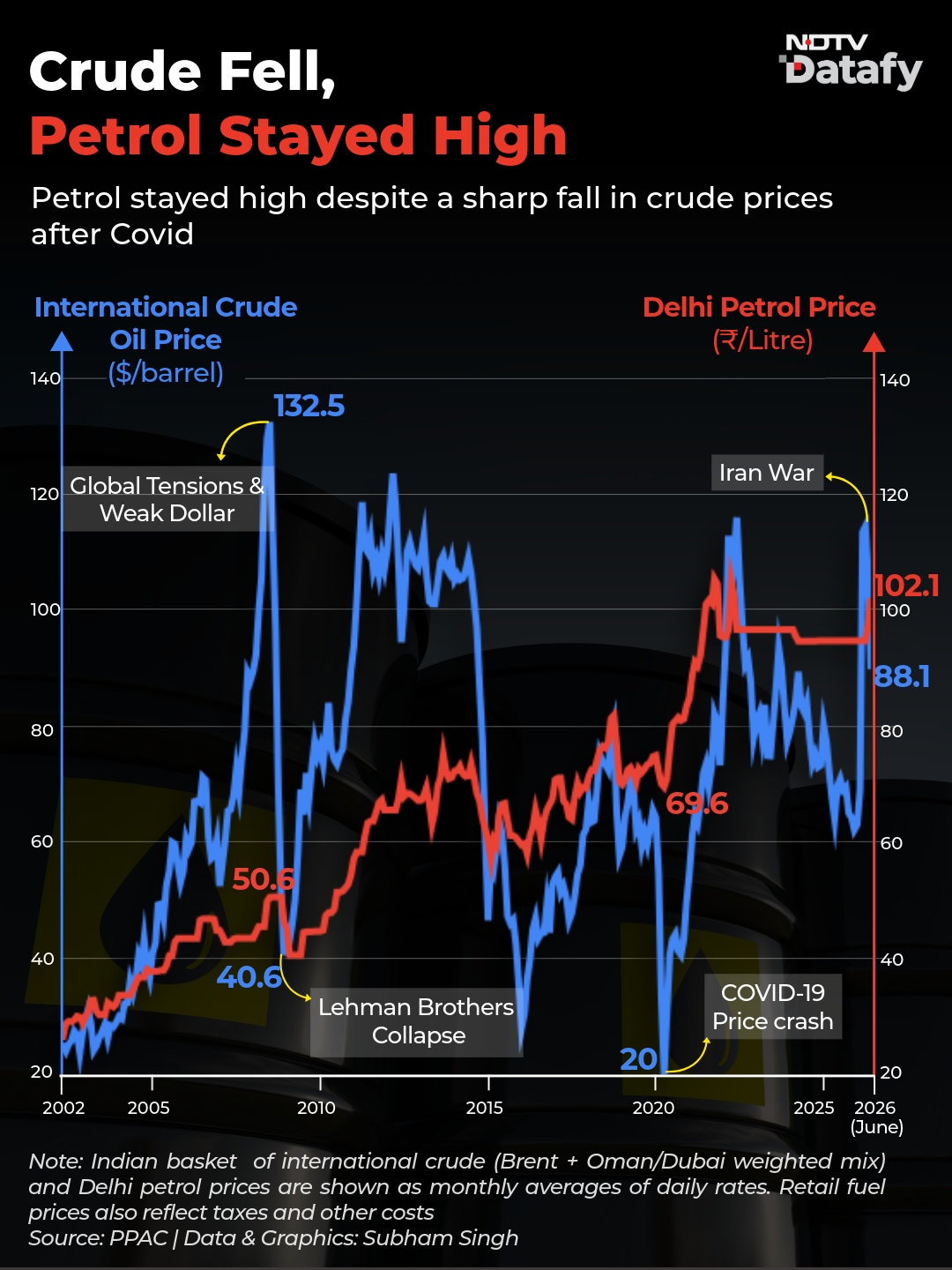
The price of the Indian basket of crude oil — the average cost of crude imported by Indian refineries — has declined in recent months, according to the data from the Petroleum Planning & Analysis Cell (PPAC). Between March and June 2026, crude prices dropped from over $113 a barrel to around $90 a barrel. However, petrol prices in Delhi rose from Rs 94.77 a litre to Rs 102.12 a litre in the same duration.
This pattern highlights how petrol prices in India do respond to crude oil movements, but only to a limited extent.
Over the past two decades, global crude oil prices have seen sharp ups and downs rising to over $130 per barrel in 2008 and falling to nearly $20 per barrel during the Covid-19 shock in April 2020. But, retail petrol prices in India have been far more stable in comparison.
The post-Covid period is a clear example. Even as crude prices crashed to multi-year lows in 2020, petrol prices remained around Rs 70 per litre and soon moved higher. Since 2022, petrol prices in Delhi have largely stayed in a narrow band of Rs 95 to Rs 100 per litre, despite crude oil fluctuating between Rs 70 and Rs 100.
This relatively “controlled” movement in petrol prices is largely due to government’s intervention and tax structure. A significant portion of petrol prices comes from central and state taxes. During periods of high crude prices, governments often reduce excise duties or absorb some of the impact, preventing petrol prices from rising too sharply. This acts as a cushion for consumers.
However, this approach also has a downside. When global crude prices fall, the benefit is not fully passed on to consumers. Instead, prices are kept relatively stable, partly to manage revenue losses from earlier tax cuts and to avoid sharp future increases.
The result is a clear trend: petrol prices in India rise when crude rises, but fall much less when crude declines. Petrol prices have remained elevated even after the recent Middle East tensions eased and crude prices came down. Nevertheless, the government by end-March had announced slashing excise duty by Rs 10 per litre on both petrol and diesel. The crude needs to be further cheaper for the government to compensate its own losses, before passing the benefits to consumers.