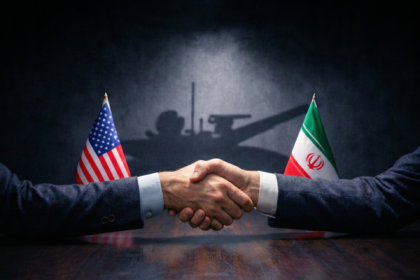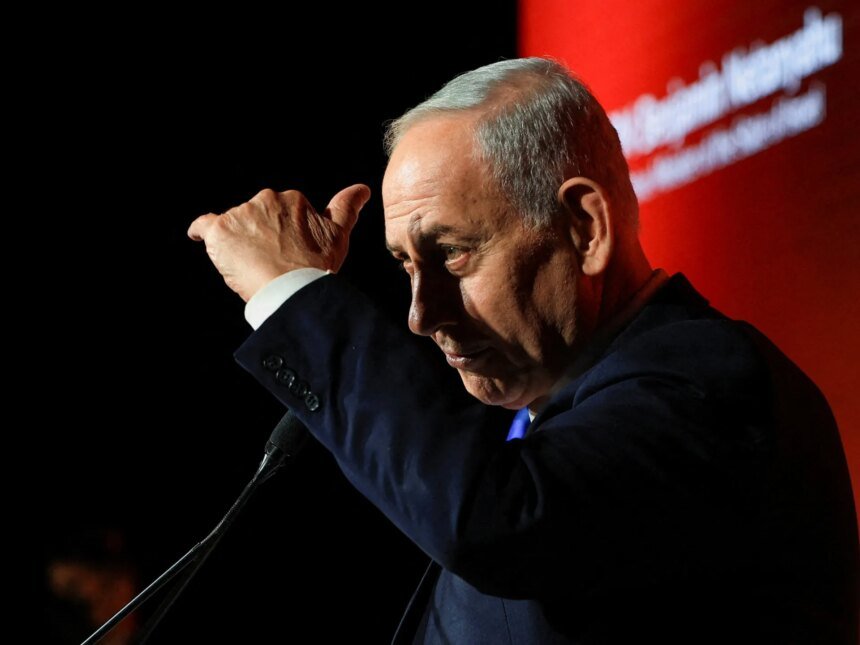
Since the US administration announced a few days ago that it had reached an understanding with Iran that paves the way for the end of the war, German newspapers have continued to criticize Israeli Prime Minister Benjamin Netanyahu, accusing him of isolating Israel internationally and regionally.
Most analyzes of German-language newspapers that focused on the latest developments in the Iran agreement confirm that Netanyahu has always bet on the war against Iran and its allies to reestablish his image as a guarantor of Israel’s security. However, the American administration’s reaching an agreement with Tehran was considered by most newspapers and magazines, especially those affiliated with the left and the liberal left, as a strategic retreat that weakened Netanyahu’s political standing, after the war failed to achieve its declared goals, the most prominent of which was toppling the Iranian regime and ending its nuclear capabilities and program. The missile.
Read also
list of 2 itemsend of list
These criticisms also included conservative newspapers, the most prominent of which was the Swiss newspaper Neue Zuricher Zeitung, which said in an article entitled, “Netanyahu is the biggest loser in the agreement with Iran… Will he be able to survive politically?” Netanyahu’s position puts him in front of two internal and external dilemmas, as his continuation of the confrontation with Iran may threaten his relationship with the United States, and failure to continue it will show him in a weak position, especially after he built for himself the image of a strong security man capable of protecting Israel.
The newspaper adds that the streets of Israeli cities were full of posters thanking Donald Trump after Netanyahu succeeded in luring the American president into the war in the hope of quickly overthrowing the Iranian regime. As for Trump – the newspaper adds – he wanted to enter history as the American president who put an end to the Iranian regime.
Now – according to the newspaper – the posters have disappeared from the Israeli streets, and gratitude turned overnight into shock after Trump signed a memorandum of understanding with Iran, while Israel was completely absent from the negotiating table.

The newspaper adds that for Trump, the agreement may be just an understanding that he was forced to conclude, at least for the time being. As for Israel, it seems like an existential threat because “the United States is leaving its partner, Israel, alone.”
It is true that Netanyahu – the newspaper continues – tried during a press conference to contain the damage, without criticizing Trump, saying that he saved the State of Israel from destruction and that it would not possess nuclear weapons “neither now nor in the future,” but the majority of Israelis interpret what happened with Iran as a “failure” for the Prime Minister.
According to the newspaper, this is a particularly “sensitive matter” for Netanyahu, who, by achieving a victory over Iran or at least weakening it significantly, wanted to divert attention from his failure on October 7, 2023.
According to the newspaper, in the past, “Israel was viewed as a dominant force capable of changing the balance of power in the Middle East, but Israel’s violent actions in Gaza, the fall of more than 70,000 people, the prevention of humanitarian aid from entering the Strip, and its almost complete destruction caused severe damage to Israel’s image and led to its increasing international isolation. However, Netanyahu knew that America under Trump would continue to support Israel, but only so far.”
The newspaper touches on the American-Israeli military attack on Iran, saying that since the start of the large-scale attack against Iran, the interests of the United States and Israel quickly began to diverge, as it became clear that the regime in Tehran could not be overthrown so quickly, despite the intense bombing, and with the approaching midterm congressional elections, Trump’s war against Iran could have led to a major defeat for the Republicans.

The newspaper concludes that Netanyahu finds himself facing a dilemma, which is that if he continues the war against Hezbollah and Iran, he risks losing the alliance with the United States, and if he backs down and surrenders to the fait accompli, he will appear weak inside Israel.
Biggest loser
In an article entitled “Israel and Trump… Netanyahu is a victim of his alliance with the American president,” the left-wing newspaper Tas says, “Netanyahu is the biggest loser from the ceasefire agreement between the United States and Iran, after he bet heavily on his close alliance with US President Donald Trump. Before the outbreak of the war, Trump was very popular in Israel because of decisions that Netanyahu’s government considered political victories, such as recognizing Jerusalem as the capital of Israel and supporting what is known as the Abraham Accords with some Gulf countries.
But the US-Iranian agreement – Tatz adds – revealed that the interests of Washington and Tel Aviv are not identical. While Netanyahu wanted to weaken the Iranian regime and perhaps topple it, Trump chose to stop the war and reach an agreement that ensures calm on the fronts, including Lebanon, and all of this is due to political and economic pressures within the United States, especially the rise in fuel prices and the approaching midterm elections.
The article ends by saying that the war, which Netanyahu wanted to use to strengthen his image as if he were the protector of Israel’s security, backfired on him because Trump’s agreement with Iran demonstrated the limits of Israeli influence and proved that Washington may advance its own interests at the expense of the demands of the Israeli government.