Published on 6/22/2026
|
Last update: 21:38 (Mecca time)
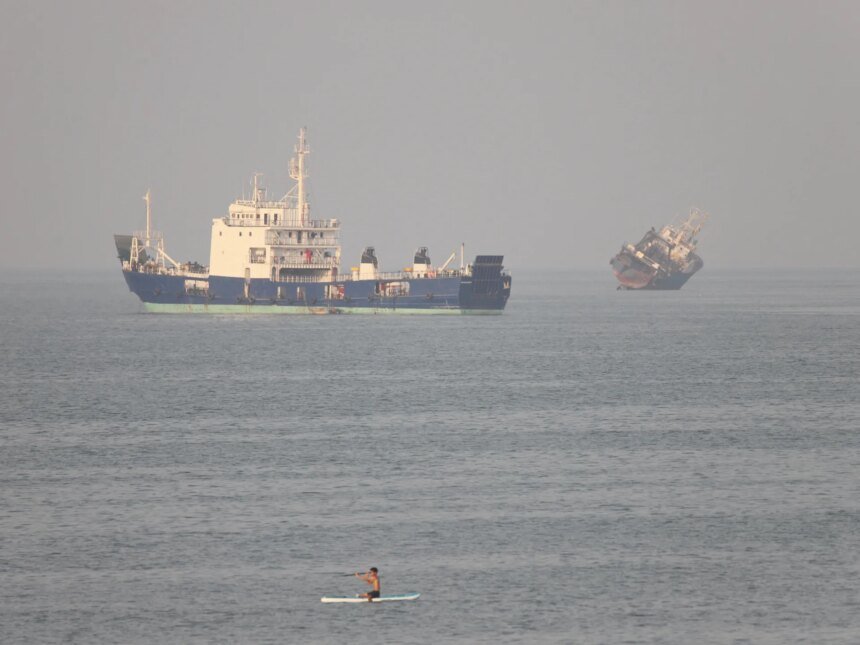
The Indian government announced today, Monday, that four cargo ships loaded with urea, diammonium phosphate, and sulfur crossed the Strait of Hormuz last week on their way to ports in India, while ship movement data indicated improved navigation in the strait, after Iran announced its closure on Saturday in response to the Israeli bombing of Lebanon.
Last week, India said, according to Reuters, that 16 ships heading to it and carrying about 700,000 tons of fertilizer were stuck in the Strait of Hormuz.
Read also
list of 4 itemsend of list
A government official said last week that India has already imported five million tons of agricultural nutrients, including urea, to meet domestic demand for the summer harvest season, in addition to boosting domestic production.
The statement indicated that the ships, bound for the ports of Krishnapatnam, Kakinada, Paradip and Mundra, crossed the strait last week.
The statement added that the total stock of fertilizers in India amounts to 19.60 million tons.
India imports fertilizers, such as urea and diammonium phosphate, in addition to liquefied natural gas, which is an essential raw material for the production of urea. It is one of the largest importers of fertilizers in the world.

Global shortages decline
In a related context, Vice President of the Thai Fertilizers and Agricultural Supplies Association, Thibvit Thyusuratkul, said that the global shortage of fertilizer supplies has begun to decline, especially urea fertilizer, in light of the resumption of imports from the Middle East through the Strait of Hormuz.
Teosoratkul added, according to what was reported by the German News Agency, that some Saudi producers modified logistical and trucking routes from the eastern region of the country to the Red Sea ports to maintain shipping operations to Thailand.
About a third of the global fertilizer trade, such as urea and ammonia, flows through the Strait of Hormuz, according to Reuters, but these supplies declined after the outbreak of the Iran war and the targeting of gas facilities in Gulf countries, as gas represents about 70% of the inputs to the fertilizer industry.
Improved navigation in Hormuz
Reuters reported that shipping data showed that oil and liquefied natural gas tankers crossed the Strait of Hormuz on Monday, an indication of a gradual improvement in navigation traffic after Iran announced at the weekend that the strait was closed again.
Iran ended its closure of the Strait last week, after it agreed with the United States on a memorandum of understanding to stop the war, which includes entering into negotiations for a period of 60 days to reach a permanent agreement between the two sides.
But the day before yesterday, Saturday, the Iranian Revolutionary Guard announced the closure of the strait again in response to the attacks launched by Israel on Lebanon, which led to a decline in navigation traffic.

Ship tracking data and analyzes from Kpler showed that four liquefied natural gas tankers belonging to Qatar headed to the strait on Monday, and that two giant tankers, each with a capacity of four million barrels of crude oil, entered the Gulf, and one of them announced that their destination was the Iraqi port of Basra.
Separate ship tracking data on the Marine Traffic platform showed that two smaller crude oil tankers, carrying a total of about two million barrels of crude, left the strait, heading towards the Gulf of Oman today.
Clarksons, a shipping brokerage company, said in a note today, “The daily transit vessel movement is still below 125 vessels, which was the usual number before the outbreak of hostilities with Iran, but the general trend is positive.”