
When news organizations around the world have faced criticism, they have historically turned to specialists: ombudsmen, in-house critics empowered to investigate their employers’ coverage and report their findings to the public.
But when CBS News appointed one last year, under an agreement with the Federal Communications Commission, it took a different tack. It tapped Kenneth R. Weinstein to flag complaints privately to its executives, pitching him in the hiring announcement as “an independent, internal advocate for journalistic integrity and transparency.”
As CBS News has been shaken by infighting between management and its star correspondents this year, Mr. Weinstein’s silence is being criticized by media experts. They say Paramount, the parent company of CBS News, has essentially hired a watchdog who doesn’t bark.
In the nine months since he was hired, Mr. Weinstein has issued no public statements about CBS News’s coverage or its controversies. He has not issued any guidance or feedback in staffwide emails or memos, three employees said. He has told some employees that he is scheduled to work only one day per month, two people said, though one said he responded to queries outside his monthly workday.
Most ombudsmen are much more public facing, said Jeffrey Dvorkin, a former NPR ombudsman who wrote the handbook for the Organization of News Ombuds and Standards Editors. That handbook says ombudsmen should report to the public, usually in a weekly column or mutually agreeable time slot.
Part of “stewarding public trust,” as Mr. Weinstein promised to do in his hiring announcement, is addressing the public, Mr. Dvorkin said.
“What’s the point then?” he said of CBS News’s decision not to require Mr. Weinstein to publish anything. “How is an ombudsman going to convey the public’s concerns, both internally and externally?”
Paramount said in a statement that Mr. Weinstein had been doing his job.
“He’s there to review concerns about CBS News’s reporting and coverage through a process that has been clear from the beginning,” the statement said. “Since September, he’s independently assessed the issues brought to him and, when appropriate, discussed them with CBS News and Paramount Skydance leadership.”
After Mr. Weinstein flags potential problems to Paramount’s executives, they decide whether to raise them with CBS News.
Since Mr. Weinstein was hired, Bari Weiss, the new editor in chief of the network, has been accused of injecting political bias into stories by three high-profile journalists for CBS’s “60 Minutes.” She fired them all as part of a broader shakeup of the show. The remaining three correspondents said they would stay only because they didn’t want the show to die. (CBS News has denied the allegations of editorial meddling.)
Many newsrooms have done away with their ombudsmen. Some, like The New York Times, which dropped the position in 2017, argued that they were anachronisms in an era of instant online criticism. Others have cited dwindling resources. In addition to The Times, The Washington Post, ESPN and The Boston Globe did away with their in-house critics in the last quarter-century; NPR and PBS are among the last remaining U.S. news organizations that employ a full-time public editor.
The F.C.C. announced the creation of the CBS News ombudsman when it approved Skydance’s acquisition of Paramount in July. The agency’s chairman, Brendan Carr, had been investigating a complaint about a “60 Minutes” interview with Vice President Kamala Harris from the previous fall, but allowed the deal after the company agreed to employ, for two years, an ombudsman who would evaluate claims of bias. (President Trump sued Paramount over the interview. Press freedom advocates said the controversy was baseless.)
Mr. Carr said the move would “promote transparency and increased accountability.”
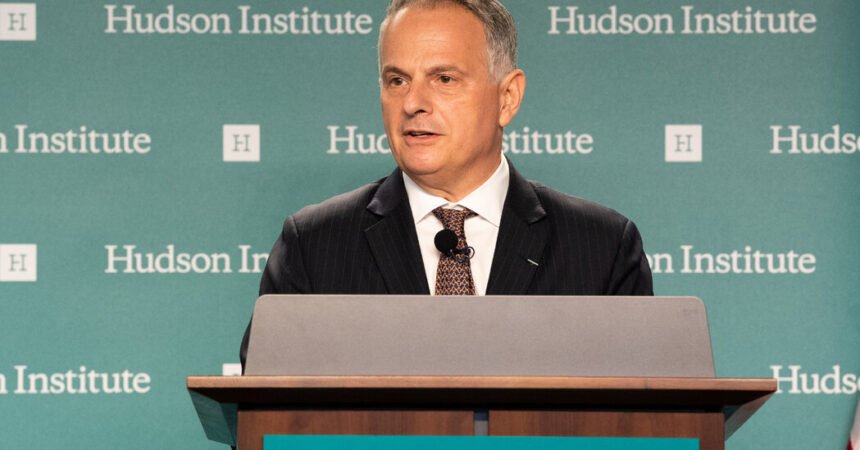
In September, Paramount announced that it had found its pick: Mr. Weinstein, a veteran of the Hudson Institute, a right-leaning Washington think tank. Though he had no experience overseeing news coverage, Mr. Weinstein had served on the board of the U.S. Agency for Global Media, an independent federal agency that oversees U.S. government-supported civilian media such as Voice of America. There, he worked alongside Jeff Shell, who would become Paramount’s president.
Though Mr. Weinstein does not respond to complaints publicly, he is easy to reach. CBS News set up a website where viewers can submit their concerns, anonymously or by name. One of the people said that many of the notes Mr. Weinstein received focused on the network’s coverage of the war in Gaza.
At least one inquiry to Mr. Weinstein has been made public. Representative Jamie Raskin of Maryland, a Democrat, sent him a letter in December to ask for a full accounting of the network’s decision-making around a November interview with Mr. Trump.
But Mr. Weinstein did not reply. Instead, Paramount’s general counsel sent a letter to Mr. Raskin explaining that the interview had been edited for length.
In December, after a “60 Minutes” correspondent, Sharyn Alfonsi, accused Ms. Weiss of meddling in one of her stories, media critics mused publicly about whether Mr. Weinstein would weigh in.
“I wonder if the CBS News ombudsman will have anything to say about this,” Brian Stelter, CNN’s chief media analyst, wrote on social media. Eric Deggans, the Knight professor of journalism and media ethics at Washington & Lee University, posted: “Wonder if Weiss will ever say exactly why she pulled the story? Or if CBS News new ombudsman will somehow surface?”
Mr. Carr, at least, does not seem concerned by the public silence from Mr. Weinstein.
This month, after Ms. Weiss fired the three “60 Minutes” correspondents, Mr. Carr was asked directly whether Mr. Weinstein would look into their complaints of editorial interference.
Jake Tapper, an anchor on CNN, sat down with Mr. Carr and pointed out that the F.C.C. had pushed for an ombudsman to evaluate claims of bias, and asked whether Mr. Weinstein should investigate.
“I don’t think so,” Mr. Carr said.