“I don’t want fancy, I want good.”
Such direct feedback from any guest would inspire a chef to think twice about a dish. But coming from former President Barack Obama, regarding a menu item at his own presidential center, it was an imperative.
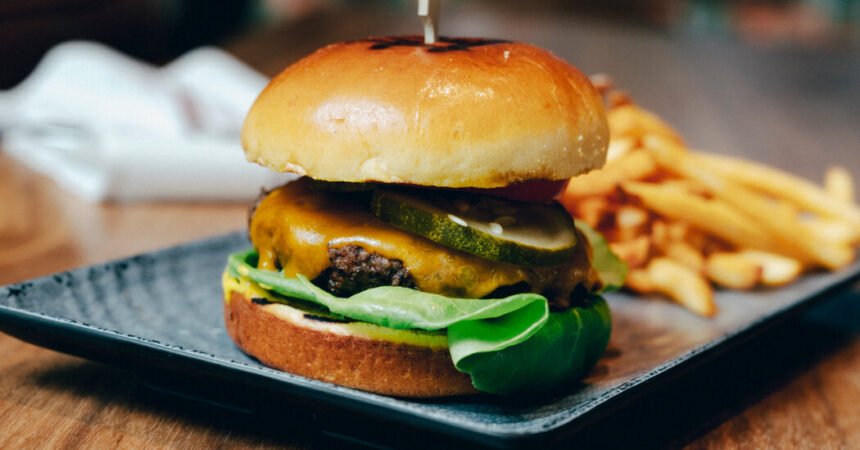
The dish in question? A cheeseburger.
The chef Cliff Rome said President Obama — once called “Foodie-in-Chief” by People Magazine — told him that the burger that would end up on the menu at the Obama Presidential Center was missing a few essential ingredients. Namely, it needed a smear of yellow mustard and the bite of a sharp Cheddar.
“He had a lot of opinions on what makes a good cheeseburger,” said Mr. Rome, who was tapped by the Obamas to conceptualize and run two restaurants, Tafari’s Kitchen and a casual cafe, on the center’s campus in the Hyde Park neighborhood of Chicago.
The center, which cost some $850 million and took more than 10 years to build, is a dramatic addition to the South Side.
The centerpiece of the 19-acre campus is a 225-foot-tall granite-clad tower sometimes called the Obamalisk. But the former first couple, who made food and food policy a high-profile aspect of Mr. Obama’s administration, wanted the menu to stand out as well, according to Valerie Jarrett, the chief executive of the center and a longtime Obama family adviser.
“We want the food to be approachable and delicious,” Ms. Jarrett said. “I think President Obama feels like his palate is a good reflection of what a lot of Americans want to taste.”
At a dinner in April, Mr. Rome presented his dishes to the Obama Foundation team. Ultimately, the “Obama Burger” on the menu is a reflection of their feedback, with housemade pickles, a toasted brioche bun, tomato and lettuce — and, of course, the Obama-mandated yellow mustard and sharp Cheddar. It’s one of the dishes available at Tafari’s Kitchen, named for Tafari Cambell, the Obamas’ personal chef, who died in 2023.
A cheeseburger may seem to be a prosaic menu item for a president known for his love of food, but it actually speaks to a deeper ethos of the center’s food program, Mr. Rome said. “The assignment was to make it good while telling a story.”
Mr. and Mrs. Obama were known for frequenting highly regarded local restaurants in Washington, D.C., like Rasika and Komi. The former president once famously dropped by a Five Guys for a burger. And he is the only head of state to have eaten on camera with Anthony Bourdain, on a “Parts Unknown” episode filmed in Vietnam in 2016.
The Obama Presidential Center continues that sensibility at the full-service Tafari’s Kitchen, which has an open kitchen and a portrait of the eponymous chef painted by the actress and artist Kate Capshaw.
Mr. Rome is a native Chicagoan and the owner and managing partner of BAMJoy, a restaurant group that includes Peach’s, which he opened in 2015 in the Bronzeville neighborhood of Chicago. Four years ago, he and Bon Appétit Management, a California-based hospitality company, were awarded the contract to manage the center’s food program.
Like many chefs, Mr. Rome attributes his love of food to his grandmother and watching her cook in her home on the South Side. “She always told me, ‘If you can cook food, you’ll always have a good relationship with people,’” he said.
He didn’t know it then, but her meals of gumbo, collard greens, pot roast and peach cobbler reflected his family’s story of roots in New Orleans — by way of Saginaw, Mich.— and highlighted Chicago’s connection to Southern cuisine through the Great Migration.
“I want to continue telling that story,” he said.
The many roads and influences of the Obamas story are evident on the menus at the center. West African-inspired jollof rice sits alongside the Obama family chili recipe served with dense cornbread, and “Mrs. Robinson’s Red Rice,” named after the former first lady’s mother, and made with pork sausage and Gulf Coast shrimp, evoking the flavors of jambalaya.
Incorporating local farming and food organizations into the work of the center is also a goal of the center, said Erika Allen, the founder and chief executive of Urban Growers Collective, a nonprofit working in farming and food systems in Chicago. Urban Growers will work with the center on gardening projects for the kitchen and programming for local residents to emphasize how migratory patterns have impacted Chicago’s food. Food waste from both restaurants will also be used by local farms for composting.
“We’ll also be working with chef Rome to teach visitors about some of the plants in the gardens and how they’re integrated into the menu,” Ms. Allen said. “Food and gardening are a part of the experience.”
Encouraging guests of the museum and food spaces to think about their own story is part of the goal of the center, Ms. Jarrett said. “The hope is that this is not a passive experience.”