Published on 6/20/2026
|
Last update: 21:02 (Mecca time)
The World Meteorological Organization said that extreme weather and climate phenomena affected at least 13 million people and caused more than 3,000 recorded deaths in Africa during the year 2025, with repercussions extending to various sectors of the economy and society.
The organization explained, in its report, “The State of the Climate in Africa 2025,” issued last Thursday, that the continent is warming at a faster pace than the global average, and that the rate of temperature rise there since 1991 is significantly greater than any similar period of thirty years in previous decades. She added that the average surface temperature on the continent in 2025 ranked between the third and seventh warmest since the beginning of recording, with an increase of about 0.51 degrees Celsius over the average period between 1991 and 2020.
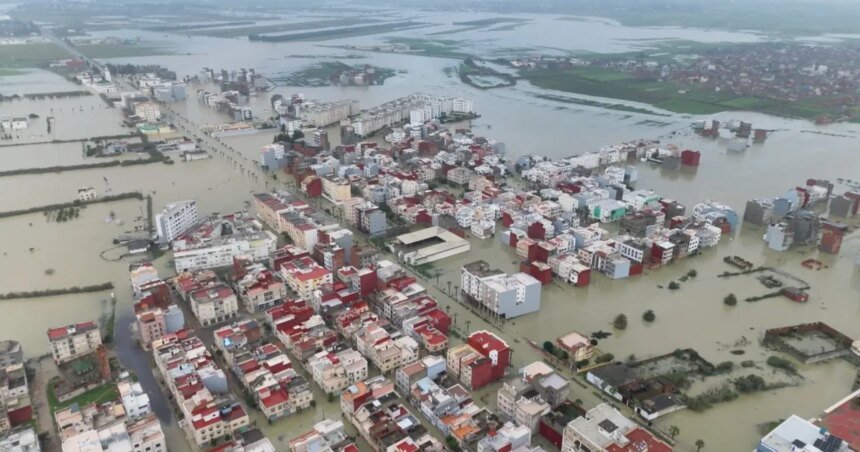
According to the report, floods were the most common recorded danger, accounting for more than half of the documented events. He pointed out that severe floods in Nigeria in May led to more than 200 deaths, while floods in the Democratic Republic of the Congo in April caused more than 160 deaths, in addition to a particularly active tropical cyclone season in the southern Indian Ocean during the years 2024-2025.
On the other hand, the report monitored the expansion of the drought, affecting more than 8.5 million people in East Africa. He stated that most regions of the eastern continent received below-average rainfall in its long and short rainy seasons, and that total annual rainfall was unusually low around the Horn of Africa. As for North Africa, according to the report, it witnessed an increase in drought, with below-average rainfall recorded along the coast overlooking the Mediterranean Sea, although parts of the northwest of the continent received above-average rainfall for the first time in years.
Ice retreats on peaks and seas rise
The report stated that glaciers in Africa have lost more than 90% of their area since the late nineteenth century, and that they are now confined to two volcanoes: Mount Kenya in Kenya and Mount Kilimanjaro in Tanzania, in addition to the Rwenzori mountain range on the border between Uganda and the Democratic Republic of the Congo.
On Mount Kilimanjaro (5,895 metres), the highest peak on the continent and home to its largest ice field, the snow area has shrunk from 11.4 square kilometers in 1900 to 0.98 square kilometers in recent years, despite significant snowfall in 2025. Between 1906 and 2021/2022, the snow area on Mount Kenya decreased from 1.64 to 0.07 square kilometers, and in the Rwenzori mountains From 6.51 to 0.38 square kilometers.
On the coasts, the report indicated that the sea level rise along the African coasts between 1999 and 2025 exceeded the global average of 3.6 millimeters annually in several regions, reaching about 4.2 millimeters on the Atlantic coast, 5.2 millimeters on the Indian Ocean coast, and 5.6 millimeters in the Red Sea.
He added that ocean warming continued with widespread marine heat waves, and that the ocean heat content and its surface temperature in 2025 were lower than the record levels recorded in 2023 and 2024, but they remained within historically high values in the last decade, with ocean acidification continuing and a record low in pH recorded in most of the region.

Early warning gap
The report noted that the continent is struggling to adapt to these impacts, and that less than 40% of African countries have early warning systems. However, he pointed to encouraging indicators represented by improved cooperation between meteorological services, disaster management agencies and local authorities, and the progress of climate services such as seasonal forecasts.
“Signs of climate change are clear across Africa, from rising temperatures and rising sea levels to devastating floods and drought,” said World Meteorological Organization Secretary-General Celeste Saulo, adding that the report “shows the scale of the risks, as well as the growing importance of early warning, climate services and coordinated action to protect lives and livelihoods.”
The report was prepared in collaboration with national meteorological and hydrological services, international data centers and United Nations partners, and includes case studies from Ghana, Nigeria and South Africa.