The 2026 World Cup is no longer just a sports tournament in which teams compete for the title. Rather, it has turned into one of the largest advertising platforms in the world, where companies are waging a parallel battle no less fierce than the competition inside the green rectangle, in a feverish race to emerge and influence within an event watched by billions of viewers around the world.
At the heart of this public momentum, brands have reshaped their marketing tools, exploiting every moment inside the tournament, from the shot inside the stadium to the digital interaction and reactions on social media platforms.
Advertisements no longer depend on direct messages or traditional appearances, but rather moved towards visual narration, story-making, and interactive experiences that integrate the audience into the content, in a shift that made advertising part of the experience and not just accompanying it.
Read also
list of 2 itemsend of list
“Clean stadiums”: strict restrictions and unexpected opportunities
However, this marketing presence clashed with a strict policy imposed by FIFA, known as “Clean Stadiums”, which requires all host stadiums to remove or cover any brands that do not belong to the official sponsors.

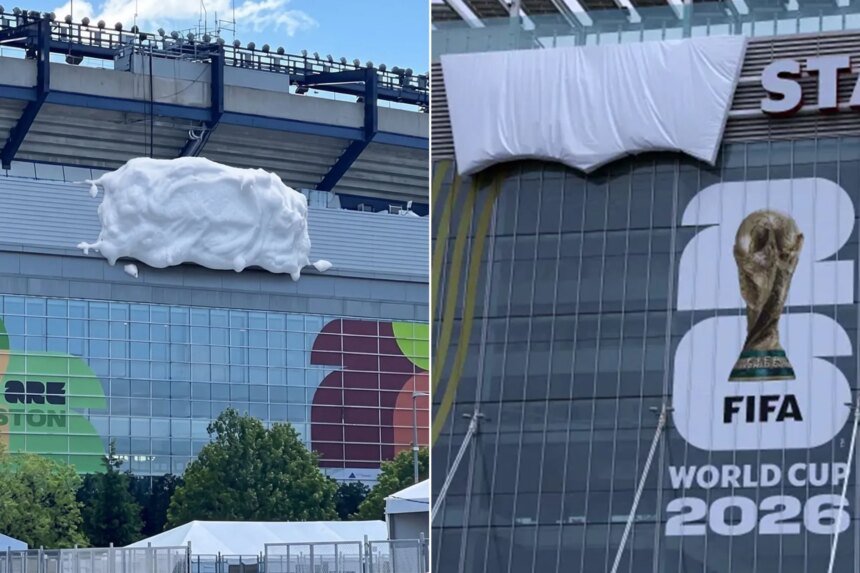
Under this policy, the names of a number of stadiums in the United States were temporarily changed to general designations inspired by their geographical locations, such as “Boston Stadium” instead of “Gillette,” and “Los Angeles Stadium” instead of “SOFI,” as part of FIFA’s effort to impose a unified visual identity for the tournament and reduce any commercial presence outside the sponsorship system.
But these restrictions did not end the marketing presence of brands, but rather prompted some of them to innovate new ways of appearing, turning the ban itself into an advertising opportunity.
Levi’s… hiding the logo and creating the event
Levi’s emerged as one of the most popular examples during the tournament. Levi Stadium, which cost about $1.3 billion, was subject to FIFA rules that required covering the commercial logo.
But the company chose to comply in a smart way; The logo was covered with a white cover, keeping its distinctive visual shape clear to the audience. Despite the disappearance of the name, the brand’s identity remained present in the minds of fans.
The matter did not stop there, as the company changed the image of its Instagram account to reflect the new shape of the logo, in a step that turned into an indirect marketing campaign that received widespread interaction.
Social media platforms were quickly filled with sarcastic and supportive comments, with one user writing: “Levi’s 1 – FIFA 0,” while another described what happened as “propaganda that money can’t buy.”
Gillette… when shaving foam turns into an advertisement
As for Gillette, it chose a different approach in dealing with the restrictions. After being asked to hide its logo because it was not an official sponsor of the tournament, the company exploited the situation in a way directly related to the identity of its product.
According to what was widely reported, the logo was covered in a visual style that suggested shaving foam, in a sarcastic and clever reference to the brand.
Activists believed that the step succeeded in achieving what traditional advertisements could not, as it kept “Gillette” present in the visual awareness of the public, and turned compliance with the rules into a marketing story that spread globally.
Heinz…even the sauce bottles were not delivered
The “clean stadiums” policy did not stop at the stadium facades, but extended to the press rooms and hospitality areas.
Brands on bottles of spices and sauces were covered with tape, including Heinz products, in a scene that sparked a wide wave of sarcastic comments on social media.
Ironically, the attempt to hide the brand prompted users to talk about it more than usual, which turned the ban itself into indirect propaganda that put the company and its products back in the spotlight.
Rexona.. The advertisement is in the least expected place
On the other hand, Rexona chose a completely different path, by exploiting the advertising spaces allowed within the tournament.
During the substitutions and the announcement of stoppage time, the company’s logo appeared under the fourth referee’s arm while raising the substitution board, in a location that is directly proportional to the nature of its product related to deodorants.
The brand name also appeared on the switchboard itself, giving it frequent exposure to millions of viewers around the world.
The idea impressed many followers, who described it as one of the smartest marketing campaigns in the World Cup, while others saw it as an example of the ability of brands to turn the smallest details into an effective advertising opportunity.
Parallel battle outside the green rectangle
In the background of this scene, the “clean stadiums” policy is part of FIFA’s strategy to reduce visual distraction within the tournament, and ensure exclusive appearance for the official sponsoring brands.
Although the measures included removing or covering logos inside stadiums and even in media and hospitality rooms, they, in return, opened the door to a wave of digital interaction, transforming regulatory restrictions into indirect marketing opportunities that enhanced the presence of brands in unconventional ways.