“It was a well-known secret,” Mr. Valdés told Tad Szulc, a former reporter for The New York Times, in a 1985 interview for his book “Fidel: A Critical Portrait.” In fact, Mr. Valdés went on, so many rumors were being intercepted every day from so many sources that he suspected that a deliberate “campaign of misinformation” was underway to throw Cuba off guard.
Once the invasion started, Mr. Valdés’s security agents rounded up some 20,000 dissidents, quickly neutralizing any chance for a domestic uprising to support the invaders.
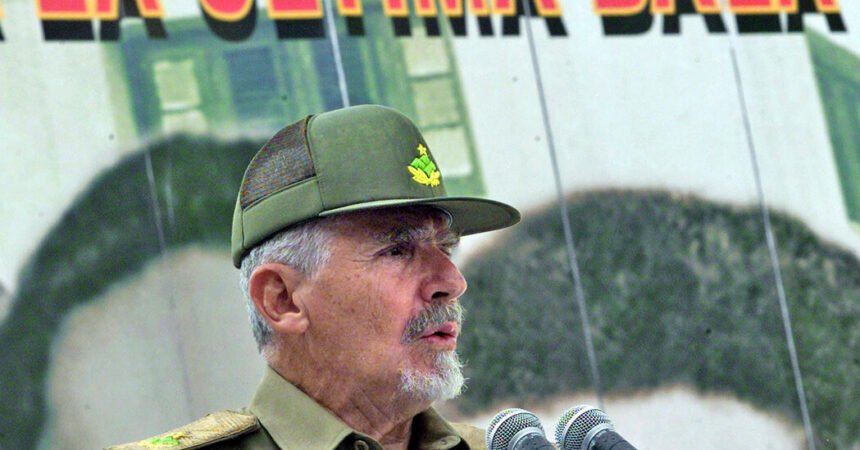
Despite his personal differences with the Castros over the decades, Mr. Valdés was never far from the center of power in Cuba. He remained a vice president and Communist Party leader up to the day in April 2021 when Raúl Castro resigned. With Cuba’s electricity system failing, Mr. Valdes, then 93, was named in late 2024 to lead a government program to stabilize the grid and expand solar power generation. The effort failed to prevent a near-total collapse of Cuba’s electric system, with prolonged nationwide blackouts lasting days.
His survivors include his wife, Alicia Alonso Becerra, and four children: Ramiro Valdés Puente, a composer who lives in Miami; Fidel Valdés Alonso; Alicia Valdés Alonso; and Ernesto Valdés Alonso.
In a rare television interview in 2018, Mr. Valdés, then 86, was asked how he had managed to retain his revolutionary spirit for so long.
“At the outset, you join the revolution out of your own free will,” he said, “but after that, forget it, there is no more deciding, no more free will. It’s what you’ve chosen to do, and it’s what you have to continue doing.”
Ash Wu contributed reporting.