
A strange thing happened when the credits rolled on Main Vaapas Aaunga.
Nobody got up immediately.
The lights had come on. The cleaning staff had already begun hovering around the exits. The film was over. Yet people remained seated, staring at the screen as if they had forgotten where they were supposed to go next.
An elderly couple in the row ahead of me sat quietly without saying a word to each other. A man near the aisle wiped his eyes and quickly looked away when someone noticed. A woman behind me kept repeating, “What a film,” to nobody in particular.
Advertisement – Scroll to continue
And for a few moments, the theatre felt less like a public space and more like a room full of people collectively recovering from a memory that wasn’t entirely theirs.
I was one of them.
I cried through large portions of Main Vaapas Aaunga. Not because Imtiaz Ali was trying to manipulate me into tears. Not because the film relies on emotional shortcuts. Quite the opposite. The tears arrived because the film quietly reached places I had forgotten existed.
It reminded me of grandparents who still speak about homes they can never return to. It reminded me of people who carried love stories for decades without ever telling them aloud. It reminded me that some losses don’t leave bruises. They become part of your bloodstream.
And perhaps that is what Imtiaz Ali understands better than most filmmakers working today.
He doesn’t make films about heartbreak. He makes films about what remains after heartbreak.
And Main Vaapas Aaunga may very well be the finest expression of that idea.
Please Stop Calling Imtiaz Ali A Masterpiece Ten Years Later
Within hours of the film’s release, social media was flooded with familiar jokes. “Watch this now, otherwise you’ll call it a masterpiece in 2036.” “Don’t ignore another Imtiaz Ali film and rediscover it a decade later.”
The memes were funny because they were painfully accurate.
This cycle has become so predictable that it almost feels like an unofficial release strategy.
Rockstar divided audiences in 2011 before becoming one of the most beloved Hindi films of its generation. Tamasha underperformed commercially before evolving into an entire personality type for millennials and Gen Z.
Laila Majnu disappeared from theatres only to find a second life years later through streaming platforms, edits, reels, and word-of-mouth. Even Love Aaj Kal, despite all the criticism it received upon release, has slowly found viewers willing to revisit and reassess it.
For years, we have treated Imtiaz Ali’s films like letters that arrived too early. Then time passes.
We grow older. Life happens. Heartbreak happens. Loss happens. And suddenly the films make sense.
The irony is that audiences often become the very people his films were talking about all along.
Which is why I refuse to participate in the ritual this time.
I don’t want to revisit Main Vaapas Aaunga in 2035 and announce that it was misunderstood. I would rather acknowledge what it is right now.
A masterpiece.
The Art Of Breaking Hearts And Fixing Them
Nobody in mainstream Hindi cinema understands emotional devastation quite like Imtiaz Ali.
But what makes him unique is that he never leaves the wound open. Jordan (Ranbir Kapoor) loses Heer (Nargis Fakhri) in Rockstar. Ved (Ranbir Kapoor) loses himself in Tamasha. Veera (Alia Bhatt) confronts trauma in Highway.
Qais (Avinash Tiwary) loses Laila (Triptii Dimri) in Laila Majnu.
In Jab We Met, Aditya (Shahid Kapoor) loses Geet, played by Kareena Kapoor (but finds her in the end).
Jai (Saif Ali Khan) loses Meera (Deepika Padukone) in Love Aaj Kal before ending up with her. His characters spend entire films wandering through emotional ruins.
Yet his cinema is never hopeless. That is the miracle of an Imtiaz Ali film.
He breaks your heart repeatedly and then repairs it so gently that you barely notice when healing begins.
Jordan finds freedom through music. Ved rediscovers storytelling. Veera finds liberation in the mountains. Even Majnu, consumed by obsession, discovers something transcendental beyond earthly love.
Main Vaapas Aaunga might be his most devastating film because the wound here isn’t personal. It’s historical.
The heartbreak belongs to an entire generation. Yet even then, Ali refuses to surrender to despair. The film leaves you shattered, but somehow softer. Broken, but not bitter.
Imtiaz Ali Has Quietly Mastered Several Arts
For years, many have tried describing what makes Imtiaz Ali’s cinema unique. The answer, perhaps, lies in the fact that he isn’t interested in one thing.
He has spent two decades mastering several emotional languages.
The Art Of Longing
Most filmmakers are interested in people falling in love. Imtiaz Ali is interested in what happens after.
The waiting. The yearning. The absence. The memory.
Jordan and Heer spend more time apart than together. Jai and Meera break up but cannot emotionally detach. Laila and Majnu transform separation into mythology. And now Keenu (Naseeruddin Shah in Main Vaapas Aaunga) spends seventy-eight years carrying a promise.
His films understand a simple truth: relationships may end, but longing rarely does.
The Art Of Not Moving On
Cinema usually celebrates closure. Imtiaz Ali does not. His characters carry people with them for years. Sometimes decades.
Main Vaapas Aaunga takes this idea to its most heartbreaking extreme. Keenu builds a life. He gets married. Has children. Becomes a grandfather. Yet somewhere inside him remains a young man waiting to return to the girl he left behind.
It sounds absurd. Until the film makes it feel completely believable.
The Art Of Daydreaming
Imtiaz Ali has often spoken about being a daydreamer. You can see it in every frame he creates. His protagonists never fully inhabit reality. They exist between memory and imagination. Between what happened and what could have happened.
Jordan sees Heer. Majnu sees Laila. Ved constantly drifts into stories.
And Keenu’s dementia transforms memory itself into a living landscape.
For Ali, imagination isn’t escapism. It is survival.
The Art Of Hallucinations
Nobody stages yearning quite like Imtiaz Ali. His characters rarely lose the people they love completely. Instead, they continue living alongside them.
Jordan sees Heer long after she is gone. Majnu continues speaking to Laila even when reality has abandoned him.
Aditya imagines Geet’s presence in Jab We Met. Veera carries Mahabir’s (Randeep Hooda) spirit with her after Highway ends. And now Keenu spends an entire lifetime speaking to Jiya.
Most filmmakers would call these hallucinations. Imtiaz Ali treats them as emotional truths.
In his cinema, love survives reality. The beloved becomes a voice, a memory, a presence that refuses to leave.
Main Vaapas Aaunga takes this idea to its most heartbreaking conclusion.
An ageing Keenu, lying on his deathbed, looks at Jiya’s photograph and asks a question he has been carrying for 78 years. “Can I go now?”
He seeks permission from a woman who died years ago. And in his imagination, she answers.
The scene should feel absurd. Instead, it feels devastatingly real.
Because every person who has deeply loved someone understands it. Sometimes people leave. Sometimes the conversation doesn’t.
The Seven-Minute Theory And Imtiaz Ali’s Fascination With Memory
One of the most fascinating ideas repeatedly appearing in Ali’s cinema is the notion that life flashes before your eyes before death. Whether intentional or subconscious, many of his films operate like extended memories unfolding in a final burst of consciousness.
Rockstar often feels like Jordan replaying the defining moments of his life while standing between life and death. Laila Majnu transforms Majnu’s final journey into something dreamlike and transcendental. Main Vaapas Aaunga takes this fascination even further.
An ageing Keenu drifts between timelines, memories and realities. The past interrupts the present. The dead return. Lost homes become tangible. Love survives where memory fails.
The result is cinema that feels less like storytelling and more like remembrance.
A Film That Belongs To Every Generation
What moved me most wasn’t merely the film itself. It was the audience. Young people. Middle-aged couples. Grandparents. Families. People who may never agree on anything else.
Everyone seemed to find something personal inside the story. The elderly saw a world they remembered. Parents saw histories they inherited. Younger viewers saw questions about identity and belonging.
That is incredibly difficult to achieve. Most films target demographics. Main Vaapas Aaunga targets emotions. And emotions rarely care about age.
I Don’t Need Time To Validate This Film
Perhaps Main Vaapas Aaunga will become another cult classic.
Perhaps ten years from now people will post clips on social media and write lengthy threads about how underrated it was.
Perhaps its re-release will outperform its original theatrical run. If history is any indication, that’s exactly what will happen.
But for once, I don’t want to wait for consensus. I don’t want to wait for nostalgia. I don’t want to wait for social media to tell me what I already felt while sitting in that theatre. I know what I watched. I watched a filmmaker at the height of his powers.
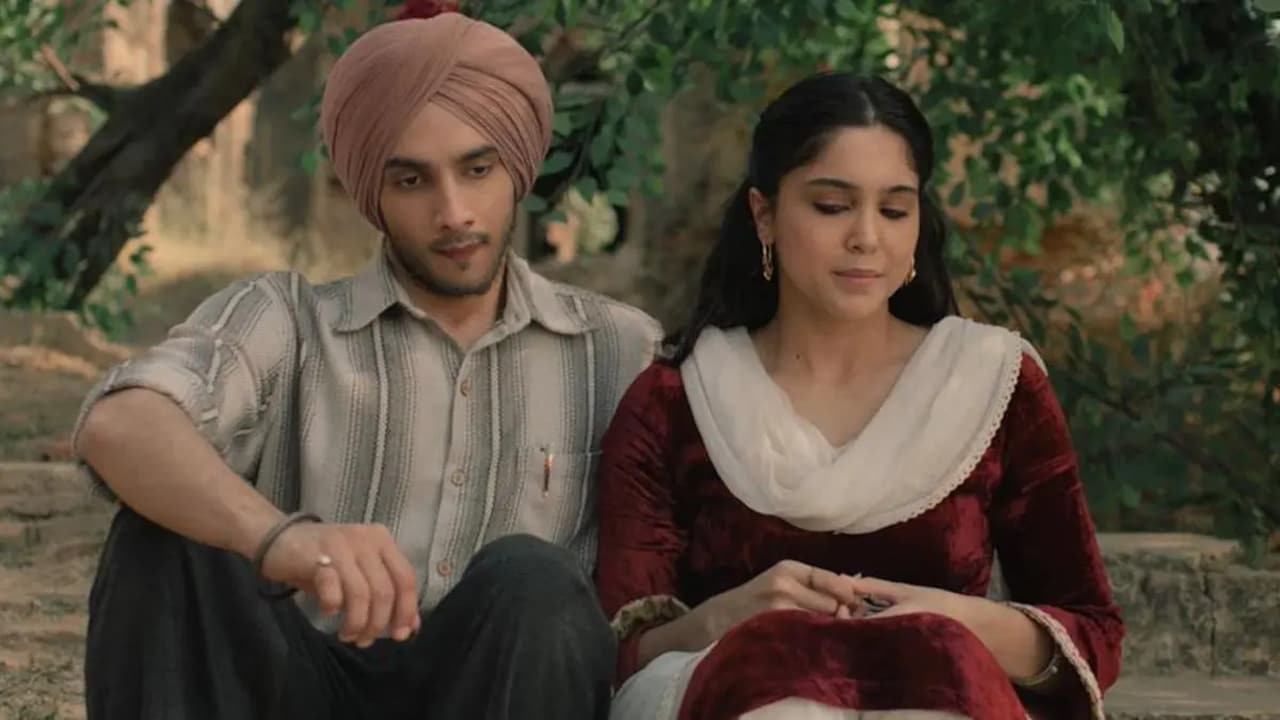
I watched a story about love, memory, displacement, identity and humanity that felt deeply personal despite unfolding across generations.
Most importantly, I watched a film that trusted audiences enough to feel rather than react.
And when the credits rolled, I wasn’t thinking about box office numbers. I wasn’t thinking about whether the film would become a cult classic. I was thinking about the tears I saw in that theatre. Mine included.
Some films need time to reveal themselves. Main Vaapas Aaunga doesn’t.
Why Imtiaz Ali’s Films Age Better Than Most Cinema
There is another reason why audiences keep returning to Imtiaz Ali’s films years later.
His films are rarely about the present. Even when they are set in the present.
Rockstar is not really about the music industry. Tamasha is not really about corporate burnout. Love Aaj Kal is not really about modern relationships. Highway is not really a road trip film.
They are all films about emotional states. And emotional states do not expire.
A political reference can become dated. A trend can disappear. Social media habits change every year. But confusion, grief, longing, regret, displacement, heartbreak and self-discovery remain constant.
Perhaps that is why Ali’s films feel richer with age.
You don’t watch Tamasha at 19 the same way you watch it at 25. You don’t understand Jordan’s self-destruction at 18 the way you do after experiencing loss. You don’t fully comprehend Laila Majnu until life teaches you that some people never truly leave you.
His films evolve because we evolve. The audience grows into them. The stories remain exactly where they were.
Waiting.
Partition As Memory
Most Partition films ask us to remember what happened. Main Vaapas Aaunga asks us to remember what was lost. That distinction changes everything.
History books tell us dates. They tell us about migration, politics, leaders, borders and statistics. But statistics do not cry. Statistics do not fall in love. Statistics do not spend 78 years longing for a place called home.
Imtiaz Ali understands this.
Which is why Keenu’s tragedy is not presented as a political argument. It is presented as a human one.
The film constantly reminds us that before people became refugees, they were neighbours. Before they became victims, they were children. Before they became statistics, they were people who had favourite streets, favourite foods, favourite songs and favourite people.
And perhaps that is what devastated me the most.
Because the film doesn’t merely ask what Partition took away. It asks who those people might have become if Partition had never happened.
Keenu doesn’t just lose Jiya. He loses an entire version of himself. A future. A home. A language. A life. And that kind of grief never really ends.
Love As Resistance
What makes Main Vaapas Aaunga different from many contemporary films dealing with historical trauma is that it refuses to weaponise pain.
The film shows violence. It acknowledges brutality. It doesn’t sanitise history. Yet it never asks us to hate. That is an increasingly radical thing for a film to do.
At a time when outrage is often easier to sell than empathy, Ali chooses tenderness. At a time when cinema is obsessed with enemies, he remains interested in people.
Love, in his films, has never been escapism. It has always been resistance.
Jordan’s love resists conformity. Ved’s love resists performance. Veera’s love resists trauma. And Keenu’s love resists history itself.
Main Vaapas Aaunga repeatedly argues that empathy is stronger than inherited hatred.
That memory can be a bridge instead of a weapon. That remembrance is not the same thing as resentment.
And that may be the most political statement Imtiaz Ali has ever made.
Imtiaz Ali’s Greatest Gift
People often say Imtiaz Ali romanticises pain. I don’t think that’s true. If anything, he understands pain too well. What he romanticises is survival.
His films acknowledge that life is messy. People leave. Dreams fail. Relationships collapse. Homes disappear. History wounds us. Time takes things away.
But somehow his characters keep searching.
They keep loving. They keep returning. That is why audiences connect with his cinema years later.
Not because he tells us life will be okay. But because he tells us life will continue. And sometimes that is enough.
For two and a half hours, Main Vaapas Aaunga reminded us that every person is carrying a story, a longing, a memory, a wound and a version of home they are trying to find again.
And maybe that is what makes Imtiaz Ali special.
Many filmmakers know how to break your heart. Very few know how to hand it back to you in better shape.
Imtiaz Ali does.
Every single time.