China took aim on Monday at a U.S. government program to reduce American reliance on Chinese imports for rare earth magnets, a move that risks reigniting trade tensions with President Trump.
New restrictions will prohibit Chinese companies from shipping certain rare earth metals to two companies that are leading the Trump administration’s efforts to revive the American rare earth industry.
The metals banned by China’s Ministry of Commerce are critical for a wide range of products from cars to military drones, and China controls nearly the entire global supply of them.
After meeting in South Korea with Xi Jinping, China’s top leader, last October, Mr. Trump said China had agreed to resume supplying rare earth metals to the United States as needed. Chinese officials, however, never publicly described the agreement in such terms.
A follow-up summit between the two leaders in Beijing last month produced no further progress on rare earth supplies.
At last week’s Group of 7 summit in France, leaders of the major industrialized nations pledged to reduce their dependence on any supplier, calling for no more than 60 percent of rare earth imports to come from one country by 2030. The world relies on China for about 90 percent of their supply of so-called light rare earths, which are used in oil refining, glass polishing and magnet production.
China also refines more than 98 percent of the world’s heavy rare earths, which are crucial additives in magnets and are also used in artificial intelligence computer chips, lasers and a wide range of other technologies. Beijing has wielded its dominance over heavy rare earths as a trade weapon for the past 14 months.
In April 2025, China imposed strict controls on the export of seven rare earth elements, most of them heavy rare earths, as well as magnets made from them. Beijing classified the materials as dual-use goods, meaning they have both military and civilian applications. Outside China, the restrictions disrupted production of cars, robots, military equipment and other products.
The action by China on Monday barred 10 American companies in all, including some with direct military ties, from purchasing additional dual-use products from China. On the list were the two largest American rare-earth companies: MP Materials and USA Rare Earth.
The Trump administration, including the Department of Defense, has poured hundreds of millions of dollars into both companies to try to restore domestic rare-earth magnet manufacturing capacity, which mostly shut down a quarter century ago.
MP Materials and USA Rare Earth both declined to comment immediately on China’s announcement. The State Department did not respond to a request for comment.
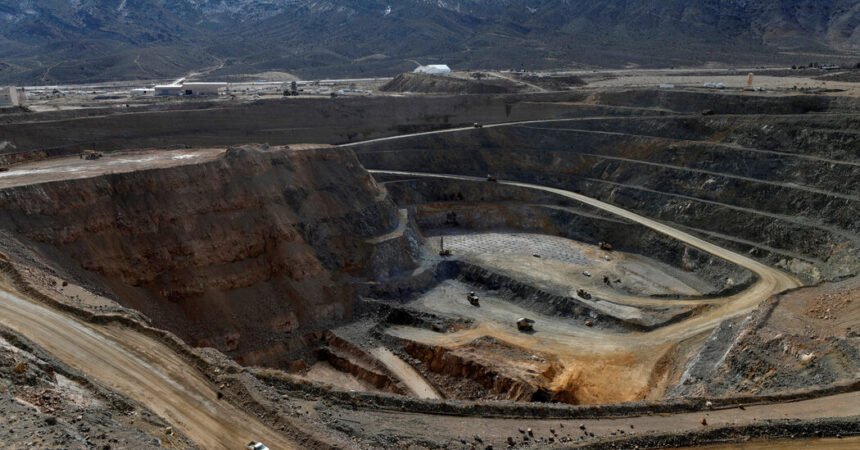
MP Materials owns the main U.S. rare earths mine at Mountain Pass, Calif., along with a large refinery that extracts four light rare earth elements from ore. It is also building rare-earth magnet factories in Texas, initially to supply General Motors, and has an agreement to provide magnets for military contractors.
USA Rare Earth has restored dormant magnet-manufacturing equipment in Stillwater, Okla., and has pursued a series of acquisitions to build a domestic supply chain.
One pending deal, announced in April, would give the company control of Serra Verde, a Brazilian company that has started producing small quantities of dysprosium, a heavy rare earth used to make heat-resistant magnets. Lynas, an Australian company, has also begun producing small amounts, though far below the volumes required by major magnet factories.
The new restrictions create another legal barrier atop what has effectively become a near shutdown of Chinese supplies of key rare earths to the United States.
Data from China’s General Administration of Customs show that shipments of dysprosium to the United States have been halted since April 2025. Dysprosium is needed in many automotive systems that operate at high temperatures, including power seats, steering systems and brakes.
Magnet manufacturers can substitute terbium, a more expensive heavy rare earth, for dysprosium. But Chinese customs data show that China has shipped no terbium to the United States since last October, when Beijing allowed a single six-metric-ton shipment timed to coincide with the summit in South Korea.
“From the magnet producer side, there is little to no access to dysprosium,” said Wade Senti, president of Advanced Magnet Lab, a small manufacturer of rare-earth magnet wire for drones in Melbourne, Fla.
Mr. Senti said his company had secured dysprosium from a recycler in Europe. But Advanced Magnet Lab produces several tons of magnets a year, while companies like MP Materials and USA Rare Earth are preparing to produce as much as 10,000 tons a year.
Manufacturers can sharply reduce, though not eliminate, their need for dysprosium or terbium through a technique called grain boundary diffusion. MP Materials and USA Rare Earth are locked in a legal dispute over intellectual property rights related to that technology.
China is also preparing to introduce even tighter global export restrictions on rare earths in November.
Ruoxin Zhang contributed research.