The United States and Iran began negotiations to permanently end their war on Sunday, kick-starting a fraught process that aims to secure a broader deal within 60 days. The talks face the constant risk of being derailed by the Israel-Hezbollah conflict in Lebanon, and will focus heavily on Iran’s nuclear program.
The two sides will also need to address other outstanding issues, including sanctions relief for Iran and the shape of a $300 billion reconstruction fund. The passage of ships through the strategic Strait of Hormuz, a critical conduit for global oil and gas supplies, will also loom over the talks. The two sides might also touch on Iran’s ballistic missile program.
Here’s where things stand on each topic.
Lifting sanctions and unfreezing assets
The U.S.-Iran framework signed last week opened the door to unfreezing billions of dollars in Iranian assets and lifting crippling sanctions on the country, suggesting that the issue would be addressed “immediately” in negotiations.
For Iran, with an economy battered by years of sanction-related isolation and devastated by three months of war, securing billions of dollars in assets frozen abroad is a priority in the negotiations.
For the United States, its ability to grant financial relief for Iran is strong leverage.
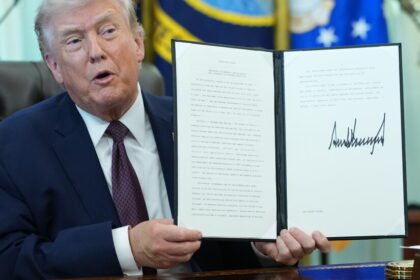
President Trump has said sanctions would be lifted on Iran “as soon as they behave,” suggesting that relief would not be offered immediately.
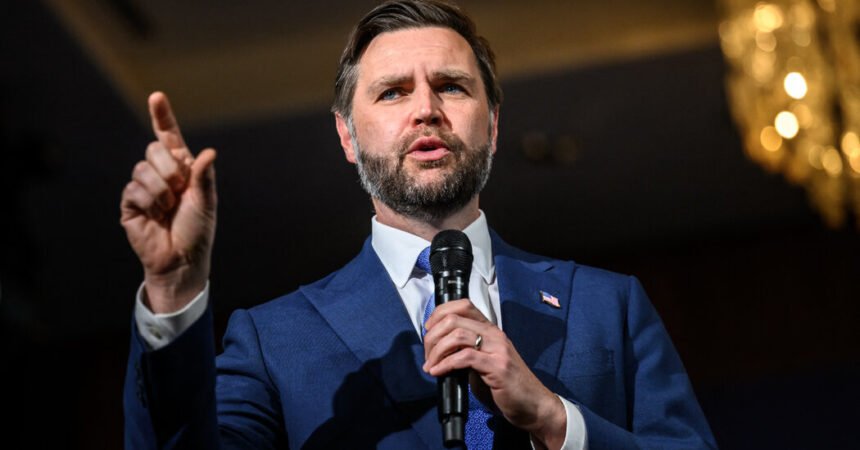
In an interview with New York Times Opinion on Thursday, Vice President JD Vance suggested relief could be tied to commitments by Iran to stop supporting regional proxies such as Hezbollah in Lebanon and the Houthis in Yemen.
Andreas Krieg, a Mideast security expert at King’s College London, said the point of contention wasn’t so much the commitment to offer financial relief as the question of chronology.
“Ultimately, there is a good understanding on all sides of what is expected,” he said on Sunday. “It’s about who moves first and how much is being unfrozen at what point.”
Reconstruction fund
The United States also committed in the preliminary deal to help develop a plan for a $300 billion reconstruction fund for Iran, but Mr. Trump later said that the U.S. government would not itself be part of the fund — leaving open the possibility that other countries, like Persian Gulf states, could provide the money.
The mechanism for implementing this fund will also be part of the latest round of negotiations, according to the terms of the preliminary deal.
According to one diplomat, the fund would be created upon the completion of a comprehensive final deal, and would be a conduit for private investment rather than a war reparations program. That person, speaking on condition of anonymity to discuss sensitive negotiations, said companies in the United States, Middle East, Asia, South America and Africa had already committed about half the amount.
The creation of the fund is politically sensitive for Mr. Trump, who repeatedly criticized President Barack Obama for shipping $1.7 billion in cash to Iran as part of a 2015 deal. That money was a refund of sorts for money Iran had paid the United States for military equipment that it never received after the shah was toppled in 1979.
Strait of Hormuz
The preliminary agreement commits Iran only to not charging fees on passing ships through the Strait of Hormuz for at least 60 days, and defers the question of its navigability to future talks with Oman and other countries in the region.
After 60 days, Iran’s foreign ministry has indicated, Tehran could charge fees in exchange for unspecified services — an arrangement the Trump administration had opposed.
Mr. Trump on Saturday added a potential complication to negotiations on the strait, writing on social media that there would be no tolls after the 60-day period, “unless they are imposed by and for the United States of America.”
Although the strait’s ultimate status will be determined in separate talks, the issue will loom heavily over the Switzerland negotiations, as any threat to restrict the economically vital waterway provides Iran with a bargaining chip.
For example, Mr. Krieg said, Iran could threaten to levy fees on passing ships to extract concessions elsewhere, such as securing access to its frozen assets abroad — much of which are locked in banks in Gulf states.
“I cannot see how Iran will impose fees on countries that are unfreezing assets,” he said.
Ballistic missiles
Trump administration officials said early in the war that curbing Iran’s short-range ballistic missile program — a major concern of Israel’s — was a central objective.
But two months in, U.S. intelligence assessments concluded that the goal had not yet been met, with Iran continuing to field about 70 percent of its mobile launchers and maintaining the same share of its prewar missile stockpile.
Now, Mr. Trump appears to have backed away from the goal explicitly, suggesting he was prepared to accept a future in which Iran maintains ballistic missiles. “I’m saying that if other countries have them, it’s a little bit unfair for them not to have some,” he told reporters last week.
On Thursday, Mr. Vance said the United States had accomplished its goal by leaving Iran’s ability to launch ballistic missiles “substantially degraded.”
If a final agreement is to be reached, Mr. Krieg said he expected it to address Iran’s ballistic weapon program only in loose terms, if at all.
Unlike limits on nuclear weaponry, caps on conventional missile programs are relatively unusual. And for the Iranians, he said, it’s “kind of the only capability they have that provides them with any deterrence, especially vis-à-vis Israel.”
“When we do have these sort of caps, it’s usually after a war with a total surrender,” he said. He added that the Iranians largely consider themselves to be in a stronger negotiating position than they were before the war.
The chance of them accepting any commitment to stringent oversight over their ballistic missile program, or any hard caps, is “unrealistic,” he said.