Published on 6/19/2026
|
Last update: 6/20/2026 13:21 (Mecca time)
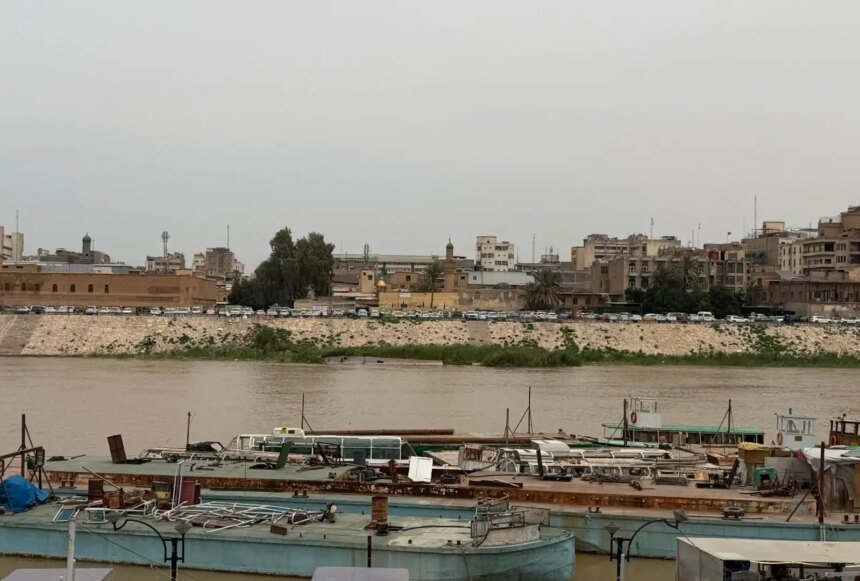
On the bank of the Tigris River in the capital, Baghdad, the owner of a small boat was watching the water and pointing to the waste on the shore, saying that the river he had lived with for many years was no longer what it was.
The man, who works in transporting hikers between the two banks of the river from the Al-Shawaka area to Al-Mutanabbi and vice versa, says that the change in color of the water and the smells emanating from it have become a recurring sight, and that talking about pollution has become part of people’s daily conversations on the banks of the Tigris, which poets sing about.
With the escalation of fears of the waves of pollution that the river has witnessed during the recent period, accounts differ regarding its causes and the extent of its effects, while official authorities and experts agree that the problem is not new, but rather the result of accumulations that have extended over years.

More than 500 sources
Assistant Director of the Authority for Operating Irrigation and Drainage Projects in the Ministry of Water Resources, Ghazwan Al-Sahlani, explained to Al-Jazeera Net that the pollution that the Tigris River witnessed during the recent period resulted from the dumping of sewage and some sewers into the Diyala River, noting that the rise in water levels in the dams and reservoirs located on the river, including the Darbandikhan and Hamrin dams, due to rain in the upstream countries and inside Iraq, led to large water releases that pushed pollutants towards the Tigris River.
Ghazwan revealed the presence of more than 500 sources of pollution in the Tigris and Euphrates rivers, belonging to a number of institutions affiliated with the ministries of health, oil and industry, in addition to the Baghdad Municipality and the sewage departments, stressing that the sources of pollution extend along the course of the Tigris and Euphrates from the Iraqi border all the way to Basra Governorate.
He explained that the Ministry of Water Resources has taken a number of measures to reduce the effects of pollution, including increasing water releases from the Samarra Dam, the Kut Dam and its branches to reduce the concentration of pollutants and speed up their passage, as well as informing water departments and local governments of the possibility of waves of pollution arriving to take the necessary measures and secure water storage before they arrive.
Ghazwan stated that the main problem lies in the limited financial allocations necessary to establish and develop wastewater treatment plants, which led to the delay in implementing a number of treatment and expansion projects, stressing that the Ministry has filed lawsuits and addressed the concerned authorities repeatedly to reduce sources of pollution.

Incomplete processing
For his part, the spokesman for the Baghdad Municipality, Muhammad Al-Rubaie, revealed to Al Jazeera Net the continuing challenges associated with treating wastewater and industrial and medical waste that flow into the Tigris River, stressing that addressing this problem requires long-term strategic projects and significant funding.
He explained that the Baghdad Sewerage Department is currently working on implementing a project to establish 17 compact units for wastewater treatment, but only five units have entered service so far, while the remaining units are still under implementation. He pointed out that these projects aim to reduce the amounts of polluted water reaching the Tigris River, especially in the areas south of Baghdad.
He revealed the implementation of a new project in the Al-Buitha area, south of Baghdad, with support from a Japanese grant and funding from the World Bank, noting that the cost of the project amounts to about 300 billion dinars, and aims to establish an advanced model station for wastewater treatment according to modern technologies.
Muhammad stressed that the sources of pollution are not limited to the municipality’s sewage networks, but also include the waste of a number of government institutions and production sectors, especially leather, oil and detergent factories, as well as the waste of some oil facilities and the fats, paraffins and petroleum derivatives they contain.
He added that the government is moving to expand water treatment projects and reuse it for agricultural purposes and increase green spaces within the Baghdad Green Belt Project, which will contribute to reducing the amounts of polluted water released into the Tigris River in the future.

The most dangerous files
The head of the Green Iraq Observatory, Omar Abdul Latif, said in a statement to Al Jazeera Net that the permanent pollution in the Tigris River has not yet entered the “red zone,” as there is still the possibility of treating the water through filtration stations before delivering it to citizens’ homes, in addition to the need to alert government departments to stop throwing waste into the river without treatment, and warn citizens against using the water directly, especially in areas that depend on it for agriculture.
Omar pointed out that one of the most dangerous issues related to pollution is that some health institutions throw patient waste into the river’s water, stressing that the decline in water levels over the past years has contributed to the exacerbation of the problem, as it has reduced the river’s ability to reduce the concentration of pollutants and get rid of them, which has led to their accumulation in its course and increased environmental and health impacts.
According to Omar, the latest wave of pollution began with the appearance of an oil spill in Baiji District, north of Salah al-Din Governorate, before it was treated. However, the greatest danger was represented by the sewage water that mixed with the river water, until the effects of the pollution spread to southern governorates.
On the health side, a laboratory in one of the health centers in the New Baghdad area, Sarah Hamid, told Al Jazeera Net that exposure to polluted water may lead to intestinal diseases such as diarrhea and colic, while accumulated pollutants in the long term may cause more serious diseases, including liver damage, digestive system infections, and other chronic health complications.
Economic losses
The effects of pollution were not limited to environmental and health aspects, but also extended to economic activity related to the river. In Al-Aziziyah District, north of Wasit Governorate, Ammar Al-Shammari, the owner of a fish lake, spoke to Al-Jazeera Net about his great loss after approximately 70 tons of fish died due to water pollution.
Ammar says with a sigh: “I lost all my money and the effort of many months was wasted,” adding that he is now seriously considering not repeating this business experience, because the problem of pollution, according to his description, may not find a solution soon.
Conflict in official discourse
Despite the escalation of fears following these warnings, conflict emerged in the official discourse regarding the extent of the crisis. While the Minister of Environment, Sarwa Abdel Wahed, recently followed up on the issue on the ground, and the authorities responsible for the pollution vowed to take legal measures, and described the continued dumping of pollutants into the Tigris as “an unacceptable matter that threatens future generations,” the spokesman for the Ministry of Environment, Louay Al-Mukhtar, denied in an official statement the validity of some statements that spoke of the water being unsuitable for drinking and domestic use, pointing to the necessity of distinguishing between the water present in water sources and the water that undergoes treatment and preparation processes before it reaches citizens.
Between the warnings of experts, the complaints of those affected, and the assurances of official authorities, the Tigris River remains facing an ongoing challenge represented in reducing the increasing sources of pollution, and saving one of the most important water resources in Iraq from a crisis whose effects go beyond the environment to affect public health, the economy, and the country’s water security.