Published on 6/20/2026
The political scene in New York City is witnessing remarkable transformations within the Democratic Party, with the increasing influence of the progressive movement, which has now linked the city’s internal politics to the position on the war in Gaza and the relationship with Israel, in a development that reflects the widening division within the party over Middle East issues.
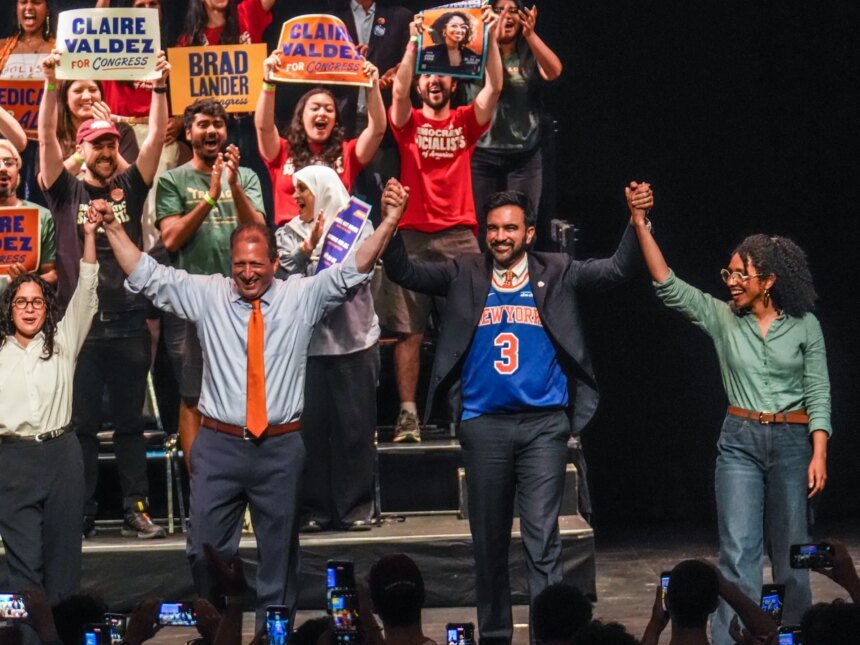
According to a Washington Post report, a rising political movement led by New York Mayor Zahran Mamdani, who won office after a campaign in which he accused Israel of committing “genocide,” is now seeking to expand its influence to include seats in the US Congress, by supporting candidates facing traditional Democratic representatives in a number of districts.

At the heart of the electoral discourse
The campaign indicates that this movement is not content with political criticism of Israel, but rather places it at the heart of its electoral discourse, as candidates supported by Mamdani raise slogans calling for stopping military support for Israel, and redirecting spending towards social services within the United States.
Read also
list of 2 itemsend of list
In this context, Democratic Representative Brad Lander, a former official in the city’s financial oversight agency, is running in an electoral race against Representative Dan Goldman in one of the most prominent constituencies, where Lander presents a sharper position towards Israel, considering that American military support must be conditional, and that current policies do not reflect the orientations of the progressive Democratic base.
In other constituencies in New York, Representative Adriano Espaillat, one of the most prominent leaders of the Latino bloc in Congress, is facing competition from young candidates who adopt a similar rhetoric, criticizing the representatives’ relations with pro-Israel lobbying committees, led by the American-Israel Public Affairs Committee (AIPAC).
Analysts:
Increasing sectors of the electorate have become more sympathetic to the Palestinians and less supportive of traditional Israeli policies in Washington, which gives progressive candidates a wider playing field.
Reshaping political alliances
The report shows that this transformation is not limited to the political dimension only, but extends to the restructuring of electoral alliances within the city, in light of the intersection of racial, social and economic factors, as voters’ priorities differ between the wealthy neighborhoods in Manhattan and the poor areas in the Bronx and Harlem.
Analysts say that the escalation of this rhetoric reflects a change in public opinion within the Democratic base, as increasing sectors of voters have become more sympathetic to the Palestinians and less supportive of traditional Israeli policies in Washington, which gives progressive candidates a wider space in the competition.

A shift in the political mood
On the other hand, some Democratic politicians warn that the intense focus on the Israel file may lead to deepening divisions within the party, and may open the door to social tensions, especially in light of mounting fears of increasing rhetoric linking foreign policy and religious identity.
Despite this, progressive candidates maintain that their proposal reflects a “real shift” in the political mood, considering that foreign issues are no longer separate from social and economic priorities within the United States, but rather have become part of the broader electoral debate about justice and the distribution of resources.
Between this and that, the upcoming congressional elections in New York appear to be an early test of the ability of the progressive movement to transform the momentum of the previous local elections into an influential force within the American legislative institution, in light of an escalating debate about the limits of political discourse in one of the most diverse cities in the United States.